


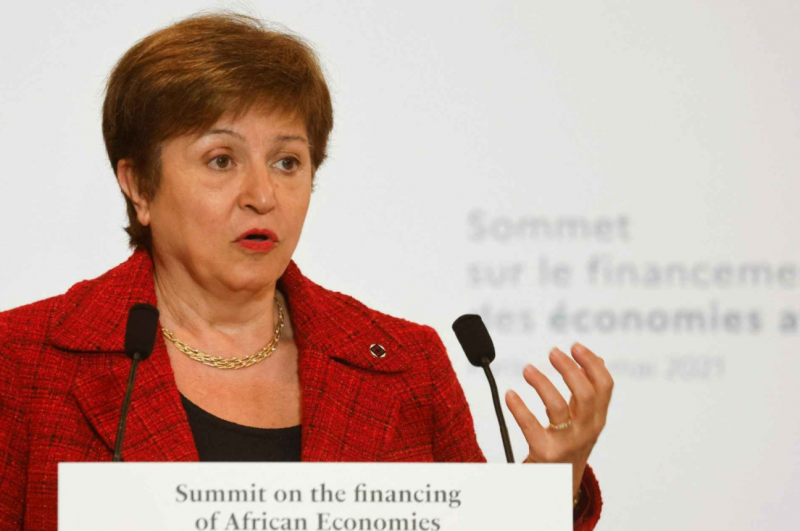
UNITED STATES President Donald Trump's push for sweeping tariffs is creating great uncertainty and denting confidence but is not likely to trigger a near-term recession, International Monetary Fund Managing Director Kristalina Georgieva said on Monday.
Reuters reported today, Georgieva, in her first major interview since Trump took office, underscored the challenges facing a global economy that is still posting underwhelming growth after scarring from the COVID pandemic, but cautioned against being overly alarmed.
The IMF will likely lower the economic outlook slightly in its next World Economic Outlook update in about three weeks, but "we don't see recession on the horizon," Georgieva said in a Reuters NEXT Newsmaker interview.
"What we see in the high-frequency indicators is indeed indicating that consumer confidence, investor confidence are weakening somewhat, and we know that that then translates into an impact on growth prospects," she said.
However, the IMF was not yet seeing "a dramatic impact" from the tariffs implemented and threatened so far by Trump since his return to the White House, she said.
The IMF in January nudged up its global economic growth estimate for 2025 to 3.3% from 3.2% in its previous estimate in October, with a half percentage-point upgrade to the U.S. outlook to 2.7% accounting for most of that uptick.
Now, though, Georgieva expects the WEO update due in April when the IMF holds its spring meetings in Washington to reflect a small downward "correction" to those estimates, she said.
While the current impact was moderate, Georgieva warned that many countries had used up their fiscal and monetary space during COVID and now had high debt levels, limiting their ability to respond to future shocks.
Wall Street's main indexes mostly shrugged off tariff uncertainty on Monday, with the Dow closing up 1 percent, the S&P 500 adding more than half a percent, and the Nasdaq ticking down marginally.
Any slowdown or reversal in the process of disinflation could slow the decline of interest rates and make it more difficult for countries to refinance their debt.
Trade developments could dampen growth in the U.S. "a little bit," but its overall outlook remained "OK," Georgieva said.
Europe's planned increase in defense spending and Germany's decision to repeal its debt brake, which she called a "self-inflicted injury," meant the region's growth projection could be lifted slightly. China needed to use its policy space and focus on increasing domestic consumption, she said.
Since returning to the White House in January, Trump has imposed 20% tariffs on all goods from China; threatened and then delayed 25% tariffs on most goods from Canada and Mexico; launched steep levies on steel and aluminum imports; announced 25% tariffs on imported automobiles; and has declared that April 2 will be "Liberation Day," when he plans to unveil global reciprocal tariffs.
The unpredictable pace of the announcements and implementation of the levies has soured investors' attitudes, and major U.S. stock indexes have been down by nearly 10% since mid-February on concern the tariffs will slow growth or even trigger a recession.
The longer the uncertainty persists about Trump's approach to tariff policy, the greater the risk to the outlook, Georgieva said.
"The sooner there is more clarity, the better, because uncertainty, our research shows, the longer it goes, the more it may negatively impact growth," she said.
Georgieva said global trade continued to grow, despite a surge in protectionist measures across the globe that had rewired trading patterns and challenged globalization, and that trade in services was outpacing growth in trade of goods.
Small and medium-sized countries were increasing collaboration among themselves, and focusing on structural reforms at home as they worked to increase their own resilience, a silver lining from upheaval in global trade, she said. – April 1, 2025















