


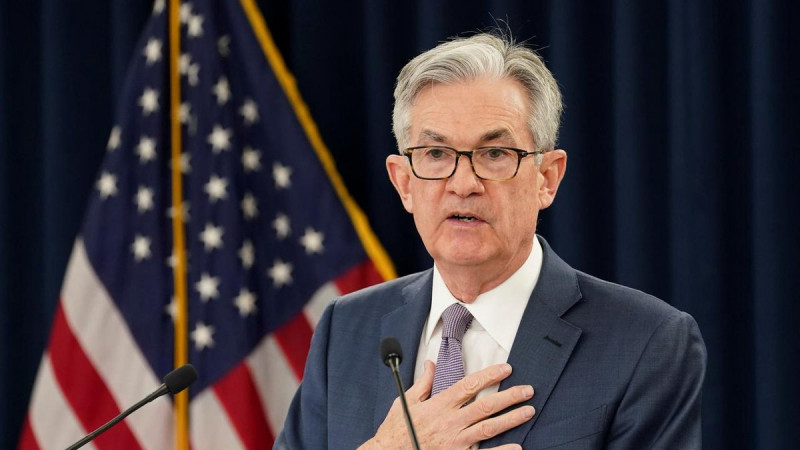
THE U.S. Federal Reserve can stay patient and wait to see how tariffs and other economic policies of the Trump administration play out before making any changes to interest rates, Chair Jerome Powell said Wednesday.
“As that great Chicagoan Ferris Bueller once noted, ‘Life moves pretty fast,’” Powell said in a speech to the Economic Club of Chicago.
“For the time being, we are well positioned to wait for greater clarity” on the impact of policy changes in areas such as immigration, taxation, regulation, and tariffs, AP reported Powell saying today.
The sharp volatility in financial markets since President Donald Trump announced sweeping tariffs April 2, only to put most of them on hold a week later, has led to speculation about whether the Fed would soon cut its key interest rate or take other steps to calm investors.
Yet the Fed is unlikely to intervene unless there is a breakdown in the market for Treasury securities or other malfunctions, economists say.
Stocks fell further after Powell’s remarks. The broad S&P 500 index dropped more than 2% in afternoon trading.
In his prepared remarks, Powell reiterated that the Trump administration’s tariffs are “significantly larger than anticipated.”
“The same is likely to be true of the economic effects, which will include higher inflation and slower growth,” he said.
Powell also said that the Fed could face threats to both of the mandates it’s been given by Congress: To achieve maximum employment and maintain stable prices.
Should both inflation and unemployment rise, that would be a “challenging scenario,” he said, because the Fed would essentially have to choose whether to keep interest rates high to fight inflation, or cut them to spur growth and hiring.
“Our tool only does one of those two things at the same time,” he said in a question-and-answer session.
Powell and many Fed officials have signaled previously that they are more concerned about tariffs pushing inflation higher than their potential hit to growth. That would mean that even if the economy weakened, the Fed might keep rates elevated to combat inflation.
Powell said the inflation from tariffs will likely be temporary, but “could also be more persistent,” echoing a concern expressed by a majority of the Fed’s 19-member interest rate-setting committee in the minutes of their meeting last month.
Yet some splits among the Fed’s interest rate-setting committee have emerged. On Monday, Fed governor Christopher Waller said that he expects the impact of even a large increase in tariffs to be temporary, even if they are left in place for several years.
At the same time, he also expects such large duties would weigh on the economy and even threaten a recession.
Should the economy slow sharply, even if inflation remained elevated, Waller said he would support cutting interest rates “sooner, and to a greater extent than I had previously thought.”
But other Fed officials, including Neel Kashkari, president of the Fed’s Minneapolis branch, have said they are more focused on fighting the effects of higher tariffs on inflation, suggesting they are less likely to support rate cuts anytime soon.
For now, most recent reports suggest the economy is in solid shape. Hiring has been solid and inflation cooled in March. Yet measures of consumer and business confidence have plunged, raising concerns among economists that spending and business investment could weaken.
Powell said he shared those concerns. He said that the increase in tariffs was so large and there is so much uncertainty surrounding the administration’s next moves that it could cause companies to become more cautious about spending.
“These are very fundamental changes in long held ... policies in the United States,” he said. “The Smoot-Hawley tariffs were actually not this large and they were 95 years ago. So there isn’t a modern experience of how to think about this.” The Smoot-Hawley tariff in 1930 has been blamed for worsening the Great Depression.
If the uncertainty persists, Powell said, “that would weigh on ... investment, just in general.”– April 17, 2025















