


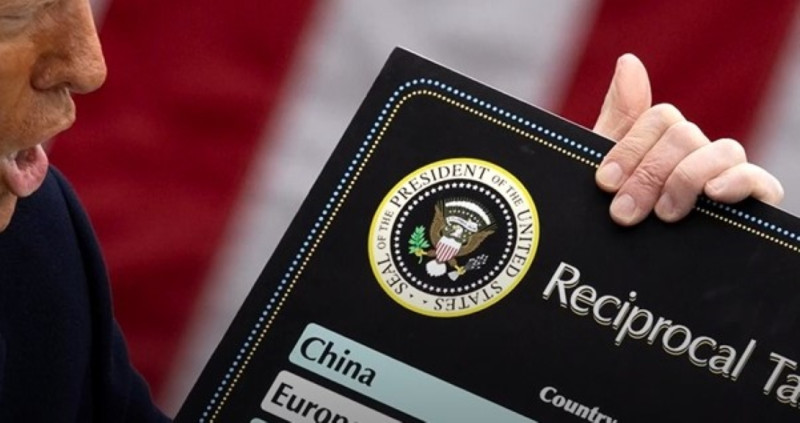
GERMANY'S pharmaceutical industry has reacted sharply to Washington’s plan to impose a 100 per cent tariff on imported branded medicines, warning it would jeopardise international trade, violate existing EU-US agreements, and threaten patient care across Europe and the United States.
The backlash followed a statement by US President Donald Trump on Thursday, announcing that unless pharmaceutical companies relocate production to American soil, the punitive tariffs would take effect on 1 October.
Bernama-Xinhua reported today that Germany, whose pharmaceutical exports to the US made up nearly a quarter of its total in 2024, sees the move as a major threat to one of its most critical export sectors, which employs around 130,000 people.
“This approach is brutal and questionable,” said Dorothee Brakmann, CEO of Pharma Deutschland, the country’s largest pharmaceutical association. “It’s a direct assault on global trade and a threat to Europe’s drug security.”
Brakmann added that the announcement reflects an increasingly isolationist stance by Washington, warning it could lead to lost sales, disrupt supply chains, and introduce more volatility into transatlantic trade.
The Association of Research-Based Pharmaceutical Companies (VFA) echoed the alarm, saying the tariffs would severely damage Germany and Europe as pharmaceutical hubs, inflate production costs, and disrupt patient care on both continents.
“We are not making full use of our potential as a single market and are in danger of becoming a pawn between the major economic powers,” said VFA President Han Steutel, noting that some investment plans have already been frozen due to the uncertainty.
Wolfgang Grosse Entrup, head of the German Chemical Industry Association (VCI), called the US decision “a new low” in trade relations and said it must be challenged. “The agreed 15 per cent tariff ceiling must apply to pharmaceuticals — otherwise, it is worthless,” he said.
The European Commission weighed in, with deputy spokesperson Olof Gill reminding that the EU-US joint statement issued in August explicitly limits tariffs on European pharmaceutical exports to 15 per cent.
The proposed US action is seen as a clear breach of that understanding and risks escalating trade tensions further. - September 27, 2025















