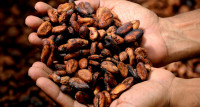
PORT-AU-PRINCE – Although small in the face of South America’s giants, Haiti is slowly developing its cocoa industry, earning better incomes for thousands of farmers and refuting the stereotype that culinary art is the preserve of wealthy countries.
Its annual production of 5,000 tonnes of cocoa pales in comparison to the 70,000 tonnes produced per year by neighbouring Dominican Republic, but the sector’s development is recent in the island nation.
Feccano, a federation of cocoa cooperatives in northern Haiti, became the first group to organise exchanges in 2001 by prioritising farmers’ profits.
“Before, there was the systematic destruction of cocoa trees because the market price wasn’t interesting for farmers who preferred very short-cycle crops,” said Guito Gilot, Feccano’s commercial director.
The cooperative now works with more than 4,000 farmers.
By fermenting members’ beans before export, Feccano has been able to target the market for fine and aromatic cocoa.
“Feccano’s customers pay for quality: they don’t have the New York Stock Exchange as a reference,” said Gilot.
Just-in-time collection
Smelling potential, Haiti’s private sector finally began investing in the cocoa industry, which, until then, had been supported solely by non-governmental organisations and humanitarian efforts.
By setting up its fermentation setter in 2014 in Acul-du-Nord, 15km from Haiti’s second city of Cap-Haitien, the company Produit des iles (Pisa) entered the market. But, the logistical challenges are many.
“The producers we work with farm less than 1ha, often divided into several plots, whereas in Latin America, a small producer already owns 4ha or 5ha,” said Aline Etlicher, who developed the industry at Pisa.
“We buy fresh cocoa, the same day as the harvest, so the farmer no longer has the problems of drying and storing that they would have if they sold it to an intermediary,” said the French agronomist.
In recent months, this just-in-time bean collection from all sites has been more challenging because many roads are regularly blocked due to sociopolitical unrest.
Maintaining organic and fair-trade certifications for cocoa is delicate, but the Haitian style has made its mark abroad.
“Today, there are bars sold in the United States that are called Acul-du-Nord,” said Etlicher.
“With our customers, we are part of the ‘bean to bar’ movement of chocolate makers who transform the cocoa bean into the chocolate bar,” she said, adding that by cutting out the middleman, Haitian producers’ revenues have doubled.
And at the other end of the chain, bean processing remains local.
‘Plant your cocoa’
For master chocolatier Ralph Leroy, making a rum ganache – Haitian, just like all the products he uses – was not an obvious choice.
After years in Montreal, he returned home to Haiti as a haute-couture stylist.
His shift to cocoa began when he made clothes out of chocolate for a culinary trade show. The training he then underwent for a year in Italy fuelled his passion as much as his pride.
“The first week, I think I was insulted when the professor said, ‘Chocolate is made for Europe. You there, plant your cocoa, we buy the cocoa and do the work’.”
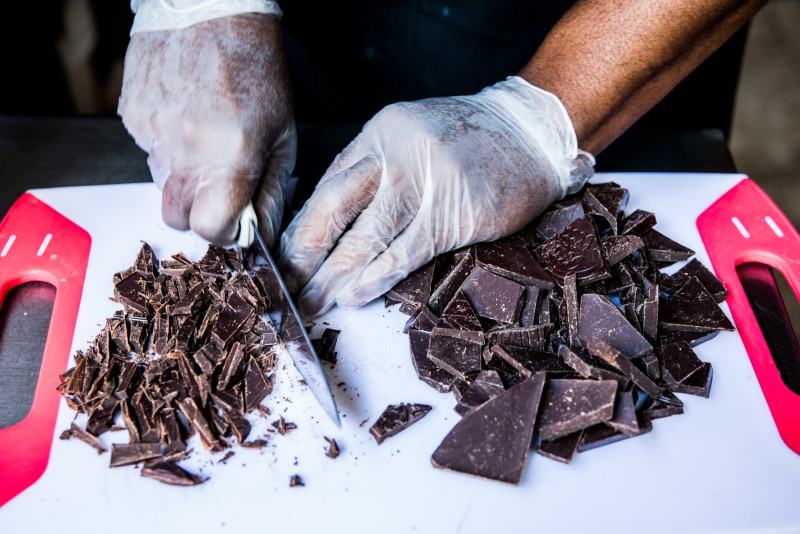
Today, Leroy runs the chocolate company he founded in 2016, Makaya, and the edible sculptures that come out of his workshop are a huge sensation at parties. His firm now has about 20 employees who share his passion.
“Even in cooking schools, we don’t learn this. I learnt everything here, and I am very, very proud,” said Duasmine Paul, 22, head of Makaya’s laboratory.
Echoes of car horns reach the ears of employees carefully sorting cocoa beans, a side effect of the chaotic traffic that paralyses the capital here at year-end.
From his workshop, where he also concocts chocolate-based cocktails, Leroy sees as sweet revenge the great marketing of his bars.
“The greatest pleasure is when, before travelling, Haitians come here to buy a lot to offer abroad. It’s become their pride. And also, when Europeans come and buy all the stock... I tell myself that I am doing a good job.” – AFP, December 27, 2020