


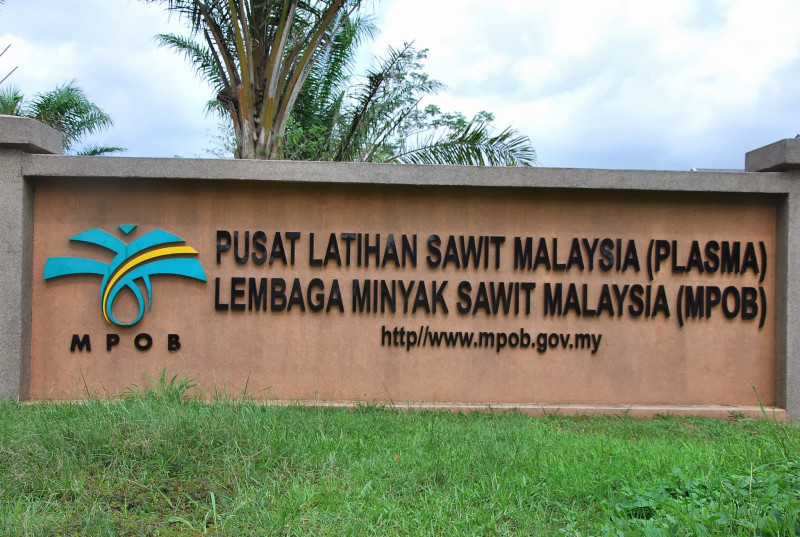
THE Malaysian Palm Oil Board (MPOB) has urged the government to introduce targeted fiscal and policy incentives in Budget 2026 to strengthen the palm oil industry’s competitiveness, improve productivity, and advance its sustainability credentials.
MPOB director-general Datuk Dr Ahmad Parveez Ghulam Kadir said support for trade promotion, branding, and replanting was essential to maintain Malaysia’s global standing amid tightening international sustainability standards and evolving consumer preferences.
“The government should intensify trade promotion and branding initiatives to position Malaysian palm oil as a sustainable, climate-smart commodity,” Bernama reported him saying. “Stronger branding reinforces Malaysia’s commitment to standards such as the Malaysian Sustainable Palm Oil (MSPO) certification and the National Traceability System (SKN), which improve transparency and accountability.”
Dr Ahmad Parveez said these efforts are critical to counteract negative campaigns in key export markets and assure buyers that Malaysian palm oil meets climate-conscious demands.
He also called for greater fiscal support to accelerate the growth of downstream sectors, including oleochemicals, specialty fats, bioenergy, and sustainable aviation fuel (SAF), which he described as key to ensuring long-term resilience.
“We urge more strategic support for logistics efficiency, including incentives for greener and lower-cost export solutions,” he added, noting that such efforts would address both current cost pressures and long-term positioning in global markets.
On improving yields, he proposed a 100 per cent reinvestment allowance (RA) for oil palm replanting to accelerate the replacement of ageing trees. “This initiative is expected to increase the oil palm replanting rate from 2.5 per cent, or 101,809 hectares, to 5.1 per cent, or 210,000 hectares annually.”
He called for RM280 million in dedicated funding under Budget 2026 to support replanting programmes for independent smallholders. “Recognising the urgent need to rejuvenate ageing plantations, the government remains committed to supporting independent smallholders,” he said.
A further RM100 million soft loan scheme was proposed to support small and medium-sized estates in undertaking replanting without undue financial strain. “In the medium to long term, this initiative will boost national crude palm oil (CPO) production through higher-yielding varieties and improved farm management.”
Dr Ahmad Parveez also recommended imposing a three per cent export duty on refined, bleached and deodorised (RBD) palm stearin to ensure sufficient domestic supply for the oleochemical sector, alongside a 10–20 per cent duty on the export of waste oils, such as used cooking oil (UCO) and palm oil mill effluent (POME oil), to promote local utilisation.
“These measures would support local production, encourage compliance with sustainability certification schemes such as MSPO and the International Sustainability and Carbon Certification (ISCC), and help transition the sector towards a circular, greener economy.”
He said Budget 2026 presents a timely opportunity to help the sector overcome external challenges, from trade restrictions to labour shortages, while strengthening its long-term productivity and market resilience.
“The focus should be on strengthening sustainability compliance through universal MSPO adoption and robust traceability systems,” he added. “Compliance with global environmental, social and governance (ESG) standards is vital to safeguard Malaysia’s position in international markets. Incentives for mechanisation, digitalisation and precision agriculture would further help reduce reliance on manual labour and improve operational efficiency.”
Prime Minister and Finance Minister Datuk Seri Anwar Ibrahim is expected to table Budget 2026 in Parliament on 10 October. - October 4, 2025















