


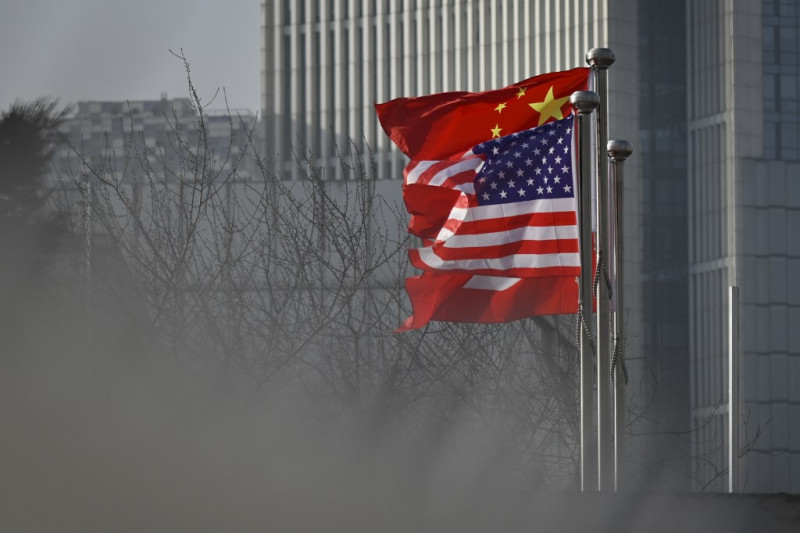
CHINA’S latest trade truce with the United States has removed a major deterrent for foreign investors, but global fund managers remain wary of jumping back into one of the world’s most volatile markets despite its strongest annual performance since 2019.
Thursday’s deal between Beijing and Washington – the longest ceasefire in years of fractious trade relations – will see the reduction of US import tariffs on Chinese goods, the easing of controls on China’s rare earth exports, and limited access for Chinese firms to American technology.
While the accord has been broadly welcomed, analysts said markets were unmoved by its specifics, noting that its symbolic breakthrough and renewed commitment to cooperation were the most significant outcomes.
“I don’t think this trade deal changes anything dramatically, but it helps move the needle on encouraging offshore investment in China,” Reuters cited Kristina Hooper, chief market strategist at the Man Group in New York saying on Friday. “There has been some concern among investors, particularly in the US, that at some point they would be forced to divest. So, any warming of relations between the two countries is a form of encouragement to invest in China.”
Despite this year’s 20 per cent rise in China’s blue-chip CSI 300 Index and a 31 per cent surge in Hong Kong’s Hang Seng – outperforming even the Nasdaq’s 23 per cent gain – foreign capital has remained selective. Investors have concentrated on artificial intelligence and domestic self-sufficiency sectors, while steering clear of broader market exposure.
Data from LSEG Lipper showed that offshore China-dedicated equity funds have seen outflows of USD 3.9 billion so far this year. Morningstar data revealed that large global funds held an average of just 1.43 per cent exposure to China as of September, far below its share of global GDP.
Cusson Leung, chief investment officer at Hong Kong-based KGI, said he viewed signs of easing Sino–US tensions positively. “I’ll continue building up China positions with today’s dip,” he said, adding that his confidence was rooted more in China’s economic recovery than the truce itself.
Analysts said the dual dynamic of competition and cooperation between the two superpowers may actually spur new investment opportunities.
“On both sides, they still have the mindset to strengthen the security of their own supply chains, and this brings opportunities for their domestic players in different sectors,” said Chaoping Zhu, global market strategist at JP Morgan Asset Management in Shanghai. “Maybe the competition will continue and at the same time, some kind of cooperation. I think the chance for upside might be a little larger than the chance for downside.”
BNP Paribas and Goldman Sachs analysts expect Chinese equities to advance further, buoyed by strong domestic drivers. Goldman forecast in a recent note that policy support, growth momentum, favourable valuations and capital inflows could lift mainland and Hong Kong markets by around 30 per cent by the end of 2027.
They added that persistent valuation gaps, or “China Discounts”, indicate investors are not overpaying for the potential upside from artificial intelligence and ample domestic liquidity.
“The combination of easing Federal Reserve policy and a weaker dollar may incentivise global funds to revisit their China investment case and repair their persistent underweight allocations,” the bank said.
Still, few believe the trade war is truly over.
“There’s not a lot of positivity getting priced in, as investors are still sceptical as to how long this unstable equilibrium sustains,” said Devesh Divya, FX strategist at Standard Chartered in Singapore. He added that while uncertainty had eased, the investment environment remained challenging for corporates and multinationals. - October 31, 2025















