


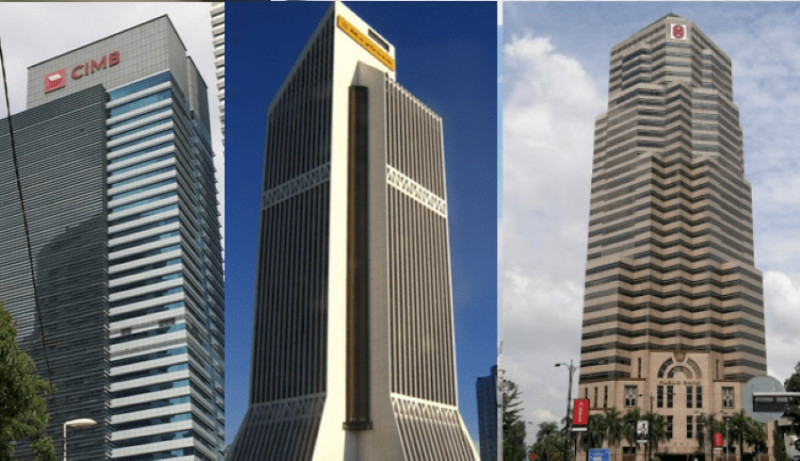
MALAYSIA’S banking system emerged from 2025 in robust shape, delivering stable loan expansion and sound asset quality despite a year defined by geopolitical anxieties and global trade frictions. Analysts observed that the sector remained profitable and well-capitalised, even as external pressures persisted.
A notable development within the domestic financial landscape was Bank Pembangunan Malaysia Bhd’s acquisition of Export-Import Bank of Malaysia and SME Bank in May 2025.
The transaction, completed based on the net tangible assets of both banks as at 31 December 2023, effectively brought the three development finance institutions under one umbrella. Following the consolidation, they are expected to be better positioned to close Malaysia’s development financing gaps.
Bank Muamalat Malaysia Bhd chief economist Dr Mohd Afzanizam Abdul Rashid told Bernama that the industry had “delivered a commendable performance” in the face of broad-based economic uncertainty triggered by United States tariff shocks and wider geopolitical concerns.
“Banks’ return on equity rose to 13.3 per cent in the third quarter, higher than the 12.4 per cent recorded in the same period in 2024,” he told Bernama.
“Total loan growth in January 2025 was 5.6 per cent. It hit a trough of 5.1 per cent in June 2025 but gradually improved to 5.5 per cent in September 2025.”
He noted that banks continued to post “respectable” sales throughout the year, although the total capital ratio eased from 18.4 per cent in January to 17.9 per cent in September.
AmBank Group chief economist Firdaos Rosli echoed the positive assessment, highlighting the sector’s resilience. He said the gross impaired loan ratio improved to 1.41 per cent in September 2025 from 1.43 per cent a month earlier, supported by a stable labour market where unemployment remained at 3.0 per cent.
Mohd Afzanizam said loan trends pointed to a sharp pick-up in non-household borrowing in 2025, especially from manufacturing-linked industries.
Loans to the non-household sector, which represent around 40 per cent of total lending, rose 5.5 per cent year-on-year in September 2025, compared with 5.0 per cent in January. Key contributors were food manufacturing, electrical machinery and apparatus, utilities and construction.
Household loans, which make up roughly 60 per cent of the total, expanded at 5.5 per cent in September, a moderation from 6.0 per cent at the start of the year amid slower growth in passenger vehicles, residential property and personal financing.
Firdaos said loan performance was driven strongly by residential, non-residential and automotive segments, buoyed by a wave of new car launches. He added that a steady Overnight Policy Rate supported sustainable property loan growth.
“A lower and predictable interest rate path buttresses loan growth throughout the year,” he said. “Within the household segment, credit cards remained the primary driver. The figure has hovered between 7.0 per cent and 9.0 per cent to date, suggesting that consumer spending remains strong.”
Bank Negara Malaysia trimmed the Overnight Policy Rate from 3.0 per cent to 2.75 per cent in 2025. Firdaos said the single rate cut in July had helped maintain confidence.
“This would lead to a stable net interest margin as banks can anticipate the future rate path and adjust accordingly,” he said. “It reduces the risk of a negative impact on earnings and can stimulate consumer confidence, as reflected in loan growth for credit card purchases.”
Mohd Afzanizam explained that an OPR reduction tends to compress margins in the near term because the rates on conventional and Islamic financing assets adjust immediately, whereas fixed deposit rates only decline once existing contracts mature.
“Thus far, economic growth has been quite stable and is likely to remain within the forecast range,” he said, noting that inflation has also stayed moderate. He added that while there appeared to be “no urgency” for further OPR cuts in the immediate term, Bank Negara Malaysia would remain alert to the full impact of US tariffs, which will be felt more acutely in 2026.
“While the OPR might stay in 2026, the possibility that it might be reduced cannot be totally ruled out.”
Firdaos said US trade measures would continue to shape the outlook. Although reciprocal tariffs escalated sharply after April 2025, trade bills peaked in June and have since moderated. Growth had already been slowing from its peak of 14.4 per cent in July 2024 due to both tariff effects and a high comparison base.
He noted that the US administration had granted numerous exemptions, with the latest announced on 14 November 2025.
“As US inflation remains elevated, we can expect more exemptions in the future. Investor confidence will likely be cautious, but it may not be as dire as initially feared.”
Firdaos stressed that while reciprocal tariffs may indirectly affect Malaysian banks through weaker trade bills, systemic risks remain contained. He said the industry’s diversified loan portfolios continue to mitigate the threat of credit slowdown and rising non-performing loans in exposed sectors. - December 8, 2025















