


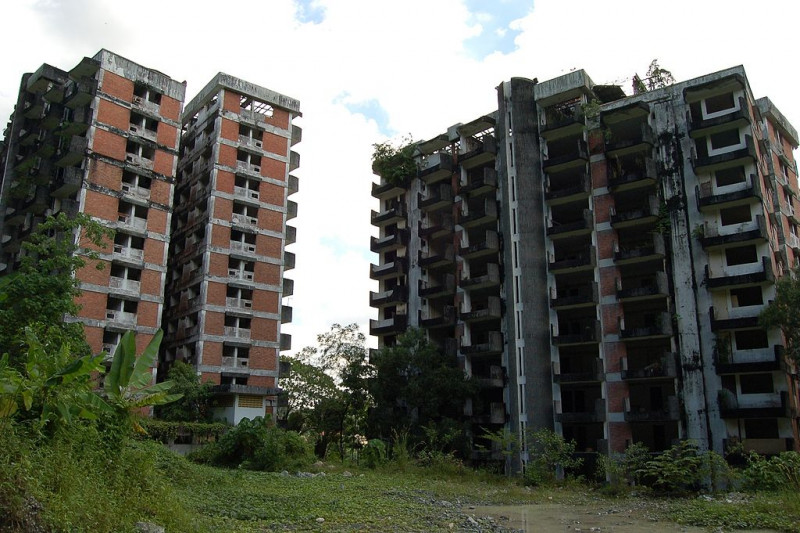
MANY Malaysians are unknowingly purchasing properties in high-risk residential areas, exposing themselves to potential disasters, according to Datuk Chang Kim Loong, honorary secretary-general of the National House Buyers Association (HBA).
High-risk locations encompass a broad spectrum of threats, including flood-prone neighbourhoods, hillside developments susceptible to landslides, and properties built on limestone formations vulnerable to sinkholes.
Additional hazards include proximity to geological fault lines, unstable soil, gas pipelines, electrical substations, reservoirs, industrial facilities, or chemical plants.
Homes bordering forests face increased fire risks, while those situated beneath or near high-voltage transmission lines carry further safety concerns.
"Despite these very real dangers, most buyers are not genuinely aware that they are purchasing property within such zones.
“Take hillside developments as an example. Homeowners are never issued a certificate confirming that a slope is safe both in its design and its final construction. Instead, they are expected to rely on the fact that approvals were granted by professionals and authorities," New Straits Times quoted Chang saying.
He emphasised that a reinforced slope may appear stable to an untrained eye, but structural weaknesses often remain hidden until a failure occurs.
"Residential safety is not a luxury and should never be treated as optional. It is a non-negotiable right. Until transparency, enforcement, and accountability become standard practice, many Malaysians will continue living on the edge, often without realising just how close they are to falling," he added.
Chang cited the 1992 Highland Towers collapse, which claimed 48 lives, as a stark reminder of the consequences of neglecting proper slope and drainage management.
He warned that similar incidents persist nationwide, with slope failures in Ampang’s Taman Bukit Permai, recurring floods in Shah Alam’s Taman Sri Muda, mudflows in Cameron Highlands, and sinkholes in Puchong and Rawang.
"Each of these incidents tells the same story: approvals were granted, early warnings were ignored, and ordinary residents ultimately paid the price," he said.
To prevent future tragedies, Chang called for stronger oversight of hillside and high-risk developments, including mandatory involvement of independent geotechnical experts, stricter enforcement of slope safety, and tougher penalties for negligent developers.
He also urged greater transparency in Environmental, Social, and Traffic Impact Assessments, which are typically submitted only to local authorities and rarely disclosed to buyers.
"Developers must conduct thorough ground investigations and implement proper mitigation measures before construction begins. Local councils should be willing to reject unsafe proposals outright instead of approving them with conditions that are rarely enforced," he said.
Chang emphasised that government agencies should provide transparent risk maps to enable homebuyers to make informed decisions.
He urged prospective buyers to recognise visually appealing developments that may be structurally hazardous, warning that such properties could be "beautiful disasters waiting to happen."
He also highlighted systemic shortcomings, including limited access to impact assessments, questionable independence of developer-commissioned studies, and inconsistent enforcement of building and planning regulations.
"Until accountability becomes real rather than theoretical, collaboration alone will never be enough," Chang said.
Practical measures, such as structured safety briefings or formal checklists during property handovers, could significantly reduce risks, but such safeguards are largely absent.
Homebuyers, he stressed, should have clear information on planning compliance, risk-zone status, mitigation works, insurance considerations, and past incidents in the area.
"Without mandatory disclosure, buyers remain dangerously exposed. Purchasing the wrong house in the wrong location can leave homeowners financially vulnerable long before their mortgage is fully paid off," Chang warned.
The HBA’s concerns underline the urgent need for systemic reform, stronger regulatory oversight, and transparency to protect Malaysian homeowners from avoidable hazards. - March 9, 2026















