


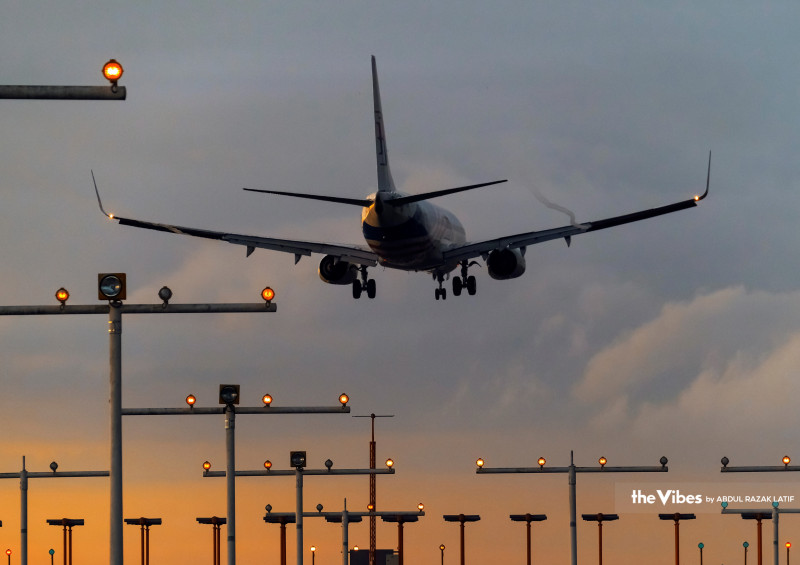
AIR New Zealand announced on Tuesday that it has increased airfares across domestic and international routes in response to the escalating Middle East conflict, highlighting the ripple effects of surging oil prices on the global aviation sector.
The national carrier said one-way economy fares have been raised by NZ$10 (US$5.92) on domestic flights, NZ$20 on short-haul international services, and NZ$90 on long-haul routes.
Reuters, on Tuesday, reported that the airline also warned that further fare adjustments could be necessary if jet fuel prices remain elevated, and it may modify its network and schedules as required.
“Jet fuel costs, which ranged between US$85 and US$90 per barrel prior to the conflict, have surged to between US$150 and US$200 per barrel in recent days,” the airline noted. “We have suspended our financial outlook for 2026 due to the uncertainty created by the conflict.”
The US-Israeli war on Iran has sent oil prices soaring, disrupting air travel, restricting airspace, and raising concerns about a potential slump in global passenger demand.
In response, some airlines, including Vietnam Airlines, have sought relief from local authorities, requesting the removal of environmental taxes on jet fuel to sustain operations.
Rising fuel costs have pushed operating expenses up by 60 to 70 per cent in Southeast Asia, with fuel suppliers struggling to meet demand.
Despite the price surge, Air New Zealand reported no disruption to domestic jet fuel supplies and said it is closely monitoring developments with suppliers and government agencies.
Markets have reacted to the conflict’s uncertainty, with airline shares showing signs of stabilisation after sharp sell-offs.
US President Donald Trump’s remarks that the war could end soon helped ease oil prices to around US$90 per barrel on Tuesday, down from US$119 on Monday.
Air New Zealand’s shares rose 2 per cent, while Korean Air Lines gained 6 per cent, Qantas Airways climbed more than 1 per cent, and Japan Airlines advanced over 2 per cent.
Fuel costs are the second-largest expense for airlines after labour, typically accounting for 20 to 25 per cent of operating costs.
While some Asian and European carriers hedge against oil price volatility, most US airlines largely abandoned hedging over the past two decades.
The conflict’s impact extends beyond ticket prices.
Airspace closures and capacity limitations are forcing reroutes, creating congestion on popular routes, and prompting travellers to reconsider summer plans.
Major Middle Eastern carriers such as Emirates, Qatar Airways, and Etihad handle significant volumes of Europe-to-Asia and Europe-to-Pacific traffic, meaning disruptions have broad global consequences.
Tour operators are responding to the uncertainty. South Korea’s HanaTour Service has cancelled group tours involving the Middle East, including Dubai transit itineraries, waiving cancellation fees for affected customers.
Thailand’s Ministry of Tourism warned that if the conflict continues for more than eight weeks, the nation could lose nearly 596,000 tourists, resulting in a loss of 40.9 billion baht (US$1.29 billion) in tourism revenue.
The rising cost of jet fuel, coupled with ongoing geopolitical tensions, underscores the fragility of the international travel industry as airlines and governments navigate one of the most challenging periods for global aviation in recent years. - March 10, 2026















