


THE Government has reiterated its commitment to cultivating a sustainable and high-value automotive sector, clarifying that its policies are designed to encourage long-term industrial growth rather than constrain foreign investment.
The Ministry of Investment, Trade and Industry (MITI), in a statement today, emphasised that global electric vehicle manufacturers, including BYD, have demonstrated confidence in the country, establishing operations at KLK TechPark in Tanjong Malim.
“Malaysia is genuinely eager to welcome world-class manufacturers not only for vehicle assembly but to engage across the entire automotive value chain, from component production and research and development to logistics and after-sales services, as we develop into a comprehensive and globally competitive automotive hub,” MITI said.
The ministry highlighted the pivotal role of national automakers, Proton-Geely and Perodua-Daihatsu, which together account for more than 63 per cent of domestic vehicle sales and sustain a workforce exceeding 700,000, contributing approximately four per cent to the national GDP annually.
Both manufacturers maintain high localisation rates, with Perodua-Daihatsu achieving over 75 per cent and Proton-Geely 76 per cent in 2025, while also developing new technologies through local joint ventures, supporting thousands of SMEs and skilled employees across Malaysia.
In response to social media speculation, MITI clarified that BYD was granted an interim Manufacturing License on 29 September 2025 to assemble energy-efficient vehicles, including electric and plug-in hybrid models, under an export-oriented production framework aligned with the National Automotive Policy and the New Industrial Master Plan 2030.
These conditions are not unique to BYD but apply consistently to all new automotive investments, promoting high-value manufacturing, local supply chain integration, and export participation.
“The approved sales volume for the domestic market is set at 10,000 units, corresponding to 20 per cent of BYD’s production capacity, with the remainder prioritised for exports.
“This is not a restriction but a mutually agreed framework to integrate Malaysia into global supply chains,” MITI said.
The ministry added that the minimum on-the-road price for domestic vehicles is RM100,000, ensuring that local assembly targets higher-value market segments while preserving space for national manufacturers.
MITI also stressed that there is no ban on new pickup truck models or brands and that the government’s approach is developmental rather than protectionist, designed to encourage localisation, advanced manufacturing, technology transfer, and sustainable long-term investment.
Malaysia remains open to foreign investment, with 14 of the 34 foreign automotive brands present in the market as of December 2025 being Chinese, including BYD and Chery.
The country offers an established industrial corridor, skilled technical workforce, robust infrastructure, and access to ASEAN’s regional market of over 600 million consumers, underpinned by 17 free trade agreements.
The ministry emphasised that its policies are intended to generate deep local value, foster technology transfer, and create sustainable jobs, while positioning Malaysia as a leading EV manufacturing hub in Southeast Asia.
“Malaysia remains open for any potential investors and businesses. We invite all global automotive manufacturers, including Chinese brands, to grow with us not only as a market but as a manufacturing and export base.
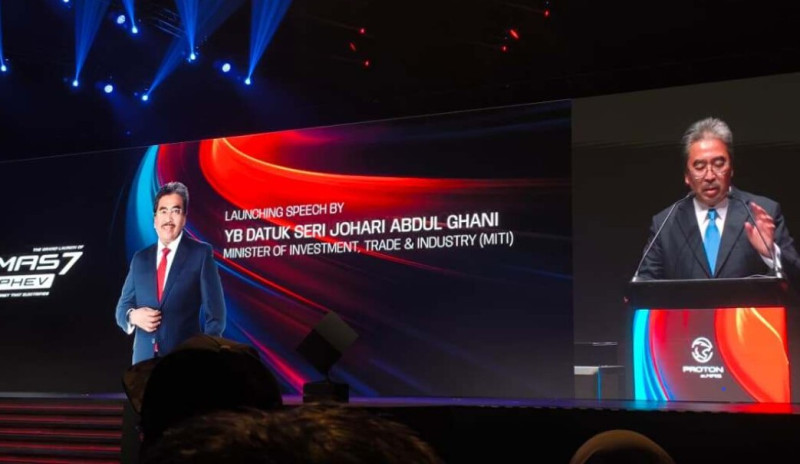
“Our policies are designed to create long-term, high-value contributions to the economy,” said the Minister of Investment, Trade and Industry Datuk Seri Johari Abdul Ghani.
The ministry is working towards a strategy to attract electric vehicle investment while balancing foreign participation with the development of its domestic automotive industry.
Technical policies and licensing conditions are incorporated into a clear narrative, retaining all key facts and official quotes while emphasising the country’s ambition to establish itself as a regional EV manufacturing hub - March 31, 2026















