


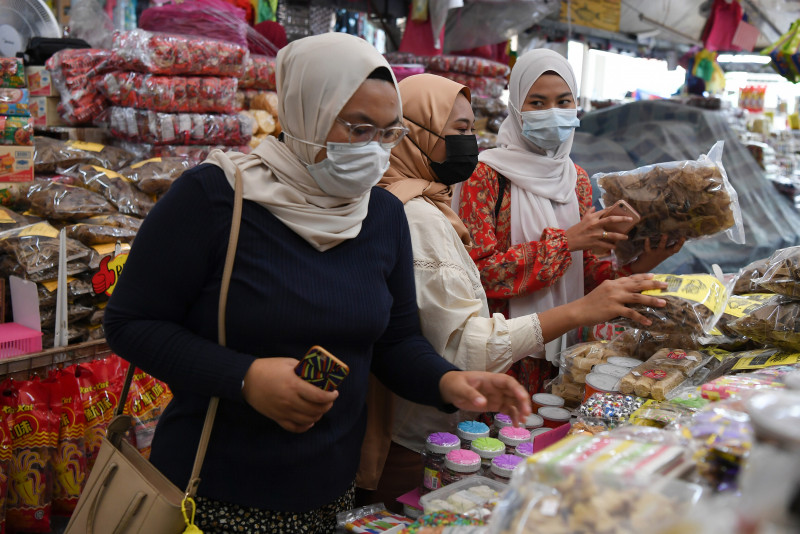
MALAYSIA’S retail sales grew by 3.7 per cent in the first quarter of 2026 compared with a year earlier, but the sector underperformed initial industry projections as higher living costs and rising fuel prices continued to dampen consumer purchasing power.
Retail Group Malaysia (RGM), in its June edition of the Malaysia Retail Industry Report, said the growth rate fell short of the 4.4 per cent forecast earlier by members of the Malaysia Retailers Association (MRA) and the Malaysia Retail Chain Association (MRCA).
The research house said retail performance during the quarter was mixed, despite support from two major festive seasons that typically drive consumer spending.
“Retail performance in the first quarter was mixed despite being supported by two major festive celebrations,” it said.
Among the strongest performers was the furniture, home furnishing, home improvement, and electrical and electronics segment, which posted a robust 9.3 per cent increase in sales.
The fashion and fashion accessories subsector, along with pharmacies, also recorded steady growth of 4.2 per cent each during the period.
Supermarkets and hypermarkets saw more modest growth of 1.4 per cent, while department stores recorded near-flat growth of 0.3 per cent.
However, department store operators that also run supermarkets posted a decline of 1.0 per cent in sales compared with the same period last year.
The personal care subsector remained under pressure, registering a 0.7 per cent contraction.
The weakest performance came from other specialised stores, which include photography shops, fitness equipment retailers, music instrument outlets, second-hand goods sellers, arts and crafts stores, and gift shops, with sales plunging 16.5 per cent.
The food and beverage (F&B) sector also delivered disappointing results despite increased dining-out activity during festive and school holiday periods.
Cafe and restaurant operators recorded a 4.6 per cent decline in sales in the first quarter, significantly below the earlier forecast of 1.9 per cent growth, while takeaway outlets, kiosks and stalls posted a 1.4 per cent drop.
RGM said higher fuel prices and rising living costs in the second quarter have made consumers more cautious, leading to reduced dining frequency and a shift towards lower-priced menu options.
At the same time, F&B operators have been grappling with rising costs of raw materials, rental, utilities, fuel, labour and packaging.
These pressures have forced some independent operators to shut down, while chain operators have closed underperforming outlets or opted not to renew rental agreements.
Some businesses have also reduced portion sizes, switched to cheaper ingredients, or raised prices to preserve profit margins.
Given the challenging operating environment, RGM expects further weakness in the sector, forecasting a 2.3 per cent decline in sales for cafes and restaurants in the second quarter, while kiosks, stalls and takeaway operators are projected to contract by 0.8 per cent.
For the full year 2026, RGM has revised its retail sales growth forecast downward to 3.8 per cent from an earlier 4.0 per cent, citing weakening consumer purchasing power driven by higher fuel prices and inflationary pressures.
It said fuel cost increases are expected to affect spending across multiple categories, including groceries, food and beverage, transport, healthcare, housing, education and travel.
However, the research group noted that government cash assistance through RM15 billion allocated for the Sumbangan Tunai Rahmah (STR) and Sumbangan Asas Rahmah (SARA) programmes in 2026 is expected to continue supporting household consumption.
It also said tourism-related spending under Visit Malaysia Year 2026 could provide additional support to the retail sector, although high fuel prices and potential flight disruptions may pose risks to both tourist arrivals and domestic travel activity. - June 12, 2026















