


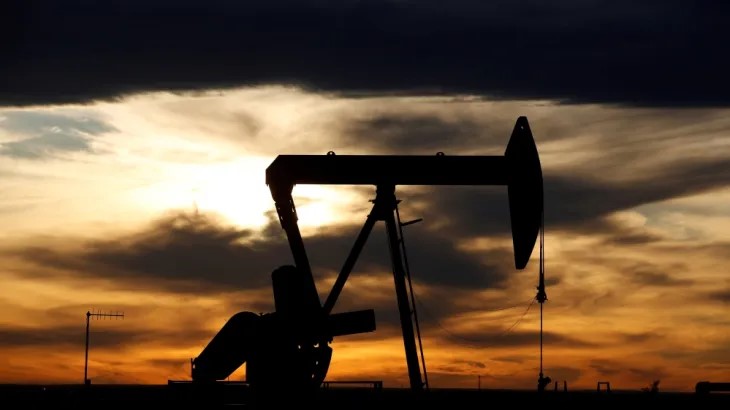
OIL prices held near recent highs on Monday as investors weighed persistent risks to Middle Eastern supplies against stalled US-Iran negotiations and a sharp slowdown in shipping through the strategically vital Strait of Hormuz.
Brent crude edged 0.1 per cent lower to US$88.48 a barrel, while US West Texas Intermediate (WTI) traded above US$82, after both benchmarks posted gains of more than 5 per cent last week.
Uncertainty over the reopening of the Strait of Hormuz continued to keep traders on edge, with shipping traffic through the waterway severely curtailed following attacks on tankers.
The disruption has heightened concerns over potential supply shortages, although continued crude movements and alternative supply routes have helped contain the immediate impact on global availability.
US President Donald Trump has maintained pressure on Iran as negotiations aimed at ending the conflict and restoring normal shipping through the Strait remain stalled. Iran, meanwhile, has called on Washington to accept defeat, while shipping traffic through the waterway remains at only a fraction of normal levels.
The geopolitical risks have also been compounded by fresh Israeli strikes in Lebanon, adding to concerns that the conflict could spread further across the region.
Market attention is now focused on whether the disruption will persist long enough to create a sustained supply deficit and exert further upward pressure on energy prices.
US Dollar Weakens As Fed Rate-Hike Bets Ease
In currency markets, the US dollar remained under pressure as softer US economic data reduced expectations of a Federal Reserve rate hike this year.
The dollar index fell 0.1 per cent to around 99.519, close to its lowest level of the month, while the yen strengthened 0.2 per cent to 159.055 against the US dollar.
The yen largely shrugged off weaker-than-expected Japanese economic growth after data showed the country's gross domestic product expanded at an annualised 1.1 per cent in the second quarter.
Capital Economics analysts described the Japanese figures as a mixed bag, noting that the economy expanded at a decent pace while increased government consumption suggested expansionary fiscal policies were beginning to have an impact.
The euro was little changed at US$1.1573, while sterling gained 0.1 per cent to US$1.3546. The Australian and New Zealand dollars were broadly flat at US$0.7085 and US$0.5891 respectively.
Weaker US non-farm payrolls in July, together with relatively subdued consumer and producer inflation, have reduced expectations of a Federal Reserve rate increase at its September meeting.
Fed funds futures were pricing a 66.9 per cent probability that policymakers would leave interest rates unchanged at the September meeting, up from 47.6 per cent a month earlier, according to the CME Group's FedWatch tool.
The shift in expectations has provided support for non-yielding assets such as gold, which posted a weekly gain on Friday.
Investors will scrutinise minutes of the Federal Reserve's July meeting, due on Wednesday, for further clues about the central bank's monetary policy outlook.
The dollar was also little changed against the offshore yuan at 6.7428 ahead of China's latest economic data.
Elsewhere, bitcoin and ether each fell about 0.3 per cent to US$62,854.48 and US$1,874.80 respectively.
Geopolitical Risks Remain In Focus
Beyond energy and currencies, investors remained alert to diplomatic efforts to contain the Middle East conflict.
US President Donald Trump's envoys met Egyptian, Qatari and Turkish mediators in Cairo on Sunday in an effort to advance his Gaza peace plan, even as Israel continued airstrikes in the territory.
For financial markets, the immediate concern is whether continued regional conflict will further disrupt energy supplies and fuel inflationary pressures, potentially complicating the Federal Reserve's interest-rate decisions.
With oil prices holding near recent highs and traffic through the Strait of Hormuz severely curtailed, traders are expected to remain highly sensitive to any signs of further escalation or progress towards a diplomatic settlement. - August 17, 2026















