


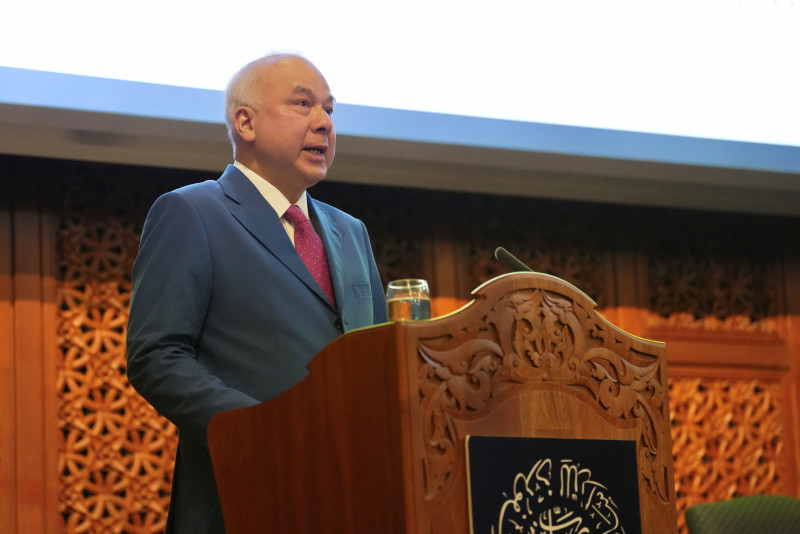
ISLAMIC finance should provide a model for reshaping how the world mobilises private capital for climate action, with risk-sharing and long-term impact taking precedence over short-term returns, His Royal Highness Sultan of Perak Sultan Nazrin Muizzuddin Shah has said.
Sultan Nazrin said the transition to a resilient and sustainable future could not be financed by public treasuries alone, making private capital indispensable despite its tendency to favour investments offering immediate and certain returns.
“This is where, I believe, the principles of Islamic finance can lead the way.
“A tradition that binds finance to the real economy, insists that capital serve productive and beneficial ends, shares risk rather than shifting it onto others, and forbids the reckless and the harmful – this is most well suited to the demands of sustainable investment,” Sultan Nazrin said.
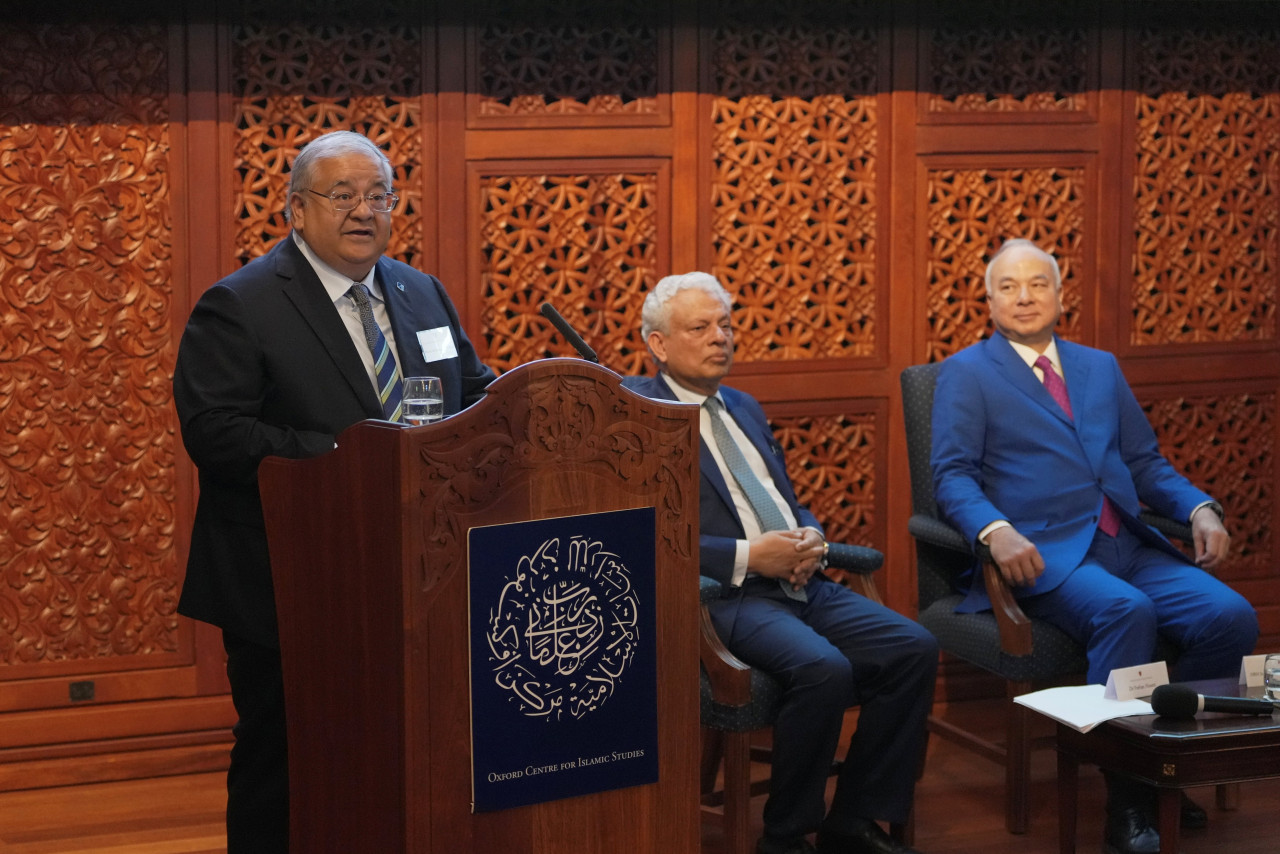
He was delivering a special address at the 17th Securities Commission Malaysia-Oxford Centre for Islamic Studies (SC-OCIS) Roundtable in Oxford, United Kingdom, themed “Building Resilience: The Intersection between Capital, Climate and Innovation”.
Sultan Nazrin said the approach should translate into greater use of sukuk structures, waqf-based mechanisms and green and blue financing instruments that put impact ahead of commercial convenience.
“(We need) a financial industry that innovates boldly and prices climate risk honestly -- modelled on Islamic finance,” he said.
He said what much of the world had only recently begun calling responsible finance had long been regarded by the Islamic tradition as finance conducted properly.
Sultan Nazrin also questioned whether conventional measures of economic growth adequately captured the costs imposed on society and the environment.
“Does growth adequately reflect the full consequences of our actions? Is there such a thing as responsible growth?” he asked.
He said markets had too often left society to absorb the consequences of economic activity, including pollution, displacement and degraded ecosystems.
Islamic principles, he said, recognised humans not as owners but as guardians of the Earth, with a responsibility to use resources wisely without harming future generations.
Sultan Nazrin said responsible investment was also critical to financing rapid advances in clean energy, efficient agriculture, water management and resilient construction.
“The technologies of clean energy, efficient agriculture, water management and resilient construction are advancing at a pace that would have seemed improbable only a generation ago,” he said.
He noted that wind, solar and other renewable sources overtook coal as the world’s leading source of electricity in 2025.
“For me, this is a sign of progress, and a cause for optimism,” he added.
Sultan Nazrin said the urgency of climate financing was particularly evident in Malaysia, where floods — the country’s main climate risk — had caused more than US$2.2 billion in losses over the past five years.
He said Malaysia was also experiencing stronger monsoon winds and landspouts, underscoring the need to build resilience into investment and economic planning.
He called for clearer adaptation frameworks and market infrastructure to measure and verify climate outcomes, saying private investors could not effectively finance risks and projects that could not be measured.
Sultan Nazrin also urged the financial industry to develop outcome-linked and resilience-based sukuk, blended finance and other innovative structures to make climate adaptation investments more bankable.
Malaysia has already built a substantial sustainable Islamic finance market.
At the same event, Securities Commission Malaysia chairman Datuk Mohammad Faiz Azmi said outstanding sustainable and responsible investment (SRI) sukuk had risen from US$1.3 billion in 2020 to US$12.9 billion last year.
Malaysia now ranks among the region’s top three issuers of green, social, sustainability and sustainability-linked bonds and sukuk, accounting for about a quarter of regional issuances.
Under the SC’s Capital Market Masterplan 2026-2030, Malaysia aims to mobilise about US$24.6 billion over five years towards climate transition, adaptation, resilience and social development.
Faiz said the SC was also developing a proposed “Sukuk Prisma SDG” framework for non-ringgit sukuk issuances, aimed at translating national priorities into clear and globally recognisable purposes aligned with the United Nations Sustainable Development Goals.
The proposed framework would be Shariah-based and aligned with the SC’s Maqasid al-Shariah Guidance, the ASEAN Taxonomy and international green bond principles. - September 13, 2026















