WASHINGTON – The United States trade deficit surged in 2020 to its highest level since 2008, the government reported on Friday, in the pandemic-roiled year that upended the global economy.
Business shutdowns and global shipping disruptions caused by Covid-19 were a major factor for most of last year, leading to the largest trade gap since the start of the global financial crisis, according to US Commerce Department data.
And even as activity began to pick up, exports lagged and services continued to suffer, while the easing of US pandemic restrictions fueled a rebound in imports.
The total US trade deficit in goods and services surged, adding US$102 billion (RM415.19 billion) to the 2019 total to reach US$678.7 billion, as exports fell more than imports, according to the data.
“Still-weak global demand and travel restrictions will keep trade subdued in the near term, with total exports clearly lagging imports,” said James Watson of Oxford Economics.
The report showed exports of goods and services fell by nearly US$400 billion to US$2.1 trillion last year, while imports fell just under US$300 billion to US$2.8 trillion.
Weak net exports subtracted from gross domestic product (GDP) growth last year, and economists caution it could get worse before it gets better, especially since services like travel and hotels may be the last to improve.
“Restrictions are being relaxed in the US, which will likely provide further support to imports, but ongoing lockdowns across Europe could weigh on export demand in the near term,” said Rubeela Farooqi of High Frequency Economics.
Failed China policy?
In the most fraught US trade relationship under former president Donald Trump, the gap with China in goods trade alone narrowed by US$34.4 billion to US$310.8 billion last year, on a modest gain in exports and a small decline in imports, the data showed.
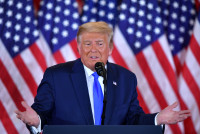
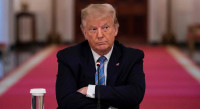
Trump promised his “America First” focus on domestic industry and aggressive trade policies and high tariffs on allies and rivals alike would boost sales of American-made products, but the total trade gap increased every year he was in office with the exception of 2019.
After a steady escalation of trade tensions and tariffs on hundreds of billions of dollars in annual goods imports, Trump signed a “phase one” deal with Beijing a year ago, but many economists say the policy has failed to achieve its stated goals and in some areas did more harm than good.
“Rather than benefiting the economy, it has reduced US economic growth and employment, resulting in an estimated peak loss of 245,000 jobs,” the US-China Business Council said in a report last month, adding that “Tariff rates remain at a multi-decade high” in spite of the agreement.
Course correction
What kind of course correction President Joe Biden will press for in trade relations remains unclear, but he has indicated he will not immediately roll back tariffs on China.
His policy efforts may be delayed as his pick to lead the Commerce Department has been held hostage by Republicans demanding he continue the hardline stance against Chinese tech firm Huawei.
Republican Senator Ted Cruz put a hold on Biden’s nomination for Gina Raimondo to head the agency that will play a key role in trade relations, effectively blocking her confirmation.
“I'll lift the hold when the Biden admin commits to keep the massive Chinese Communist Party spy operation Huawei on the Entity List,” Cruz tweeted.
Trump barred Huawei from the US market, pressured allies to shun its telecom networking gear and imposed a succession of escalating sanctions including cutting off access to vital components, saying the equipment could be used by China for espionage. – AFP, February 7, 2021