


Business

China consumer prices fall in January on drop in services costs

Overall CPI drop is below analysts’ expectations, while domestic demand continues improvement despite fresh virus surge

Updated 5 years ago · Published on

China consumer prices fall in January on drop in services costs
Despite China’s consumer prices falling in January, food prices rose on-month due to approaching festivities, Covid-19 outbreaks and low temperatures that hit production and transportation. – Pixabay pic

BEIJING – China’s consumer prices fell in January after a brief improvement at the end of last year, as the world’s second-biggest economy was hit by the impact of fresh coronavirus outbreaks and decreased travel, official data showed today.

The consumer price index (CPI), a key gauge of retail inflation, fell 0.3% from a year ago, with the National Bureau of Statistics saying that residents travelled less given a series of lockdowns in northern China and more restrictions.

Consumers also did not spend as much on services compared with last year – when the impact of Covid-19 had not yet been felt.

“With the Spring Festival (Lunar New Year) taking place in February this year, and the impact of a partial epidemic spread, there were decreases in both residents’ travel and some contact-based services,” said NBS senior statistician Dong Lijuan.

Dong added that air ticket prices fell 33.2% on-year, while travel agency fees dropped 9.9%.

The overall CPI drop was below analysts’ expectations of prices being unchanged, according to a Bloomberg poll, and down from December’s 0.2% on-year rise.

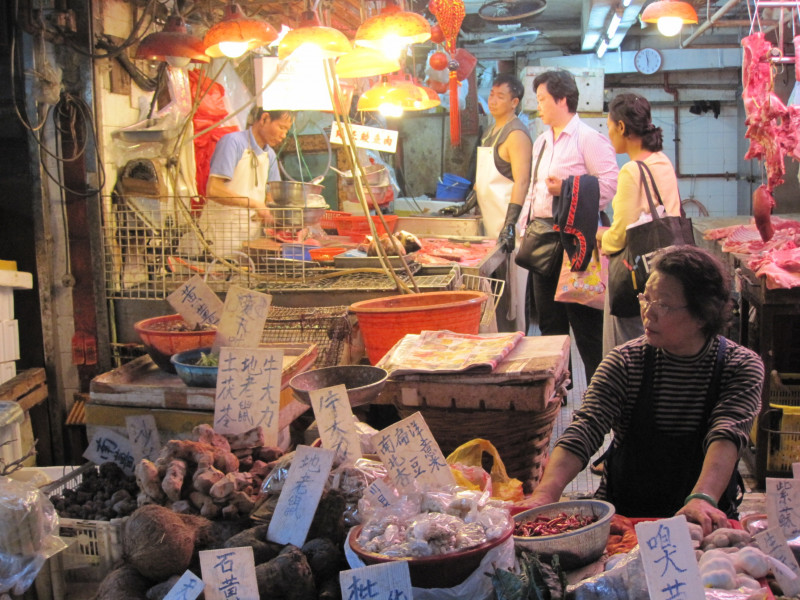
But NBS figures show that food prices rose on-month due to approaching festivities, local Covid-19 outbreaks and low temperatures that hit production and transportation.

“Consumer price inflation is likely to spike in February as the New Year effect reverses,” said analysts at Capital Economics, adding the slip into deflation is “no cause for concern”.

Pork prices, however, were lower than last year, continuing a downward trend after costs of the staple meat in China rocketed due to an African swine fever outbreak.

There was also further improvement in factory-gate prices, NBS data showed, with the producer price index (PPI) increasing on-year for the first time since January 2020, in line with analysts’ expectations.

Official data showed PPI, a key measure of input costs, came in at 0.3% in January, having fallen every month but January in 2020 owing to a collapse in demand as the virus broke out around the country and then the world. 

The figure was in line with forecasts and a big improvement in the 0.4% fall seen in December.

Dong noted domestic demand continued to improve, and so did the prices of commodities such as crude oil and iron ore, driving a monthly increase. – AFP, February 10, 2021


Related News

Business / 21h

Pengerang needs to create wider economic value, not just store more oil, says expert

Opinion / 1d

The Jensen Huang case: The racial trope driving US - China relations

Opinion / 1w

Honey Trap: Western media response to Jensen Huang and the latest China spy story

Business / 2w

Energy disruptions - a timely reminder that energy, economic security are interconnected - Minister

Opinion / 3w

Will the AI bubble burst?

Events / 4w

Shanghai trade fair returns to KL with 500 exhibitors in November

Spotlight

Malaysia

Anwar receives special recognition as 10,000 Muslims gather in Putrajaya

Malaysia

Video of elderly man being assaulted goes viral on social media

Malaysia

The wide reach of corruption and organised crime in the country

Malaysia

Malaysia pushes to give smaller economies stronger voice in Asia-Pacific trade – Anwar

Malaysia

No tsunami threat to Malaysia after 5.4-magnitude earthquake hits Banda Sea

Malaysia

Who is calling the shots in Negeri Sembilan as Ismail’s position comes under scrutiny?

Opinion

Ayob Khan: When the uniform comes off, the principles remain

Malaysia

MySiren to send emergency alerts to compatible phones nationwide from Nov 29 test

You may be interested

Business

Govt moves to block seven US-blacklisted entities from accessing local data centres

Business

Oil extends losing streak for fourth week as supply glut outweighs Middle East tensions

Business

Matrix Concepts ranked among top ten developers at TDPA 2026

Business

NexG share surge puts spotlight on RM7.5b takeover proposal as SC examines trading

Business

Oil origin claims need official documents, not trader papers, says expert

Business

Three Malaysian firms placed on US trade blacklist over advanced technology diversion fears

Business

Pengerang needs to create wider economic value, not just store more oil, says expert

Business

Oil retreat offers limited relief as ringgit weakens against firmer US dollar


















