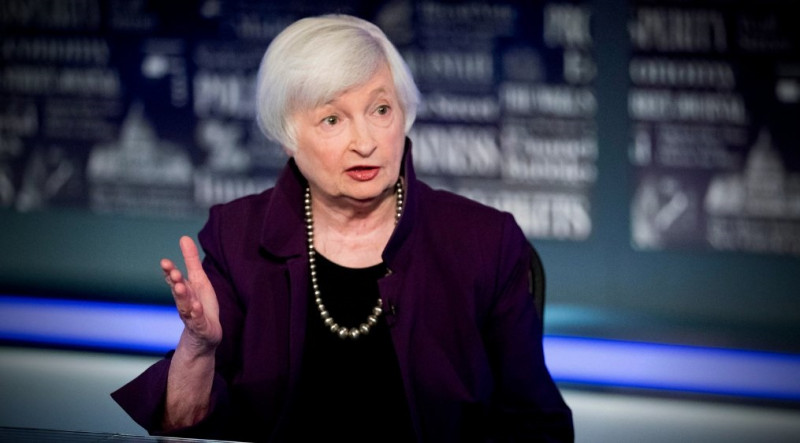
WASHINGTON – Raising US corporate taxes could spur similar moves by other countries and hasten the establishment of a global minimum corporate tax, US Treasury Secretary Janet Yellen said yesterday.
US President Joe Biden last week unveiled a US$2 trillion (RM8 trillion) jobs and infrastructure plan paid for in part by an increase in the domestic corporate tax rate, and by sweeping up corporate profits stashed overseas.
A unilateral tax hike could put the US at a disadvantage with other nations with lower rates, but Yellen predicted the proposed increase would encourage other countries to end the competition over providing corporations the most favourable tax climate.
“We’re not only ending America’s participation in the race to the bottom. The tax plan incentivises the whole world to give up the game,” Yellen told reporters.
“Destructive tax competition will only end when enough major economies stop undercutting one another and agree to a global minimum tax, and this proposal includes some powerful incentives for nations to do that.”
Yellen earlier this week announced that Washington would push the G20 for an agreement on a global minimum corporate tax to stem the erosion of government revenues, and the bloc is expected to unveil a proposal by July.
G20 finance ministers met yesterday and agreed to continue work on a “globally fair, sustainable and modern international tax system”.
US Deputy Treasury Secretary Wally Adeyemo told CNBC News that the US had confidence in being able to implement a global minimum corporate tax based on “the fact that so many of Secretary Yellen’s counterparts from around the world joined her in calling for this in the last few days”.
However, he rejected the idea of a tax that would target only tech giants: “We’ve made that clear to our European counterparts that we will not support a tax that is discriminatory towards American companies, but we do support taxation to make sure that companies have to pay a level rate throughout the world.”
Competing on infrastructure
Biden’s plan partially reverses former president Donald Trump’s 2017 corporate tax cut, a reform Yellen said cost the US jobs and tax revenue.
“The law actually incentivises American companies to offshore their workers and investments and to shift their profits to tax havens,” she said.
The reform drove corporate tax collections to their lowest level since World War II, she said.
Under current law, the US would lose roughly US$2 trillion of corporate tax base over the coming decade “because of this broken system”.
“Simply put, by choosing to compete on taxes, we’ve neglected to compete on the skill of our workers and the strength of our infrastructure,” Yellen said.
Companies currently pay an effective tax rate of just under 8%, according to details of the plan released by the Treasury.
The proposal raises the official rate to 28% from 21%, and increases the minimum tax on businesses to 21%, “ending the ability of multinationals to shield income in tax havens from US taxes”, Treasury said.
However, the US tax rate would remain about seven percentage points below its level prior to the 2017 overhaul.
Another provision is targeted at companies that report massive incomes but pay no taxes at all, a practice Biden has vowed to end.
Under the plan, corporations that report “sky-high profits” to shareholders – known as their “book income” – but report no taxable income, would pay a minimum tax of 15% on those profits.
“In a typical year, around 200 companies report net income of US$2 billion or more,” the US Treasury said.
But due to loopholes in tax law, “a significant share pay zero or negative federal income taxes, despite reporting hundreds of billions of dollars in profits to shareholders”, according to the report. – AFP, April 8, 2021