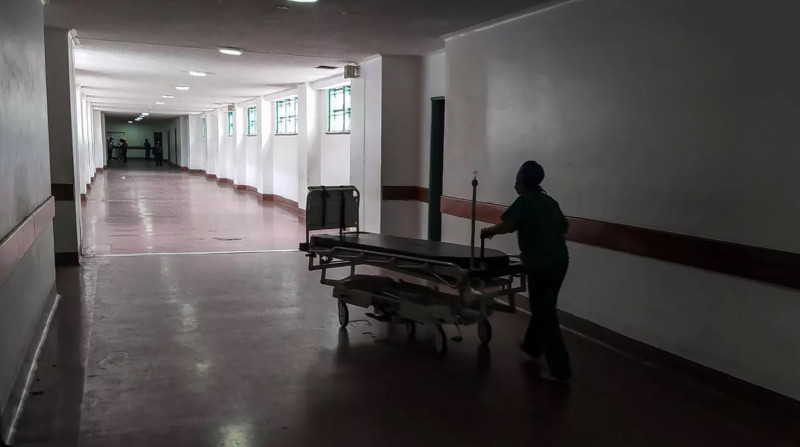
CARACAS – Johany Perez, a stretcher-bearer at a hospital here, earns a “starvation wage” of the minimum US$2.20 (RM9) a month in a Venezuela wracked by a severe economic crisis.
However, like many staff at the Clinical University Hospital, one of the most important doctor training centres in the South American country, he won’t quit.
“I love my hospital,” said the 30-year-old, who has spent 14 years working there.
But he laments the “starvation wage that they call minimum and has become even more minimum because you can’t eat with this”.
“We’re working free for the state,” he added bitterly.
Many working in the public sector need to take second or even third jobs to make ends meet.
The highest monthly salary for someone working in public administration is less than US$10, despite a 300% raise ordered by President Nicolas Maduro.
In Venezuela, the minimum wage is not even enough to buy a kilogramme of meat.
Meanwhile, the average private sector salary is around US$50.
Hyperinflation and monetary depreciation have rendered many state salaries in Venezuela almost worthless.
Perez is paid in the devalued bolivar currency in a country where US dollars have become the most common legal tender.
“It’s not enough for anything,” Matilde Lozada, 54, a nurse of 25 years, told AFP.
“Not even to come to work.”
Her salary amounts to what she spends on public transport in just six days.
Still, she won’t stop going. And she’s not alone. Doctors, janitors, kitchen staff, they all keep turning up to work despite the miserable pay.
“It’s our calling,” said a nurse who spoke to AFP on condition of anonymity.
She has looked for home services jobs that pay US$15 to US$20 per visit.
‘We’re like MacGyver’
The hospital, within the complex of the Central University of Venezuela – a Unesco World Heritage Site – is an architectural gem.
But its corridors are a testament to years of neglect: filthy walls, broken floors, elevators out of order.
Doctors and nurses say they bring their own chlorine from home to clean machinery.
They have no stitches, gloves or masks and only two of eight operating rooms are functioning.
“We get everything from donations,” said a doctor, who asked to remain anonymous for fear of reprisals from the management.
“The hospital is destroyed,” he added.
A patient who twice survived cancer died of a urinary infection because the hospital didn’t have antibiotics.
The government blames the situation of US sanctions against the country, although the crisis began long before they were imposed.
The rate of post-graduate students dropping out of their studies rose during the pandemic, particularly in states where parents can no longer afford to fund their children’s studies.
“Those guys don’t eat,” said the doctor, who is paid 25 cents a month to lecture.
He lives off what he earns in his private practice.
Staff have to club together to repair equipment.
“We’re like MacGyver, mending everything,” joked the doctor in reference to the ingenious 1980s television character.
US$5 treat
Unions have asked for university salaries to be paid in dollars but to no avail.
“We’ve written to the state, the United Nations, we’ve been to many entities,” said Chaira Moreno, a unionist who works in the hospital’s administration.
She’s hung lists of her demands in her dingy office but the hospital director Jairo Silva told her he’d run out of money.
Some people still remember what Venezuela was like before the economic rot set in over the last decade.
“I built my house with what I used to earn... and I ate out. I haven’t been able to do that for the last eight years,” said one kitchen worker.
She rents out two rooms in her house for US$20 a month each and also works as a janitor in a private college.
The day before she treated herself to a new bra.
“It cost me US$5, I’m still sweating,” she joked, pulling out the bra strap from under her uniform to show it off. – AFP, June 11, 2021