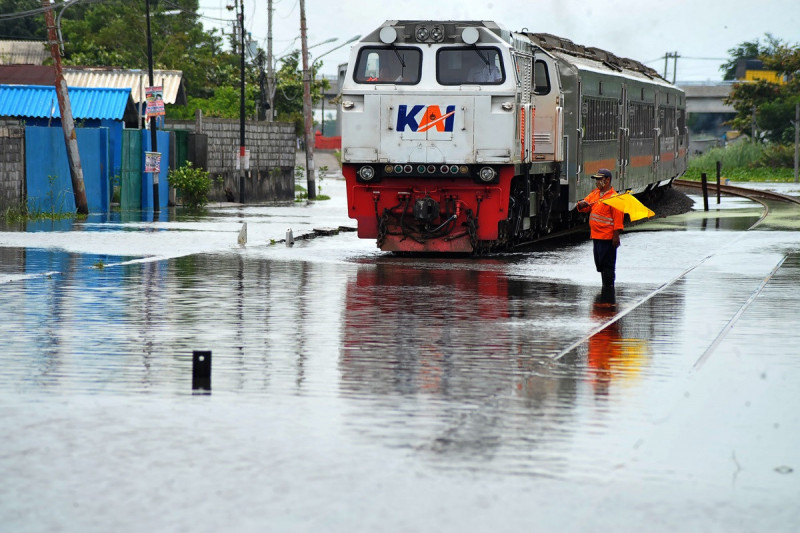
PARIS – Climate change is already taking a toll on the global economy, and forecasts predict worse to come by mid-century, according to a draft report by the UN’s Intergovernmental Panel on Climate Change (IPCC), seen exclusively by AFP.
Here are some of the report’s findings on economic impacts:
Global
Climate-boosted extreme weather events – cyclones, droughts, flooding – have already sapped both short- and long-term economic growth, especially in developing countries.
- Average global economic damage due to floods over the last several decades has averaged US$50 billion (RM207 billion) to US$350 billion annually, depending on methods of calculation
- In a worst-case scenario, if Earth’s temperature rises 4°C above pre-industrial levels, global GDP could decline 10% to 23% compared with a world without warming
- Expected damage for 136 major coastal cities were calculated at between US$1.6 trillion and US$3.2 trillion by 2050 in a worst-case scenario without adaptation
- Storm surges enhanced by sea level rise threaten more than 40% of coastal nuclear power plants worldwide
- Nearly 14% of the world’s sandy beaches face severe erosion by 2050 under a moderate greenhouse gas emissions scenario
Africa
Heat and scarce rain are adding obstacles to Africa’s development path.
- Per capita GDP for Africa would have been nearly 14% higher over the period 1991-2010 without man-made global warming
- A decline in rainfall from 1960 to 2000 – attributed in part to climate change – widened the GDP gap between Africa and the rest of the developing world by 15% to 40%
- Adaptation costs in Africa are projected to increase tens of billions of dollars per year if global warming exceeds 2°C
- Capping global warming at 1.5°C rather than 2°C would increase per capita GDP 5% across nearly all African countries by mid-century, and up to 20% by 2100
Asia Pacific
Rising sea levels are threatening to cause havoc across Asia-Pacific, from Bangladesh to China to Australia.
- In South Asia, water-related impacts of climate change are expected to reduce GDP up to 2.5% by 2050 if global warming exceeds 2°C
- Asia could experience direct losses of nearly US$170 billion with half-a-metre of sea level rise, and damage will be concentrated in China. The IPCC projects sea level rise up to 1.1m by 2100
- In Bangladesh, one-third of power plants may need to be relocated by 2030 due to sea-level rise
- Climate-induced loss in Australian agricultural and labour productivity could exceed US$14 billion by 2030 and US$159 billion by 2050
Elsewhere
Melting Arctic ice and other climate calamities loom large over Russia, Europe and the United States.
- Damage from multiple climate hazards to transport, energy, industry and social infrastructure in Europe could triple by 2030, and increase tenfold by 2100
- In Russia, nearly 20% of critical infrastructure will be damaged by degraded permafrost by 2050
- Under a worst-case emissions scenario, hundreds of billions of dollars in annual economic damage in the US are anticipated by 2090
- By mid-century, regardless of emissions scenario, permafrost thaw across the Arctic region is projected to damage nearly 70% of infrastructure. – AFP, June 23, 2021