Business

Emerging East Asia bond yields diverge on back of virus uncertainty: ADB

Covid-19 pandemic, inflationary pressure denting markets, says monitor

Updated 5 years ago · Published on

Emerging East Asia bond yields diverge on back of virus uncertainty: ADB
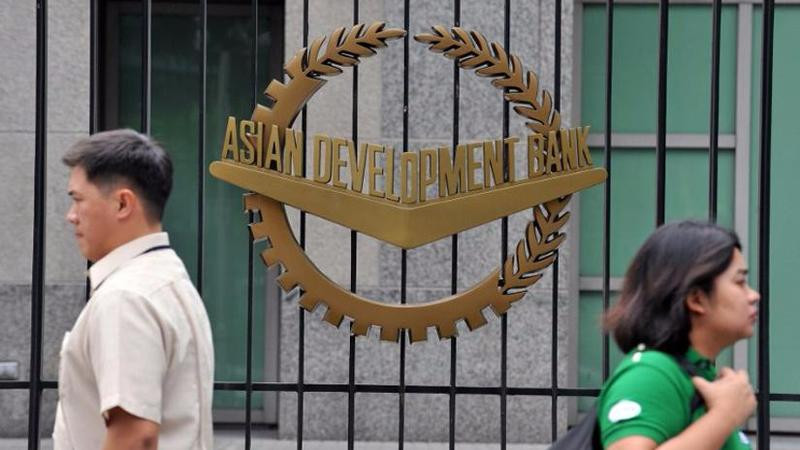
China, Hong Kong, Indonesia and Vietnam posted declines in yields on both short-term and long-term government bonds, while South Korea, Malaysia and the Philippines posted increases, reports ADB. – AFP pic, June 25, 2021

KUALA LUMPUR – Bond yields in emerging East Asia diverged due to market-specific factors, while uncertainty surrounding the Covid-19 pandemic and concerns over inflationary pressure led to subdued investor sentiment, said the latest issue of the Asian Development Bank’s (ADB) Asia Bond Monitor.

It said yields on short-term (two-year) government bonds from February 28 to May 21 largely declined on the back of accommodative liquidity conditions while uneven recovery paths and market-specific economic fundamentals caused long-term (10-year) government bond yields to diverge across the region. 

In a statement today, ADB chief economist Yasuyuki Sawada said persistent uncertainty surrounding the Covid-19 pandemic and looming inflationary pressure had put a dent in emerging East Asia’s bond markets, leading to volatility and mixed performances in the region’s financial and equity markets.

“The region’s fast-expanding sustainable bond markets, underpinned by a growing interest in a green and inclusive recovery and conducive public policies, will be key to the region’s efforts to rebuild smarter after the pandemic,” he said. 

According to Asia Bond Monitor, the Covid-19 pandemic remains the biggest risk to East Asia’s bond markets, with renewed outbreaks, the emergence of new virus variants, and slower-than-expected vaccine roll-outs in some markets hampering economic activity.

It noted that concerns that the US Federal Reserve might tighten monetary policy in response to growing inflationary pressure are weighing on financial conditions in the region.

The report noted that China, Hong Kong, Indonesia and Vietnam posted declines in yields on both short-term and long-term government bonds, while South Korea, Malaysia and the Philippines posted increases.

Meanwhile, sustainable bond markets in Asean plus China, Hong Kong, Japan, and South Korea totalled US$301.3 billion (RM1.2 trillion) at the end of the first quarter, growing 13.2% from the previous quarter and 44.5% from a year earlier.

The region’s market now accounts for about 20% of the global sustainable bond market, making it the largest after Europe’s. – Bernama, June 25, 2021


Related News

Business / 2mth

Moves in major US stock indices could spill into currency and gold markets

Off beat / 4mth

Malaysia’s ‘Happy Potato’ enters 4 new markets in 6 months

Malaysia / 6mth

Covid-19 cases in Malaysia stable, no deaths recorded this year – MOH

Malaysia / 8mth

Guan Eng outlines two possibilities to help Malaysia navigate economic challenges

Malaysia / 9mth

Bad move to channel EPF dividends into Account 3 for festive withdrawals, cautions economist

Malaysia / 11mth

Country in good position to tap new markets under Anwar’s leadership, says Dep Minister

Spotlight

Malaysia

Anwar receives special recognition as 10,000 Muslims gather in Putrajaya

Malaysia

Video of elderly man being assaulted goes viral on social media

Malaysia

The wide reach of corruption and organised crime in the country

Malaysia

Malaysia pushes to give smaller economies stronger voice in Asia-Pacific trade – Anwar

Malaysia

No tsunami threat to Malaysia after 5.4-magnitude earthquake hits Banda Sea

Malaysia

Who is calling the shots in Negeri Sembilan as Ismail’s position comes under scrutiny?

Opinion

Ayob Khan: When the uniform comes off, the principles remain

Malaysia

MySiren to send emergency alerts to compatible phones nationwide from Nov 29 test

You may be interested

Business

Govt moves to block seven US-blacklisted entities from accessing local data centres

Business

Oil origin claims need official documents, not trader papers, says expert

Business

Three Malaysian firms placed on US trade blacklist over advanced technology diversion fears

Business

Oil prices holds above US$80 as Hormuz attacks heighten supply concerns

Business

Oil retreat offers limited relief as ringgit weakens against firmer US dollar

Business

NexG share surge puts spotlight on RM7.5b takeover proposal as SC examines trading

Business

Pengerang needs to create wider economic value, not just store more oil, says expert