Business

Asean may lose US$28 tril if climate change uncurbed: Deloitte

Report shows how region can instead gain US$12.5 tril economic value over next 50 years by limiting rising global temperatures

Updated 5 years ago · Published on

Asean may lose US$28 tril if climate change uncurbed: Deloitte
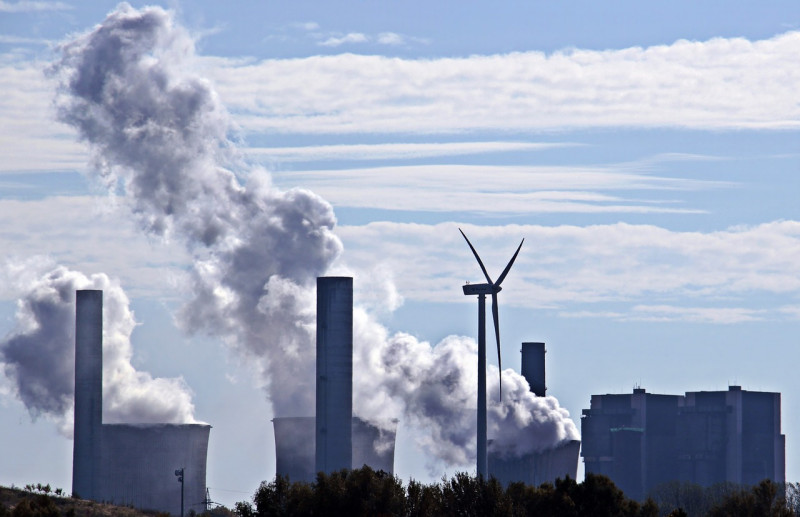
If no action is taken on climate change, average global temperatures may rise by 3°C or more by the end of this century. – Pixabay pic, August 27, 2021

HANOI – Southeast Asia must act now to prevent the region from losing US$28 trillion (RM117.4 trillion) in economic potential over the next 50 years due to unmitigated climate change, according to a new Deloitte Economics Institute report.

In the report, titled “Southeast Asia’s turning point: How climate action can drive our economic future”, the institution also revealed how the region could instead gain US$12.5 trillion in economic value over the same period by limiting rising global temperatures and realising its potential to export decarbonisation to the world. 

According to the Vietnam News Agency, Deloitte Southeast Asia CEO Philip Yuen stressed that Asean countries must act quickly – within the next 10 years – to circumvent irreversible damage from climate change.

He said the bloc’s economies have made strong commitments in this regard, but each country is at a different stage on the sustainability journey, owing to their unique geographic and economic circumstances.

To alter the trajectory, Southeast Asia must seize the opportunity to lead the charge and take climate action, said Yuen.

If no action is taken on climate change, average global temperatures could rise by 3°C or more by the end of this century. This will make it harder for people to live and work as sea levels rise, crop yields fall, infrastructure is damaged, and other challenges emerge.

Deloitte’s research also showed that if governments, businesses and communities act boldly and rapidly in the next decade to address climate change, average global temperature rises can be limited to around 1.5°C by 2050 – a scenario that would minimise the impact of climate change for Asean and the rest of the world. 

At the same time, the region can achieve significant economic growth by supplying products and services, as well as providing financing solutions, to a world that will need to limit temperature increases. – Bernama, August 27, 2021


Related News

Malaysia / 5d

Santiago demands answers over Malaysia’s bid to bring Myanmar back into Asean

Events / 1mth

‘We need to work together to combat threats of climate change’ – Sarawak deputy premier

Events / 1mth

MBPP President shares valuable insights at zero-waste conference 

Events / 1mth

Sarawak and Sabah play key roles in weathering climate change

Business / 2mth

Malaysia must give investors clearer exits to unlock ASEAN capital

Opinion / 2mth

Merdeka: This is our Malaysia – and you will not take it from us

Spotlight

Malaysia

Anwar receives special recognition as 10,000 Muslims gather in Putrajaya

Malaysia

Video of elderly man being assaulted goes viral on social media

Malaysia

The wide reach of corruption and organised crime in the country

Malaysia

Malaysia pushes to give smaller economies stronger voice in Asia-Pacific trade – Anwar

Malaysia

No tsunami threat to Malaysia after 5.4-magnitude earthquake hits Banda Sea

Malaysia

Who is calling the shots in Negeri Sembilan as Ismail’s position comes under scrutiny?

Opinion

Ayob Khan: When the uniform comes off, the principles remain

Malaysia

MySiren to send emergency alerts to compatible phones nationwide from Nov 29 test

You may be interested

Business

Oil retreat offers limited relief as ringgit weakens against firmer US dollar

Business

Pengerang needs to create wider economic value, not just store more oil, says expert

Business

MAG to add 10 Boeing Dreamliners in long-term fleet expansion drive

Business

NexG share surge puts spotlight on RM7.5b takeover proposal as SC examines trading

Business

Oil prices holds above US$80 as Hormuz attacks heighten supply concerns

Business

Govt moves to block seven US-blacklisted entities from accessing local data centres

Business

Three Malaysian firms placed on US trade blacklist over advanced technology diversion fears