Business

Malaysia’s Services Producer Price Index up 0.5% in Q4 2021

Rise driven by growth in accommodation, F&B service activities, among others, says Stats Dept

Updated 4 years ago · Published on

Malaysia’s Services Producer Price Index up 0.5% in Q4 2021
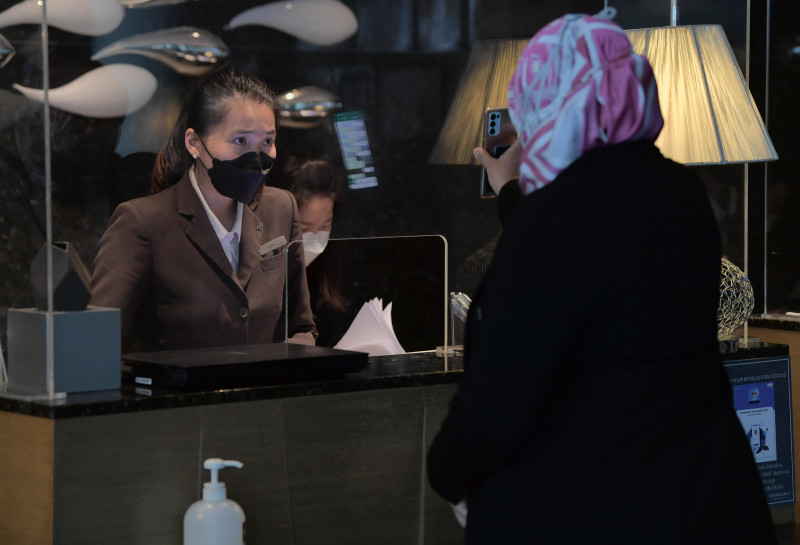
Datuk Seri Mohd Uzir Mahidin says the lifting of travel restrictions and reopening of the tourism sector in mid-September 2021 led to the increase in the accommodation and F&B services index. – Bernama pic, February 7, 2022

KUALA LUMPUR – Malaysia’s Services Producer Price Index (SPPI) went up 0.5% in the fourth quarter of 2021 (Q4 2021) to 110.7 compared to 110.1 in Q4 2020, the Statistics Department said.

The uptrend in the SPPI – which measures the average changes in the price of service charged by the local service industries in Malaysia – was driven by growth in the indices of accommodation and food and beverage service activities (1.5%) and transportation (0.7%).

In a statement today, chief statistician Datuk Seri Mohd Uzir Mahidin said the rise in the restaurants and mobile food service activities (1.8%) and the lifting of travel restrictions as well as the reopening of the tourism sector in mid-September 2021 led to the increase in the accommodation and F&B services index.

As for the transportation subsector, the increase was mainly driven by the higher prices in freight transport by road (1.2%) and passenger air transport (0.8%), he said.

“Other subsectors that also recorded increases are real estate activities (0.6%), education (0.5%), health (0.2%), and professionals (0.1%).

“However, the index for arts, entertainment, and recreation subsector showed a decrease of 0.2%, while the information and communication index remained unchanged,” said Uzir.

He noted that overall, the SPPI increased by 0.3% in 2021, compared to 0.5% in 2020.

In terms of quarter-on-quarter (q-o-q), the SPPI rose by 0.2%, contributed by the transport subsectors (0.8%), accommodation and F&B service activities (0.7%), and real estate activities (0.2%).

He added that the professional, education, and health subsectors registered a marginal increase of 0.1% q-o-q, while the arts, entertainment and recreation index declined by 2.2% q-o-q and the information and communication index remained unchanged. – Bernama, February 7, 2022

Related News

Malaysia / 3y

Average household income rose to RM8,479 last year: Statistics Dept

Business / 3y

Malaysia posts RM222.1 bil total trade in June 2023: DoSM

Business / 3y

Unemployment numbers down in April 2023: Statistics Dept

Business / 3y

Malaysia’s inflation rises to 3.3% in 2022: DoSM

Business / 3y

Malaysia posts RM4.3-bil current account surplus in Q1 2023: DoSM

Business / 3y

Wholesale, retail trade sales surge 12.8% to RM407.4 bil in 1Q

Spotlight

Malaysia

Durian trader in Raub loses nearly half a million in AI-based investment

Malaysia

GPS banks on fresh faces, retains Abang Johari and key incumbents for Sarawak polls

Malaysia

Anwar yet to accept Anthony Loke's resignation, says DAP chief remains on leave

Business

MAG to add 10 Boeing Dreamliners in long-term fleet expansion drive

Malaysia

Court imposes gag order in case against AKPS chief Mohd Shuhaily

Malaysia

Cyber scam losses hit estimated RM19.7b in a year

Malaysia

Govt approves RM451m for projects in 66 opposition-held constituencies

By Alfian Z.M. Tahir

You may be interested

Business

MAG to add 10 Boeing Dreamliners in long-term fleet expansion drive

Business

Oil prices holds above US$80 as Hormuz attacks heighten supply concerns

Business

Oil retreat offers limited relief as ringgit weakens against firmer US dollar

Business

South Korean robotic parking company explores opportunities in Malaysia

By Ian McIntyre

Business

Matrix Concepts founder honoured as FIABCI Malaysia Property Man of the Year 2026

Business

Pengerang needs to create wider economic value, not just store more oil, says expert

Business

NexG share surge puts spotlight on RM7.5b takeover proposal as SC examines trading

Business

Govt moves to block seven US-blacklisted entities from accessing local data centres