


Business

China to curb financing for emerging economies, says French study

Insurance-credit group Euler Hermes estimates 10 such countries will face combined deficit of US$47 billion

Updated 6 years ago · Published on

China to curb financing for emerging economies, says French study
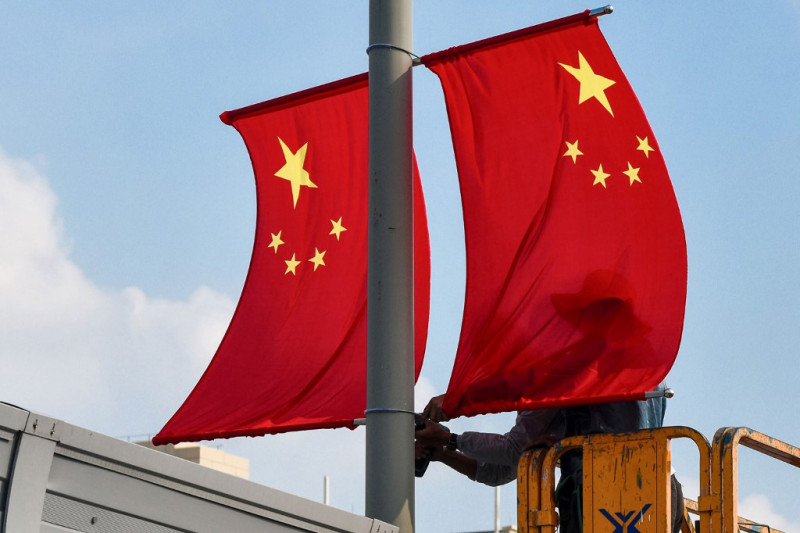
Chinese financing under the strategic Belt and Road Initiative has led to an improved economic infrastructure for nations like Ethiopia, Kenya and Zambia. – AFP pic, November 12, 2020

PARIS – Emerging economies will have to find fresh sources of funds as China reduces investments and loans, said a study by French insurance-credit group Euler Hermes this week.

The company expects China “to slow its international engagement over the next few years”, according to a report released on Tuesday.

This is because as Chinese economic growth slows, Beijing must also deal with “a heavy domestic debt burden”, said the report.

Euler Hermes estimated that 10 emerging-market countries in Africa and Latin America that have received substantial Chinese aid since 2010 will face a combined deficit of US$47 billion (RM194.25 billion).

In recent years, China has been the world’s leading creditor to poorer countries, accounting for 63% of all such loans extended by G20 countries at the end of 2019, said the World Bank last month.

Countries including Ethiopia, Kenya and Zambia have improved economic infrastructure thanks to Chinese financing that is part of the strategic Belt and Road Initiative, said Euler Hermes.

But, Beijing has also lent money to countries that might not be able to pay it back, such as Angola, Argentina and Ecuador, which offered guarantees in the form of natural resources that could prove hard to recover if they default on their loans.

Euler Hermes’ data showed that Ethiopia and Zambia, in particular, relied on Chinese funding, as it represented 49% and 45%, respectively, of all loans contracted abroad.

For Kenya, the rate was 37%, and Angola, 30%.

Angola has large hydrocarbon reserves, and a little more than two-thirds (67.6%) of its exports last year were to China. – AFP, November 12, 2020


Related News

Opinion / 1d

The Jensen Huang case: The racial trope driving US - China relations

Opinion / 1w

Honey Trap: Western media response to Jensen Huang and the latest China spy story

Opinion / 3w

Will the AI bubble burst?

Events / 4w

Shanghai trade fair returns to KL with 500 exhibitors in November

Malaysia / 1mth

PM Anwar loses beloved elder brother; Idrus Ibrahim passes away

Malaysia / 2mth

Anwar asks Loke to reconsider resignation over Najib pardon

Spotlight

Malaysia

Anwar receives special recognition as 10,000 Muslims gather in Putrajaya

Malaysia

Video of elderly man being assaulted goes viral on social media

Malaysia

The wide reach of corruption and organised crime in the country

Malaysia

Malaysia pushes to give smaller economies stronger voice in Asia-Pacific trade – Anwar

Malaysia

No tsunami threat to Malaysia after 5.4-magnitude earthquake hits Banda Sea

Malaysia

Who is calling the shots in Negeri Sembilan as Ismail’s position comes under scrutiny?

Opinion

Ayob Khan: When the uniform comes off, the principles remain

Malaysia

MySiren to send emergency alerts to compatible phones nationwide from Nov 29 test

You may be interested

Business

Pengerang needs to create wider economic value, not just store more oil, says expert

Business

Oil retreat offers limited relief as ringgit weakens against firmer US dollar

Business

Oil origin claims need official documents, not trader papers, says expert

Business

Matrix Concepts ranked among top ten developers at TDPA 2026

Business

NexG share surge puts spotlight on RM7.5b takeover proposal as SC examines trading

Business

Oil extends losing streak for fourth week as supply glut outweighs Middle East tensions

Business

Three Malaysian firms placed on US trade blacklist over advanced technology diversion fears

Business

Govt moves to block seven US-blacklisted entities from accessing local data centres


















