Business

Indonesia cuts rates to bolster recession-hit economy

Bank Indonesia cuts key lending rate by 25 basis points to 3.75%

Updated 6 years ago · Published on
Indonesia cuts rates to bolster recession-hit economy
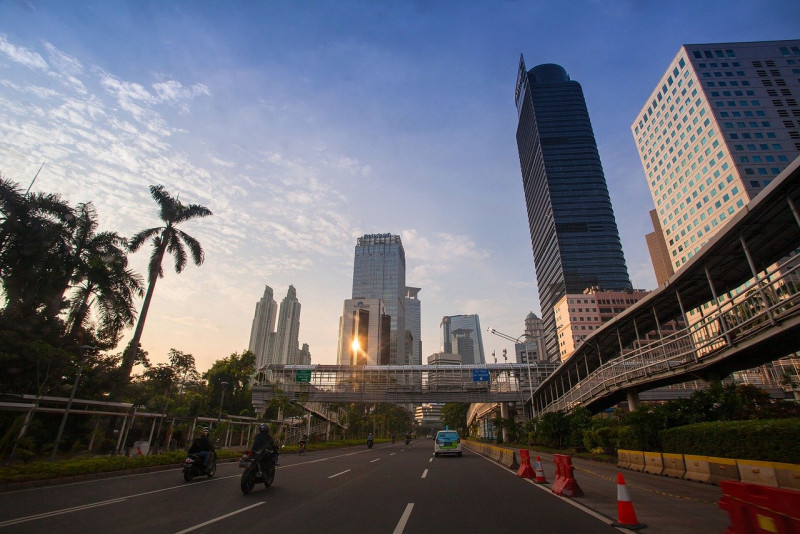
Central bank governor Perry Warjiyo says the government has unveiled more than US$48 billion in stimulus to help offset the impact of the virus, which forced large-scale restrictions that hammered growth –  Pixabay pic, November 19, 2020  

JAKARTA – Indonesia’s central bank slashed interest rates again Thursday after the Covid-19 pandemic pushed Southeast Asia's biggest economy into its first recession in more than 20 years.
Bank Indonesia cut the key lending rate by 25 basis points to 3.75%, its fifth rate reduction this year, as the global health crisis slams the brakes on growth.
The move comes two weeks after Indonesia posted its second consecutive quarter of negative growth – the country's first recession since the 1998-99 Asian financial crisis.
“This is a follow-up step to accelerate the national economy's recovery,” said central bank governor Perry Warjiyo.
The government has unveiled more than US$48 billion in stimulus to help offset the impact of the virus, which forced large-scale restrictions that hammered growth.
Several million Indonesians have been laid off or furloughed as the vast country, home to nearly 270 million people, has battled to contain the crisis.
Covid-19 infections have topped 480,000 with more than 15,000 deaths, putting Indonesia among the worst-hit Asian countries.
However, the true scale of the crisis is widely believed to be much bigger in Indonesia, which has one of the world's lowest testing rates.
“There is little doubt the economy is in need of further support,” research house Capital Economics said of the latest rate cut.
“While the number of new virus cases appears to be easing, the situation is far from being under control ... Some restrictions will have to remain in place and daily life is unlikely to return to normal soon,” it added. – AFP, November 19, 2020

Related News

Business / 10h

Pengerang needs to create wider economic value, not just store more oil, says expert

Malaysia / 6d

Indonesia should compensate Malaysians for the prolonged haze – Guan Eng

Business / 2w

Energy disruptions - a timely reminder that energy, economic security are interconnected - Minister

Malaysia / 1mth

Haze: Details of Malaysia’s aid to Indonesia to be finalised this Monday – Fahmi

Malaysia / 1mth

Is Malaysia 'soft' in tackling the haze? The government has done everything it possibly can – PM Anwar

Malaysia / 1mth

Malaysia’s K-shaped economy: Growth without shared prosperity?

Spotlight

Malaysia

Anwar receives special recognition as 10,000 Muslims gather in Putrajaya

Malaysia

Video of elderly man being assaulted goes viral on social media

Malaysia

The wide reach of corruption and organised crime in the country

Malaysia

Malaysia pushes to give smaller economies stronger voice in Asia-Pacific trade – Anwar

Malaysia

No tsunami threat to Malaysia after 5.4-magnitude earthquake hits Banda Sea

Malaysia

Who is calling the shots in Negeri Sembilan as Ismail’s position comes under scrutiny?

Opinion

Ayob Khan: When the uniform comes off, the principles remain

Malaysia

MySiren to send emergency alerts to compatible phones nationwide from Nov 29 test

You may be interested

Business

Oil extends losing streak for fourth week as supply glut outweighs Middle East tensions

Business

Oil origin claims need official documents, not trader papers, says expert

Business

NexG share surge puts spotlight on RM7.5b takeover proposal as SC examines trading

Business

Pengerang needs to create wider economic value, not just store more oil, says expert

Business

Oil retreat offers limited relief as ringgit weakens against firmer US dollar

Business

Govt moves to block seven US-blacklisted entities from accessing local data centres

Business

Matrix Concepts ranked among top ten developers at TDPA 2026

Business

Three Malaysian firms placed on US trade blacklist over advanced technology diversion fears