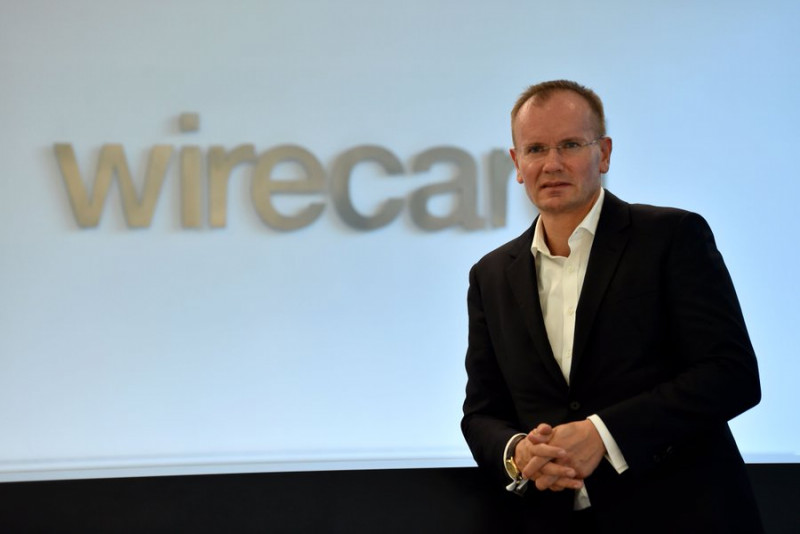
BERLIN – Markus Braun, the former chief executive of disgraced payments giant Wirecard, refused to answer questions from German lawmakers on Thursday over the massive accounting fraud that brought down his firm.
Wirecard collapsed in June after it was forced to admit €1.9 billion (RM9 billion) missing from its accounts did not exist, and MPs have opened a full parliamentary inquiry into possible regulatory failings that allowed the cheating to go unnoticed for years.
"I will not comment on further details and am currently invoking my comprehensive right to refuse to give evidence," Braun said in a statement to the Bundestag lower house of parliament.
Austria-born Braun, dressed in all black, added that he would speak with Munich prosecutors "soon". He denies any wrongdoing.
Braun had travelled to Berlin from the Bavarian city of Augsburg, where he is in pre-trial detention on suspicion of organised commercial fraud and market manipulation.
Absent from the proceedings was fellow prime suspect and Austrian Jan Marsalek, Wirecard's mysterious former chief operating officer who has been on the run since the scandal broke and features on Interpol's most wanted list.
"Apart from Jan Marsalek, Markus Braun is probably the main person responsible for the Wirecard fraud who can shed light on what happened," said lawmaker Frank Schaeffler from the pro-business FDP party, a member of the parliamentary finance committee running the inquiry.
The Wirecard implosion, which has drawn comparisons with the Enron accounting scandal in the US in the early 2000s, has been described as "unparalleled" in Germany by Finance Minister Olaf Scholz.
The fallout has prompted Scholz to announce plans to overhaul finance watchdog Bafin, accused of lax oversight of Wirecard, and introduce stricter rules for auditing firms.
But Scholz has himself faced scrutiny from MPs eager to know when exactly government officials learned of the Wirecard suspicions and whether authorities failed to act on early warning signs.
Even Chancellor Angela Merkel has been embarrassed by the scandal, after it emerged that she promoted Wirecard on a trip to China in September 2019, when the firm was eyeing a foray into the Chinese market -- and when journalists were already raising questions about its books.
Founded in 1999, Bavarian start-up Wirecard rose from a company piping cash to porn and gambling sites to a respectable electronic payments provider that edged traditional lender Commerzbank out of the blue-chip DAX 30 index in 2018.
A rising star in the fintech sector, Wirecard boasted a market valuation of more than 23 billion euros at one point – outweighing giant Deutsche Bank.
The fraud revelations later sent Wirecard's share price tanking by 99 percent and it was booted off the DAX last August.
Clouds started to gather in early 2019 with a series of Financial Times articles alleging accounting irregularities in its Asian division, headed by COO Marsalek.
In a much-criticised move, Bafin responded by announcing a probe into FT journalists.
The Wirecard scam unravelled in June when longtime auditors Ernst & Young said they were unable to find 1.9 billion euros of cash meant to be sitting in trustee accounts at two Philippine banks, forcing Wirecard to admit the money did not exist.
The company filed for insolvency and Braun resigned.
Braun was arrested days later and initially released on a five-million-euro bail.
But he was re-arrested in July after Munich prosecutors widened their investigation against him and other top Wirecard executives.
They stand accused of inflating revenues and profits to hide years of losses and con investors into providing funds of up to 3.2 billion euros ($3.7 billion) to Wirecard, money that is likely lost forever.
According to Munich prosecutors, the trickery started as far back as 2015.
Braun, former accounting head Stephan Freiherr von Erffa and Oliver Bellenhaus, the managing director of a Dubai-based Wirecard subsidiary, are all in custody in Germany.
All three have been called as witnesses in the parliamentary inquiry, along with several other ex-employees.
Another top Wirecard figure, former finance chief Burkhard Ley, was released on bail earlier this month.
The fugitive Marsalek meanwhile is never far from the headlines, with a steady stream of media revelations about his colourful lifestyle and reported connections to Austrian and Russian intelligence services adding another layer of intrigue to the Wirecard saga. – AFP, November 22, 2020