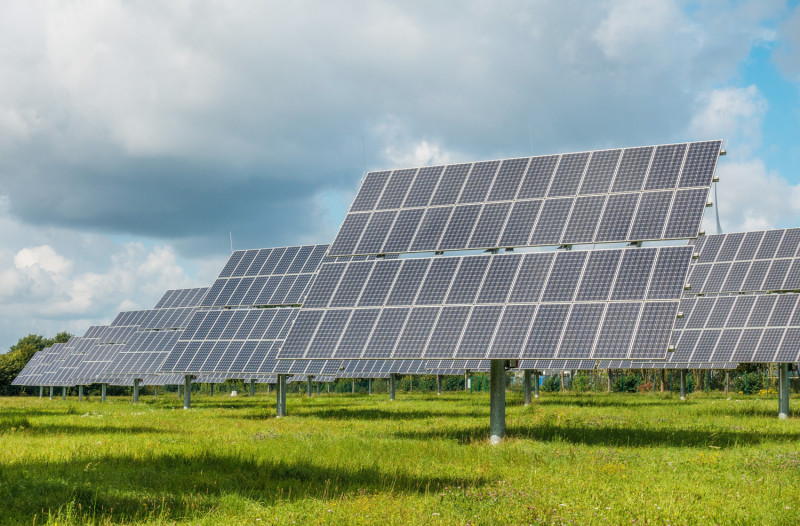
KUALA LUMPUR – Policy support and the improving competitiveness of renewable energy will fuel Emerging Asia’s (EM Asia) long-term transition to a lower carbon energy mix, albeit at different speeds, according to Moody’s Investors Service in a report.
However, it said that key challenges remain for certain countries, including inconsistent policy implementation and high leverage to fund capacity expansion for renewables.
“Government policies, such as priority in dispatch and mandatory renewable energy consumption targets, will further support the sector’s development in EM Asia.
“Still, the move away from coal will depend on how governments balance near-term objectives such as energy affordability and security against long-term emission reduction goals,” said Moody’s vice-president and senior credit officer Boris Kan.
EM Asian countries’ plans to reach net-zero emissions depend on shifting the fuel mix from mainly thermal power towards clean and renewable energy.
The International Energy Agency stated that a policy scenario predicts total installed non-hydropower renewable capacity in China, India and Southeast Asia will increase from about 700GW in 2020 to about 5,300GW in 2050.
In EM Asian countries such as India and China, wind and solar power are the most competitive energy sources, mainly driven by a drop in wind turbine and solar module prices over the past three to five years despite recent price volatility.
Nevertheless, Moody’s said difficulties remain for renewable energy companies, including their non-compliance with renewable purchase obligations, delays to renewable tariff payments by off-takers, electricity transmission constraints, the uncertainty of the renewable tariff regime and higher leverage amid significant renewable expansion – although major companies will have access to lower-cost financing.
“Most rated state-owned power utilities in EM Asia will benefit from policy support given their high strategic importance to their countries’ power supply security and decarbonisation goals,” the report stated.
Another Moody’s vice-president and senior credit officer Abhishek Tyagi said most privately owned rated issuers have a reasonably long history of stable operations and strong sponsors.
As for Malaysia, the report said the government has outlined a target of increasing its renewable generation capacity to 31% by 2025 and achieving carbon neutrality by 2050, at the earliest.
It said the government is reviewing its decarbonisation strategies to help achieve its targets, which it plans to conclude by the end of 2022.
“A timely and supportive decision, which could include the introduction of a carbon tax, could help promote investment in renewable generation.
“A prolonged delay, on the other hand, would raise uncertainty and present difficulties to power generators,” it added. – Bernama, August 31, 2022