Business

ADB plans to allocate US$14 bil for Asia Pacific’s worsening food crisis

Funds will be drawn across bank’s sovereign, private sector operations, president says

Updated 4 years ago · Published on

ADB plans to allocate US$14 bil for Asia Pacific’s worsening food crisis
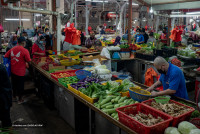
The Asian Development Bank has mentioned its plans to provide at least US$14 billion to ease the spiralling food crisis in Asia Pacific between 2022 to 2025 as its president highlights the high number of people who lack healthy diets due to soaring prices. – The Vibes file pic, September 27, 2022

KUALA LUMPUR – The Asian Development Bank (ADB) plans to provide at least US$14 billion (RM64.55 million) between 2022 and 2025 to ease the worsening food crisis in Asia and the Pacific.

President Masatsugu Asakawa said nearly 1.1 billion people lack healthy diets due to poverty and food prices, which have soared to record high this year.

Speaking at a press conference as part of ADB’s 55th annual meeting, he said assistance under the programme will be drawn from across ADB’s sovereign and private sector operations.

ADB also seeks to leverage an additional US$5 billion in private sector co-financing for food security.

“In our sovereign operations, we are repurposing funds from selected projects and strengthening counter cyclical support in a number of countries for a total of approximately US$1 billion. 

“We also have at least US$1.5 billion in our project pipeline related to agriculture, natural resources, and rural development,” Asakawa said.

In the private sector, ADB aims to support trade and supply chain financing, providing financing to agribusiness and to farmers; its lending to financial institutions will support small and medium enterprises in the food and agriculture sector.

Private sector support from ADB resources is expected to reach US$800 million in 2022.

Between 2023 and 2025, ADB has programmed up to US$10.7 billion in additional commitments and will be adopting three strategies to build stronger, more sustainable, and equitable food systems.

Asakawa said funding for the support programme will be channeled via existing and new projects in the sectors including farm inputs, food production and distribution, social protection, irrigation and water resources management, as well as projects leveraging nature-based solutions.

“Asia and the Pacific is vulnerable to food shocks, as some of its countries depend on imported staples and fertilizers. Even before the invasion of Ukraine, nutritious food was unaffordable for significant portions of the population in many ADB low-income member countries,” he said.

ADB is also scaling up its climate mitigation and climate adaptation investments and promoting digital transformation initiatives to improve the efficiency of agricultural production and value chains, including fisheries and livestock. – Bernama, September 27, 2022

Related News

Malaysia / 4y

Chicken eggs shortage only temporary: domestic trade ministry

Business / 4y

ADB cuts ‘developing Asia’ growth forecast as China lockdowns bite

World / 4y

World leaders call for urgent action on food security

Business / 4y

Covid-19 pushes back Asia’s poverty reduction by at least two years: ADB

Malaysia / 4y

Govt using four main dimensions as measures to ensure lasting food security: Kiandee

World / 4y

Russian strikes on Odessa port in Ukraine cast doubt over grain deal

Spotlight

Malaysia

Anwar receives special recognition as 10,000 Muslims gather in Putrajaya

Malaysia

Video of elderly man being assaulted goes viral on social media

Malaysia

The wide reach of corruption and organised crime in the country

Malaysia

Malaysia pushes to give smaller economies stronger voice in Asia-Pacific trade – Anwar

Malaysia

No tsunami threat to Malaysia after 5.4-magnitude earthquake hits Banda Sea

Malaysia

Who is calling the shots in Negeri Sembilan as Ismail’s position comes under scrutiny?

Opinion

Ayob Khan: When the uniform comes off, the principles remain

Malaysia

MySiren to send emergency alerts to compatible phones nationwide from Nov 29 test

You may be interested

Business

Oil origin claims need official documents, not trader papers, says expert

Business

Oil prices holds above US$80 as Hormuz attacks heighten supply concerns

Business

Govt moves to block seven US-blacklisted entities from accessing local data centres

Business

Pengerang needs to create wider economic value, not just store more oil, says expert

Business

NexG share surge puts spotlight on RM7.5b takeover proposal as SC examines trading

Business

Oil retreat offers limited relief as ringgit weakens against firmer US dollar

Business

Three Malaysian firms placed on US trade blacklist over advanced technology diversion fears