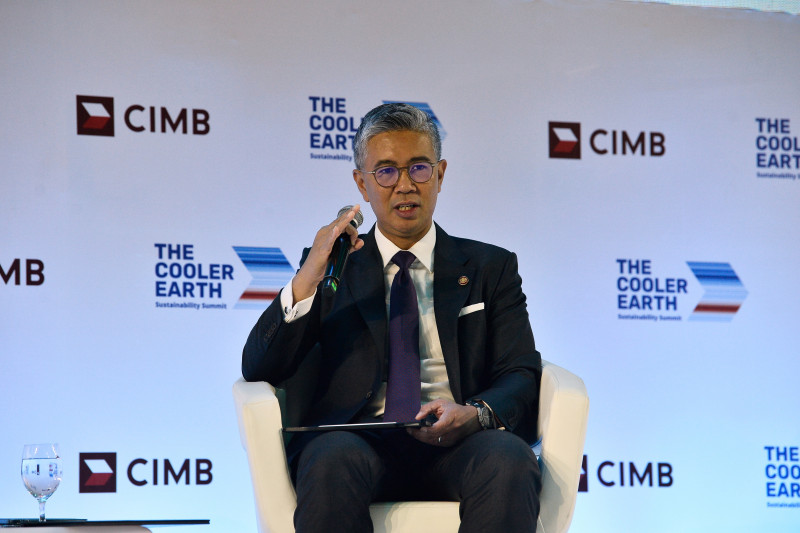
KUALA LUMPUR – Asia is arguably the dynamo of global economic growth and should now work on a solution to the global economy’s reliance on the US dollar, as well as a more equitable global policy and regulatory environment that will benefit the wider world and not just a select few, said Finance Minister Datuk Seri Tengku Zafrul Tengku Abdul Aziz.
“Asian economies perpetually seem to be at the mercy of decisions and market fluctuations occurring a few continents away.
“I am not advocating to abandon the greenback for another currency like some have. Malaysia remains committed to the global financial architecture as it exists, but sooner or later, these are questions smaller trading nations must consider, uncomfortable as they may be,” he said at the Khazanah Megatrends Forum 2022 here today.
He said given the US dollar’s unique position as the global reserve currency, one that often appreciates in periods of uncertainty, a currency’s position versus the greenback is hardly a yardstick for the economy, especially in the short term.
“A world where key countries can adversely affect the growth trajectories of others, including Malaysia, is unsustainable,” he said.
He said certain policies might benefit one superpower domestically, but must not end up hurting others and potentially jeopardising global prosperity.
“There must be a sense of responsibility, as well as justice, towards collective global growth, as well as improved monetary cooperation and coordination.
“It is high time we get the job done by creating a viable international monetary cooperation mechanism to ensure financial systems are not only effective and fair, but also consider the unique needs of small, emerging, and developing countries equitably,” he said.
Tengku Zafrul said dialogue is crucial, but action is more important.
“In 1985, the Plaza Accords were signed to stabilise the US dollar against the Japanese yen and German mark,” he said.
He said between 1985 and 1987, the accords stabilised the US current account balance while solidifying Japan’s presence as a major player in the international market.
“A second agreement, the Louvre Accord, was signed in 1987 to stop the continuing decline of the dollar and stabilise exchange rates,” he said.
Tengku Zafrul also noted the global financial crisis, where central banks in developed countries coordinated to prevent financial contagion from spreading to the rest of the world.
“Finally, at the onset of the Covid-19 pandemic, the global financial safety net provided ample financing to quickly stabilise the global financial markets and contain the economic crisis.”
Tengku Zafrul noted that existing institutions like the Bank of International Settlements and International Organisation of Securities Commissions also have an important role in aiding developing countries and emerging economies.
“The cost of uneven growth between countries, or even deglobalisation, will be high, especially when we are trying to tackle global issues such as poverty and sustainability.
“These are issues I have been raising with some of my counterparts in the past few weeks and definitely some of the key ideas I hope to take with me at the upcoming International Monetary Fund and World Bank fall meetings later this month,” he said.
He added that as an emerging economy striving to be a high-income nation, Malaysia must continue voicing out for a fairer and more equitable global policy and regulatory environment. – Bernama, October 4, 2022