KUALA LUMPUR – UOB Malaysia Bhd expects the country’s economy to rebound to 6.0% next year compared to its earlier estimate of 5.5% as a result of government efforts to counter the effects of the Covid-19 pandemic.
Senior economist Julia Goh said improved external demand conditions will be another significant contributor to the country’s recovery.
She said the government’s ongoing policy support through various fiscal packages, Budget 2021 measures, and the cumulative interest rate cuts to date will provide an impetus for the country’s recovery.
The potential of an effective Covid-19 vaccine roll-out, better-than-expected recovery of the global economy, and Malaysia’s diversified economic fundamentals also point to a positive outlook for next year.
“In Budget 2021, the government has planned a sizable spending of RM322.5 billion or 20.6% of gross domestic product (GDP) to help drive domestic demand and the multiplier effects of this spending will help boost further GDP growth.
“The budget is supported by additional measures such as cash assistance, tax cuts and reliefs, targeted loan and repayment assistance, cash advance from the Employees Provident Fund (EPF) Account 1 and a lower EPF contribution rate by employees,” she said at the UOB Malaysia’s Economic Outlook 2021 online media briefing today.
Goh said another potential growth catalyst is the progress of large infrastructure projects such as the third Mass Rail Transit, East Coast Rail Link, West Coast Expressway, National Digital Infrastructure Plan, Johor Bahru-Singapore Rail Transit System, and the Kuala Lumpur-Singapore High-Speed Rail.
“Moreover, the revival of the Petronas Refinery and Petrochemical Integrated Development refinery complex and the commencement of the Petronas Floating Liquefied Natural Gas-2 facility will augur well for investments,” she said.
“We also expect that committed investments in the rubber, electrical and electronics and healthcare sectors will potentially drive growth next year.”
However, Malaysia’s path to recovery will likely be uneven and dependent on the risks of any resurgent wave of the Covid-19 pandemic.
Asked whether further conditional movement control order (CMCO) extensions will cost or impact the economy, Goh said although restrictions under the CMCO, which currently covers most of the country, are less stringent than before and allow economic activity to continue, they have affected business and consumer sentiments in the fourth quarter of this year.
“The impact of CMCO is lesser than the enhanced MCO (EMCO). The magnitude of CMCO’s economic cost this time is about 15% less, between RM17 and RM22 billion, compared with RM32 to RM45 billion during EMCO in March and April,” she said.
Meanwhile, the projected improvements in external demand, particularly within Asia, is a silver lining, she added.
Goh said the recent signing of the Regional Comprehensive Economic Partnership marks the broadening and deepening of economic and trade linkages, as well as the integration among Asia-Pacific economies.
She said the outcome of the recent United States presidential election also bodes well for a new beginning in trade consultations and negotiations with China, expected to lead to improvements in the US-China ties that will ripple positively through the rest of Asia.
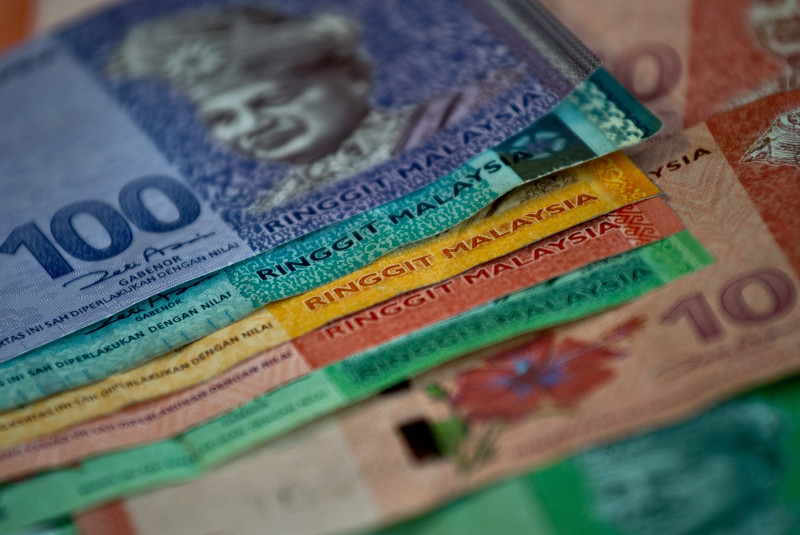
On the ringgit movement this year, Goh said with the gradual weakness of the US dollar, stable commodity prices, and strengthening of China’s Renminbi, UOB Malaysia forecasts the ringgit to move towards RM4.05 against the greenback in 2021. – Bernama, November 30, 2020