


Business

Huawei replaces thousands of US-banned parts with Chinese versions

However, still facing difficulties with manufacturing advanced microchips, founder says

Updated 3 years ago · Published on

Huawei replaces thousands of US-banned parts with Chinese versions
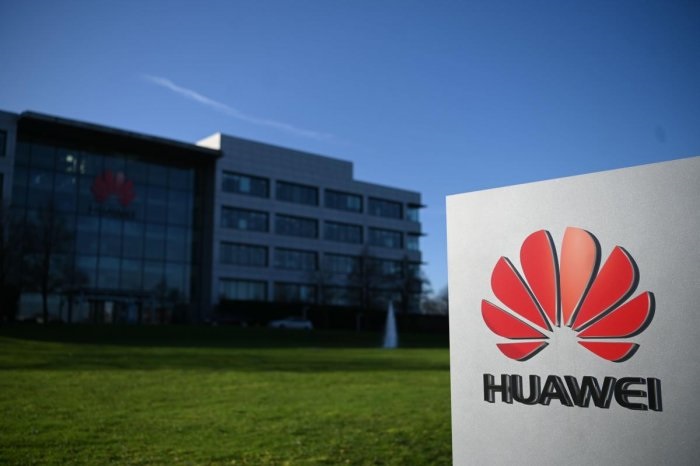
A leading supplier of telecom gear, smartphones and other advanced equipment, Huawei has been repeatedly targeted by the United States in recent years over cybersecurity and espionage concerns. – AFP pic, March 18, 2023

BEIJING – Chinese technology giant Huawei has replaced thousands of product components banned by the United States with homegrown versions, its founder has said, according to a transcript of a recent speech released by a Shanghai university.

A leading supplier of telecom gear, smartphones and other advanced equipment, Huawei has been repeatedly targeted by Washington in recent years over cybersecurity and espionage concerns.

The administration of former president Donald Trump effectively barred American companies from doing business with the firm, and his successor Joe Biden has imposed further sanctions including a ban on sales of new Huawei equipment in the United States.

The moves have forced the firm to find new ways to obtain semiconductors and other parts, with founder Ren Zhengfei saying Huawei has replaced more than 13,000 components with domestic versions in the past three years, according to the transcript posted by Shanghai Jiao Tong University yesterday.

The company has also redeveloped more than 4,000 circuit boards for its products, Ren said during the talk, which took place on February 24.

“As of now, our circuit board (production) has stabilised, because we have a supply of domestically produced components,” he said.

He did not give details about which specific parts were being sourced from within China or what proportion of Huawei’s total supply they represented.

Ren’s claims could not be independently verified and a Huawei representative gave no further comment when contacted by AFP today.

Responding to a question from an audience member, Ren said there are still “difficulties with manufacturing advanced microchips in China, so we have to find other ways of making up ground (with the US) on chips”.

He added that Huawei spent US$23.8 billion (RM106.75 billion) on research and development last year, and would invest more in the coming years as profits rise.

“We’re still in a difficult period, but have not stopped on the road towards progress,” he said. – AFP, March 18, 2023


Related News

Opinion / 1d

The Jensen Huang case: The racial trope driving US - China relations

Opinion / 1w

Honey Trap: Western media response to Jensen Huang and the latest China spy story

Opinion / 3w

Will the AI bubble burst?

Events / 4w

Shanghai trade fair returns to KL with 500 exhibitors in November

Malaysia / 1mth

PM Anwar loses beloved elder brother; Idrus Ibrahim passes away

Malaysia / 2mth

Anwar asks Loke to reconsider resignation over Najib pardon

Spotlight

Malaysia

Anwar receives special recognition as 10,000 Muslims gather in Putrajaya

Malaysia

Video of elderly man being assaulted goes viral on social media

Malaysia

The wide reach of corruption and organised crime in the country

Malaysia

Malaysia pushes to give smaller economies stronger voice in Asia-Pacific trade – Anwar

Malaysia

No tsunami threat to Malaysia after 5.4-magnitude earthquake hits Banda Sea

Malaysia

Who is calling the shots in Negeri Sembilan as Ismail’s position comes under scrutiny?

Opinion

Ayob Khan: When the uniform comes off, the principles remain

Malaysia

MySiren to send emergency alerts to compatible phones nationwide from Nov 29 test

You may be interested

Business

Pengerang needs to create wider economic value, not just store more oil, says expert

Business

Matrix Concepts ranked among top ten developers at TDPA 2026

Business

Oil extends losing streak for fourth week as supply glut outweighs Middle East tensions

Business

Govt moves to block seven US-blacklisted entities from accessing local data centres

Business

Oil origin claims need official documents, not trader papers, says expert

Business

Three Malaysian firms placed on US trade blacklist over advanced technology diversion fears

Business

NexG share surge puts spotlight on RM7.5b takeover proposal as SC examines trading

Business

Oil retreat offers limited relief as ringgit weakens against firmer US dollar


















