


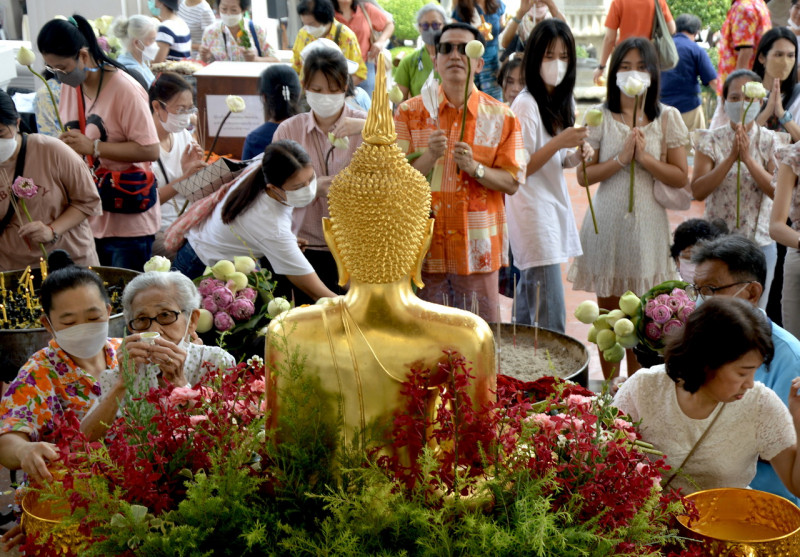
THAILAND is once again preparing for Songkran, its traditional New Year festival, even as global economic pressures and extreme weather temper celebrations.
Observed annually from April 13 to 15, with festivities beginning earlier this year on April 11, Songkran has evolved into one of the country’s most prominent cultural events and a significant draw for international visitors.
The festival, rooted in Buddhist traditions, is widely recognised for its exuberant water-splashing activities.
For decades, both locals and tourists have taken to the streets armed with water guns, drenching one another in a symbolic act believed to wash away misfortune and usher in good luck for the year ahead.
Although celebrations are expected to be more subdued due to the ongoing global energy crisis and a prolonged heatwave, major events will still proceed.
At least six provinces, including Bangkok, are set to host the 11th Thai Water Culture Festival, underscoring the enduring cultural and economic importance of the occasion.
While Thailand is most closely associated with Songkran, similar festivals are celebrated across several countries with strong Theravada Buddhist traditions, each reflecting local customs and identities.
In Cambodia, the New Year is marked as Chaul Chnam Thmey, while in Laos it is known as Pi Mai Lao. In parts of India, particularly Arunachal Pradesh and Assam, the festival is observed as Sangken.
In Bangladesh, the celebration called Sangrai incorporates a distinctive social custom in which young men and women stand in opposing lines, splashing water from shared tubs in a communal expression of festivity.
Myanmar observes Thingyan over five days, combining water rituals with religious ceremonies such as Shinbyu, a rite of passage in which young boys temporarily enter monastic life as novice monks.
The tradition has also spread further afield. In China, the Dai ethnic community celebrates the Water Splashing Festival, or Po Shui Jie, featuring rituals such as launching rockets and performing masked dances intended to dispel evil spirits.
Japan, while not traditionally associated with Songkran, has in recent years embraced a variation of the festival. The Beppu Songkran Festival, held as part of the Beppu Hatto Onsen Matsuri in Oita Prefecture, blends water festivities with the country’s famed hot spring culture.
Though still relatively new, the event has added an international dimension to Songkran’s reach, illustrating how the centuries-old tradition continues to evolve while retaining its symbolic core of renewal, cleansing and communal celebration. - April 10, 2026







