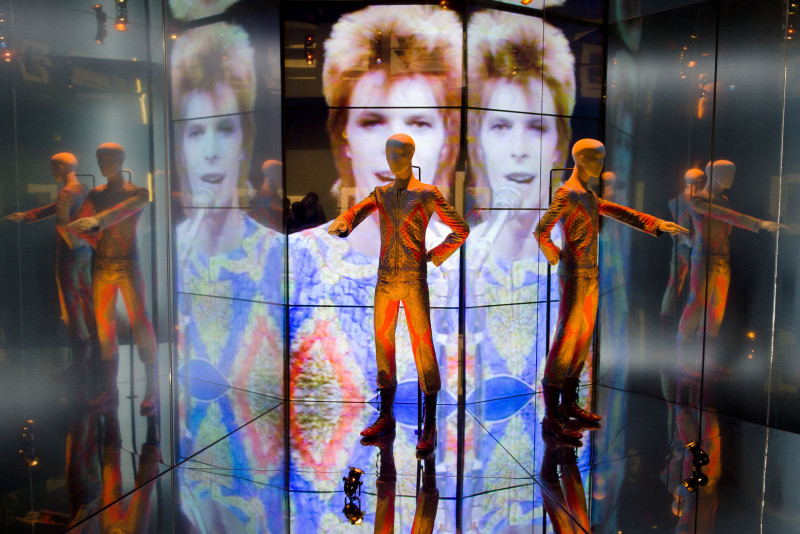
IT is half a century since Ziggy Stardust – a character that turned David Bowie into an intergalactic star and revolutionised sexual politics in the process – crashed onto Earth.
The London singer had spent a decade trying to refine his stage persona, but despite a couple of hits – 1969's 'Space Oddity' and 'Changes' two years later – he had yet to achieve the stardom he craved.
"He had failed in everything he tried since the beginning of his career," Jerome Soligny, one of the world's leading Bowie experts and author of 'David Bowie: Rainbowman', told AFP.
But on June 16, 1972, 'The Rise and Fall of Ziggy Stardust and the Spiders from Mars' finally pulled together all the elements he had been absorbing.
There was the dirty rock of Iggy Pop and Lou Reed whom he had met in New York, the mime and theatre he had studied in London, boiler suits from 'A Clockwork Orange', and wild, androgynous styles from the underground gay clubs he frequented with his wife.
Into the melting pot went Bowie's memories of veteran rocker Vince Taylor, who had gone off the rails and believed he was an alien god, and his obsession with a Texas country singer known as Legendary Stardust Cowboy.
And out came an alter-ego in Ziggy Stardust – a pan-sexual alien rockstar from outer space who fed a hunger in pop culture for something radical and shocking after too many years of long-haired hippies.
"We wanted nothing to do with the sixties," Bowie later said. "We were determined that we were at the beginning of the 21st century. We wanted to wipe out everything that went before."
Beautiful creation
Crucial to the impact of the album was an interview he gave British music weekly Melody Maker a few months before its release.
"I'm gay and always have been, even when I was David Jones," he said, resplendent in his red spiky hair, skin-tight jumpsuit and red plastic boots.
It was shocking at the time – the first major celebrity to come out, less than five years after homosexuality was decriminalised in Britain.
Soon, this attitude would make him an icon, providing a psychological lifeline for generations of queer kids and outsiders.
"It was marketing before its time – (that statement) was his most beautiful creation and it allowed him to hatch, to become something more than a well-kept secret among the rock intelligentsia," said Soligny.
'Psychological destruction'
Still, it took a while to catch on.
The shows were a radical change from the norm, with multiple costume changes and a story arc, but barely a dozen people showed up to some of the early Ziggy concerts – and sometimes they were booed off stage.
An appearance in July on the legendary BBC show 'Top of the Pops', followed by a hugely successful US tour, changed all that.
It helped that there was more to Bowie than showmanship and shock value – a sophistication missing from many of his glam-rock peers.
The album remains a bona fide rock classic, packed with hits like 'Starman', 'Suffragette City' and the title track.
Crucially, as Rolling Stone magazine wrote at the time, Bowie "never made his sexuality anything more than a completely natural and integral part of his public self, refusing to lower it to the level of gimmick".
Very quickly, Bowie became one of the defining artists of his generation.
And just as abruptly, he ended it – announcing at a gig in London in July 1973 that Ziggy was no more.
The success had made it dangerously hard to separate the Ziggy storyline from reality.
"With the help of some chemical substances at the time, it became easier and easier for me to blur the lines between reality and the blessed creature that I created... Then you start on the trail of chaotic psychological destruction," Bowie later recalled.
Ziggy was dead, but Bowie had set a template for creating characters that he would continue with huge success in the years to come. – AFP, June 17, 2022