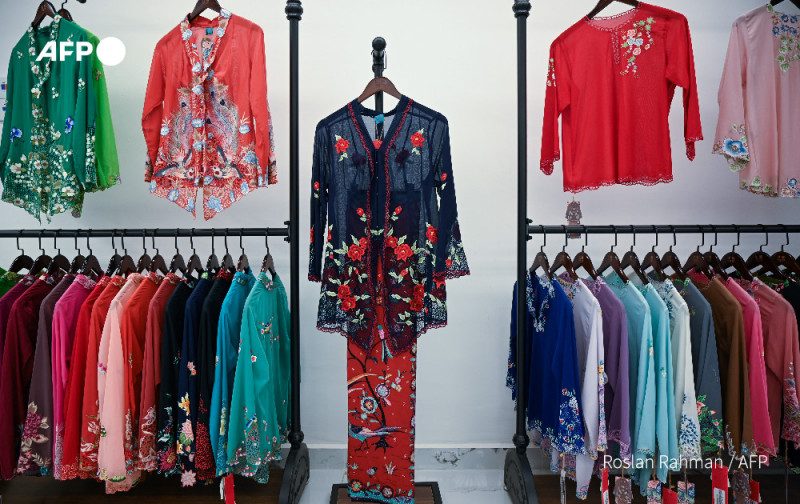
IN a Malaysian boutique, a small group of seamstresses sit at clattering sewing machines, stitching bright flowers and leaves into kebayas, traditional blouses worn by women around Southeast Asia.
What makes kebayas special is that they are worn by women of all ethnic backgrounds in a diverse region, according to Lim Yu Lin, who co-runs the family business her grandmother founded in 1955.
"It's not only meant for one culture," she told AFP.
In a moment of unity, Malaysia, Indonesia, Singapore, Brunei and Thailand have jointly nominated the kebaya for the UN's prestigious intangible cultural heritage list, with a decision expected in 2024.
Suited to hot tropical weather, the intricately embroidered blouse is usually long-sleeved, and ranges from loose-fitting to semi-transparent, figure-hugging cuts.
A kebaya can cost as little as US$7 for a simple, machine-made design, to around US$1,200 for a more intricate handmade piece.
National symbol
Indonesia picked the centuries-old kebaya as its national dress for women after it declared independence from the Netherlands in 1945.
Author and independence activist Soerastri Karma Trimurti celebrated the new country's cultural roots by wearing a kebaya to the proclamation ceremony. She later became the country's first minister of labour.
The blouse was later popularised by Malaysian film actors.
Singapore, Malaysia and Indonesia's national airlines also used it as the inspiration for their uniforms.
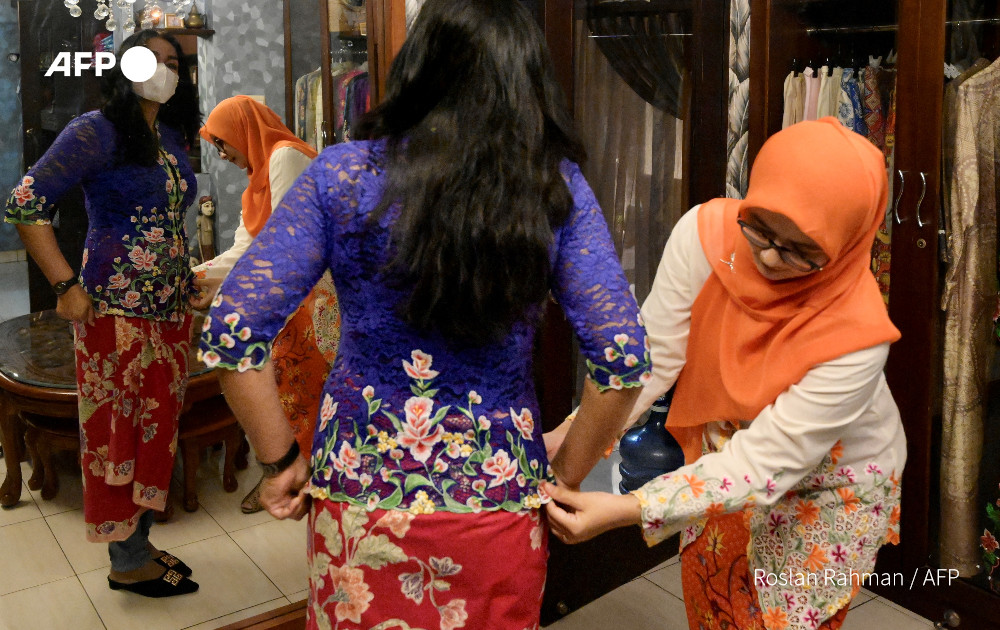
Kebayas were traditionally worn to weddings and formal events, but they are seeing a steady comeback among enthusiasts who wear them in daily life.
In Singapore, Charmaine Neo, 36, said she wears the garment to attend family events, and that it is suited to women of all ages.
"It's not just limited to the older folks. You see lots of young people also wearing the kebaya," she said.
"It's very flattering to the figure."
In Indonesia, 49-year-old Telly Nathalia said it was during a holiday with friends to Central Java province that she decided to start wearing a kebaya every day.
In her eyes, it was a way to connect with her country's history.
"Our ancestors lived here wearing kebaya," she said.
"People would ask, 'are you going to a party or something? A wedding?' Because in Indonesia when you wear a kebaya, they would think that you are going to something special."
'Our culture, our identity'
The kebaya is believed to have originated in the Middle East and was once worn by both men and women.
Over a dozen styles have been developed across Southeast Asia, mostly in Indonesia and Malaysia.
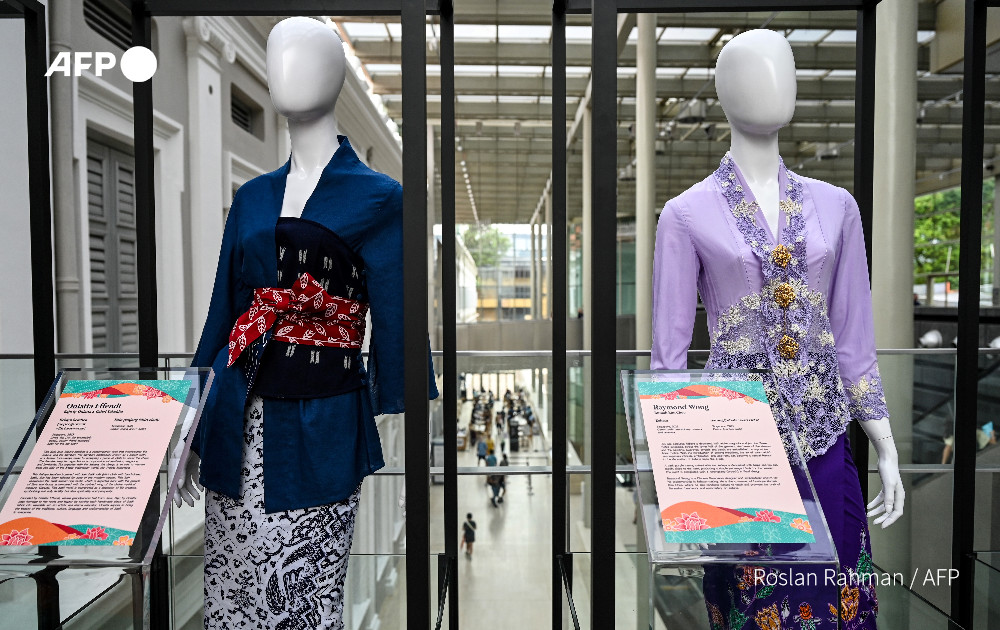
"It's a form of traditional women's garment that has evolved over time," said Yeo Kirk Siang, a senior director at Singapore's National Heritage Board (NHB), which organised a kebaya exhibition in April following the Unesco nomination.
"There was a kind of fusion of cultures, influences and different communities that brought about their own kebayas."
Oniatta Effendi, a fashion designer in Singapore who creates modern takes on the traditional blouse, said it is a symbol of cultural heritage.
"Many of us grow up seeing a kebaya worn by our mothers and grandmothers. It represents our culture, our identity," she said, according to an NHB statement.
"The kebaya may present itself differently in different countries. Its significance to each person may also be different, but one thing is certain: the kebaya brings us together through an identity that is shared." – AFP, May 16, 2023