


MALAYSIAN and Asia-Pacific enterprises are losing ground to a new wave of highly sophisticated, artificial intelligence-driven cyberattacks as fragmented internal security architectures leave operations crippled by alert fatigue and inefficient manual processes.
A new regional study has exposed a critical vulnerability gap, revealing that internal operational complexity has become as severe a threat to corporate data integrity as external malicious actors, with the vast majority of firms lacking the advanced readiness required to withstand modern digital onslaughts.
The comprehensive research, commissioned by cybersecurity leader Fortinet and executed by Forrester Consulting, surveyed 585 cybersecurity decision-makers and influencers across the Asia-Pacific region.
The findings paint a troubling picture of regional digital defences, with 70 per cent of organisations identifying AI-driven cyber threats as a major structural concern.
Compounding the issue, 64 per cent of respondents cited fragmented security architectures as a primary operational bottleneck, while 63 per cent pointed to overwhelming alert volumes as a critical challenge.
Security teams are currently buckling under the strain of disconnected systems, with 55 per cent of organisations admitting that the sheer volume of daily alerts makes it nearly impossible to distinguish genuine threats from false positives.
Furthermore, more than half of the firms surveyed still rely heavily on slow, labour-intensive manual workflows to manage incidents.
This lack of automation has severely restricted regional cybersecurity maturity, leaving 68 per cent of organisations operating at a mere intermediate level, while only 16 per cent have achieved an advanced stage of cybersecurity readiness.
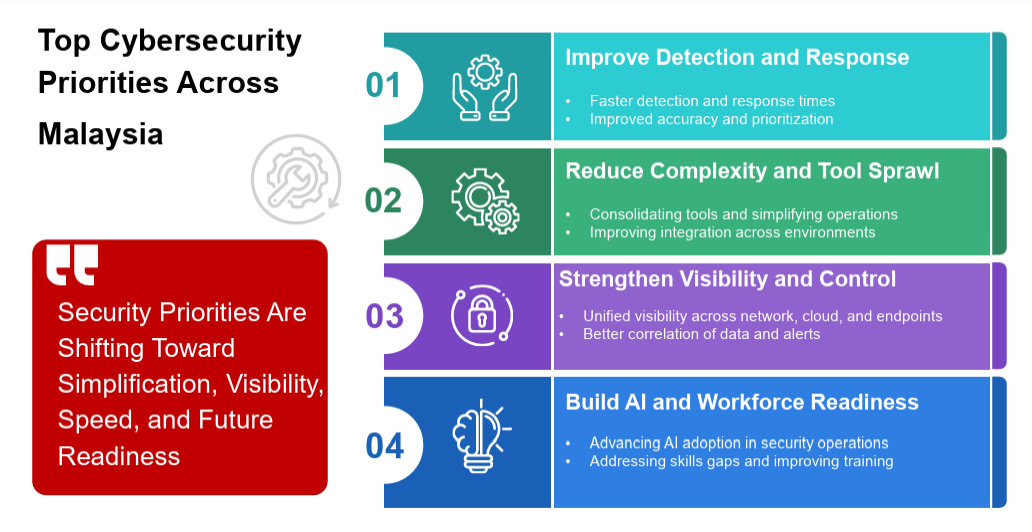
In response to these operational weaknesses, a significant regional shift towards simplified, integrated security architectures is underway to curb tool sprawl and enhance visibility across complex hybrid environments.
While only 35 per cent of organisations currently operate unified cybersecurity platforms, this figure is projected to surge to 50 per cent over the next 12 to 24 months.
Businesses are aggressively prioritising threat detection and incident response capabilities, with 90 per cent of organisations expecting measurable performance gains from consolidation, including accelerated threat detection, sharper response times, and heightened analyst productivity.
However, the transition to unified defences remains fraught with caution.
Half of the surveyed organisations identified high migration costs and operational disruption as major obstacles, while 46 per cent expressed uncertainty regarding whether platform-based systems could effectively operate across disparate technological domains.
Despite these hesitations, corporate investment in advanced technologies is accelerating, with nearly 78 per cent of organisations planning to increase their AI-related cybersecurity budgets, and more than half anticipating double-digit spending growth.
The report nevertheless cautioned that many enterprises lack the foundational infrastructure needed to deploy AI effectively at scale.
Disconnected data systems and insufficient automation threaten to hamper adoption, raising the risk that poorly integrated AI deployments could inadvertently worsen rather than alleviate cybersecurity complexity.
Forrester Consulting Project Lead Amelia Lau said organisations throughout the Asia-Pacific region were facing simultaneous pressure from increasingly advanced cyber threats and growing internal technological complexity.
“Organizations across APAC are facing a dual challenge, rapidly evolving AI-driven threats and increasing internal complexity. While investment remains strong, many are still struggling to operationalize security effectively.
“Moving toward integrated, platform-based approaches will be critical to improving visibility, efficiency, and resilience.”
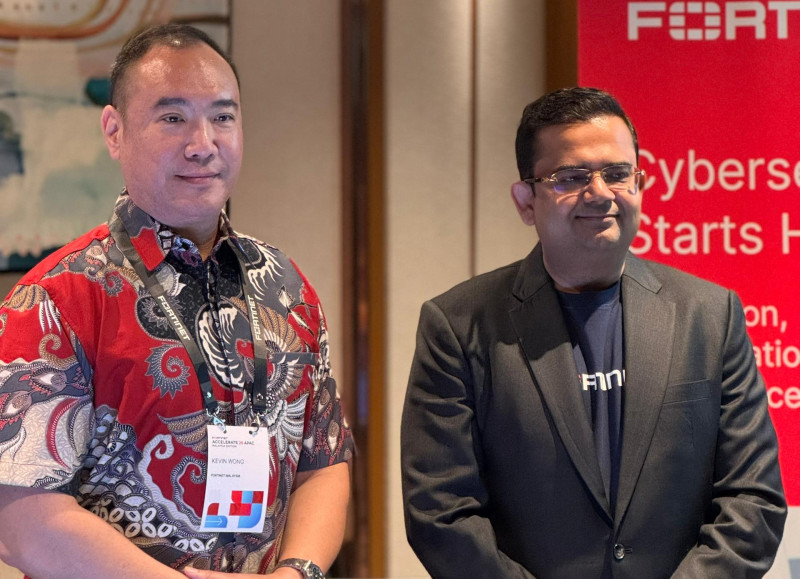
Fortinet Malaysia Country Manager Kevin Wong said many organisations were attempting to leverage AI to improve cybersecurity performance but remained constrained by fragmented systems and poor visibility across their environments.
“Customers today are dealing with increasingly complex environments, where fragmented tools, limited visibility, and growing alert volumes are making it harder to detect and respond to threats effectively. At the same time, they are looking to leverage AI to improve speed and efficiency but often lack the integrated foundation to do so,” he said.
He added that Fortinet was helping organisations simplify security architectures through integrated platforms combining automation, visibility and AI-driven intelligence.
Meanwhile, Fortinet APAC Marketing and Communications Vice President Rashish Pandey warned that artificial intelligence could only deliver meaningful security outcomes if built upon fully integrated operational foundations.
“Organizations are placing significant expectations on AI to transform security operations, from improving detection to accelerating response.
“However, AI can only deliver meaningful outcomes when it is built on an integrated foundation. Without unified visibility and connected data across environments, AI risks amplifying complexity rather than reducing it,” he said. - May 21, 2026










