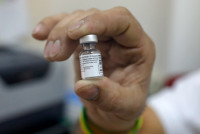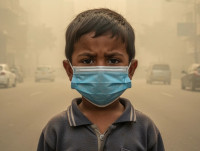
IT feels like everyone was eagerly awaiting this new year – which, for some, was a long time coming – but will 2021 really be any better than 2020? So think many people in countries all around the world, who have high hopes for 2021. In fact, the majority are optimistic that this year will be more positive than 2020 ... so long as the effects of the global pandemic subside.
More than three quarters of people around the world (77%) are optimistic that 2021 will be a better year than 2020. This feeling is shared by people in China (94%), Peru (92%) and Mexico (91%), but much less so in Germany (63%), France (53%) and Japan (44%), where people seem less confident, according to the latest edition of the Ipsos Global Advisor Predictions report.
While that may seem like a logical observation after the difficult year we've had, this feeling is actually more or less the same as last year. At the time, 75% of people worldwide thought that 2020 would be a better year than the previous one, although not in all regions. In France, for example, only 50% of respondents shared the feeling.
However, there's no denying that 2020 was particularly trying for people in all the world's countries. Seven in 10 people polled worldwide thought that 2020 had been a bad year for themselves and their family, while 90% said it had been a bad year for their country. People in Turkey (89%), India (81%), Italy (80%) and South Africa (80%) were particularly numerous in considering 2020 a bad year for themselves and their family, while those in France (95%), Argentina (95%) and, once again, South Africa (95%), were particularly pessimistic about the year's impact on their country.
Getting back to normal?
According to the Ipsos data, more than four in 10 people worldwide (41%) think that life will get back to normal in their country after the effects of the covid-19 pandemic. Here too, it's in China where people are the most optimistic (90%), ahead of Saudi Arabia (75%) and India (63%). At the other end of the scale, in Great Britain (11%), Belgium (11%) and France (16%), few people think that life will get back to normal after the pandemic.
This pessimism could be explained by the fear of experiencing a new global pandemic – a concern for 47% of people worldwide. Those in certain countries seem particularly troubled by the idea, such as Malaysia (70%), South Korea (69%) and Russia (65%). On the other hand, people in France (43%), Great Britain (33%), Italy (33%) and Australia (32%) seem much less worried.
But the pandemic isn't the only subject weighing on the world's population as we head into the new year. Following the lockdowns and social distancing of 2020, almost a third of people worldwide (31%) think that they will feel lonely a lot of the time. This is a particular concern in Turkey (53%), Malaysia (50%) and China (45%), but less so in France (26%).
Whether or not they think there's a better year ahead, people around the world haven't stopped making resolutions, with 75% of respondents worldwide stating that they will make some personal resolutions to do specific things for themselves or others in 2021.
The Global Advisor Predictions are based on online interviews, carried out between October 23 and November 6, 2020, by Ipsos among 23,007 people age 16 to 74 in 31 countries. The sample is composed of around 1,000 individuals in Australia, Belgium, Brazil, Canada, China, France, Germany, Great Britain, Italy, Japan, Spain, New Zealand and the USA, and of 500 individuals in Argentina, Chile, South Africa, Hong Kong, Hungary, India, Israel, Malaysia, Mexico, the Netherlands, Peru, Poland, Russia, Saudi Arabia, Singapore, South Korea, Sweden and Turkey. – ETX Studio, January 7, 2021