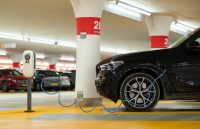
MANY drivers can't see themselves at the wheel of an electric vehicle in the near future, and the brakes on uptake can vary from country to country. While price is the most discouraging factor in France, for people in Germany and China, it's the lack of charging stations that's particularly offputting.
While electric vehicles are the subject of much interest and curiosity, they haven't completely won over the public, according to research from Continental. With the exception of drivers in China, the majority of people polled couldn't imagine themselves in an electric car in the near future.
People in Germany proved the most dubious about opting for an EV for their personal journeys (59%), followed by drivers in France (57%). A similar trend was seen in Japan and in the US. In China, on the other hand, just 12% of people polled couldn't see themselves in an electric car in the near future.
For people in France, price was the biggest obstacle to going electric. For people in the four other countries surveyed, it was above all the lack of charging stations that proved the main argument against all-electric cars. Note that the limited range of EVs compared to internal combustion engine vehicles also featured as a major discouraging factor for electric mobility in Germany (57%), the US (44%) and in China (59%), but less so in France (28%).
The study also highlights the fact that 16% of drivers in France have been using cars more frequently than before the pandemic began. This is explained by a desire to minimize contact with others and a certain lack of confidence in public transport. The trend is even more pronounced in the other countries studied. It remains to be seen whether this will be a lasting trend.
The Continental study was carried out with the market and social research institute infas, and the Handelsblatt Research Institute in September 2020, polling a representative sample of the population in five countries (Germany, China, USA, France, Japan). – ETX Studio, March 23, 2021