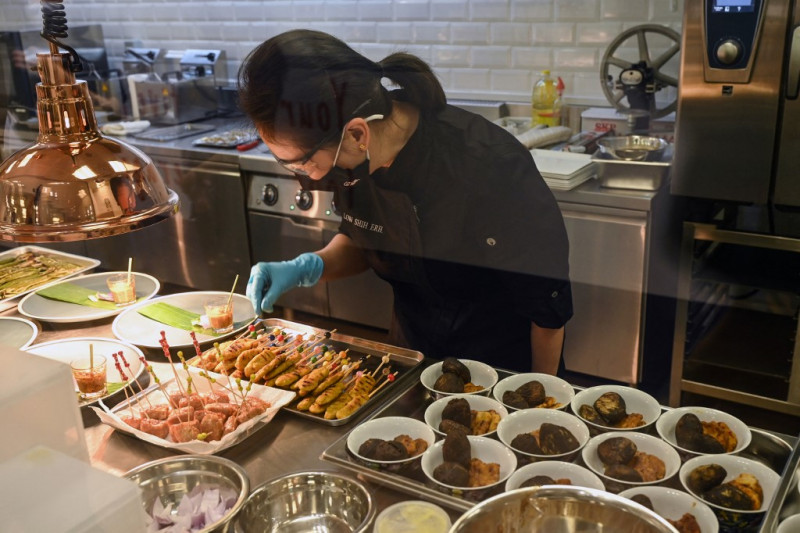
SINGAPORE – From faux-chicken satay to imitation beef rendang, a high-tech Singapore laboratory is replicating popular Asian dishes with plant-based meat alternatives to feed the region's growing appetite for sustainable food.
Flavour specialists and food scientists in white coats work with plant extracts at the newly opened facility to create vegetarian versions of traditionally meaty dishes that taste like the real thing.
Demand for sustainable foods in Asia, while small compared to the West, is rising in tandem with greater awareness about healthy eating and concerns about the environmental impact of meat consumption.
Plant-based burgers and chicken nuggets have already found their way to the region, but US food processing giant ADM is focusing its efforts on dishes with more local appeal.
"We work with local chefs, work with local customers to really develop and tailor the taste to what's needed here in Asia," said Dirk Oyen, the company's Southeast Asia vice president and general manager for human nutrition.
"That's really the key – so we can create the local taste."
The ADM lab has cooked veggie versions of satay and rendang.
It hopes to perfect the base ingredients for such delicacies and market them to consumer firms and supermarkets.
The scientists use cutting-edge technology to fuse nutrition, texture, aroma and flavour to create protein-rich, vegetarian meat alternatives, mainly using soy and pea beans.
Their products mimic beef, pork, chicken and seafood and can be used in a wide variety of finished dishes. They also recreate processed meat products, such as faux ham and sausages.
Asia is already home to some plant-based staples, such as tofu and tempeh, but ADM hopes to offer consumers a broader, and more sophisticated choice.
Worries about the environmental impact of eating meat centre on the amount of methane, a potent greenhouse gas, produced by cattle, as well as the logging of forests to make way for pastures.
While demand for meat alternatives is growing in Asia, companies like ADM still face challenges, ranging from persuading consumers to change age-old eating habits to stiff competition.
Singapore is already home to a host of local start-ups creating sustainable foods ranging from "lab-grown" seafood to dumplings made with tropical fruit instead of pork. – AFP, May 7, 2021