
ENVIRONMENTAL destruction and pollution has plagued this planet for many years, but new research shows an undeniable change in behaviour towards the global crisis as hundreds of millions of people are becoming more concerned about the health of the natural world.
The global research entitled 'An Eco-wakening: Measuring global awareness, engagement and action for nature' that was commissioned by World Wide Fund for Nature (WWF) and conducted by the Economist Intelligence Unit (EIU), reveal that the rate of interest and concern from the public on nature has risen noticeably by 16% over the past five years.
The numbers are expected to keep growing during the Covid-19 pandemic and with the report coming ahead of the International Day for Biodiversity that will be held on May 22, the UN aims to increase the understanding and awareness on biodiversity issues.
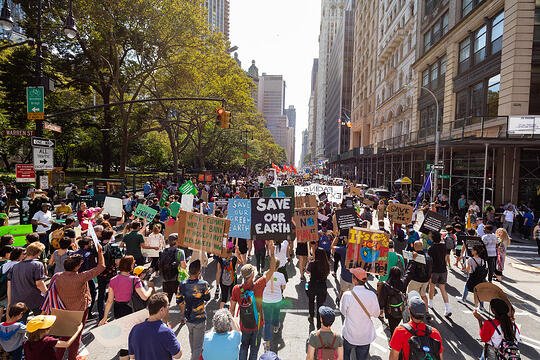
The surge in environmentalism is largely contributed by digital activism with a 65% increase in the number of Twitter mentions, with an increase of mentions of nature and biodiversity from 30 million to 50 million in the last four years have amplified concern for nature worldwide.
In Southeast Asia, news stories about nature loss and biodiversity increased in volume by 77% and tweets increased by 102% on both topics.
Malaysia currently ranks 110/180 on the Yale Environmental Performance Index for Biodiversity and Habitat.
Worldwide, a variety of influencers including politicians, spiritual leaders, celebrities, and major news organizations have used their voice on behalf of nature, to reach a combined audience of almost 1 billion people worldwide.
Asian and Latin American countries primarily have shown a growing popularity in nature-related searches, with Indonesia and India showing an increase of 53% and 190%, respectively.
With 96% of respondents located in Latin America indicating that nature loss is a serious global problem, the shift in public sentiment shows a hard reality, as people in emerging countries and markets are most likely to be the ones that experience the destructive impact of nature loss.
Director-General of WWF International, Marco Lambertini said: “The results of this research are crystal clear: concern over the impact we are having on the natural world is growing rapidly and particularly in emerging markets, where people are feeling more acutely the impacts of deforestation, unsustainable fishing, species extinction and the decline of eco-systems”.
Despite the alarming rate of its devastation, environmental issues are rarely at the top of the global agenda, even though the destruction represents a massive threat to our health and the global economy.
“The science and the economics are clear. The public sentiment is now clear. And – the solutions are clear too. Society is supporting a transformation of our economic and development model towards one that finally values nature as our moral duty to all life on Earth, and for the crucial services it provides to our economy, wellbeing, health, and security. This is truly a historic ‘eco-wakening’ and the chance to rebalance our relationship with the planet,” he added.
The research also found that consumers around the world are finding ways to change their previously harmful behaviour towards nature. In high-income countries, such as the UK, the US, Germany, Australia, and Canada have shown a staggering 71% increase in popularity of searches for sustainable goods.
This trend has also caught on and accelerated in developing and emerging countries such as Indonesia and Ecuador with an increase of 24% and 120%, respectively. Corporations in the cosmetics, pharmaceutical, fashion, and food sectors are forced to respond to this amounting pressure and make effort to be more environmentally conscious.
Executive Director/CEO of WWF-Malaysia, Sophia Lim said: “Businesses and governments around the world must take notice of what the public is saying. Public concern for nature is growing even louder – a 16% increase in the past five years equates to hundreds of millions of people around the world who are increasingly concerned. Media coverage plays a critical role in driving awareness and reaching decision-makers as we tackle the planetary emergency that we are now all living in”.
The destruction of nature inevitably increases our vulnerability to pandemics, threatens livelihoods, and undermines the efforts to tackle the climate crisis. With world leaders scheduled to make critical decisions later this year during the Conference of Parties of the Convention on Biological Diversity, it represents a momentous chance for us to reverse the loss of biodiversity and procure a nature-positive world. – The Vibes, May 20, 2021