RESEARCHERS in Australia want to transform single-use Covid masks into road material.
In the United States, the protective gear is recycled into benches. And in France, they are reborn as floor carpets for cars.
Used to curb the spread of Covid-19, masks are exacerbating another pandemic: plastic pollution.
Around 129 billion disposable masks are used every month around the world, according to the American Chemical Society.
Made out of polypropylene plastic material, elastic and metal, used masks are usually thrown out in garbage bins, destined for landfills, or incinerated.
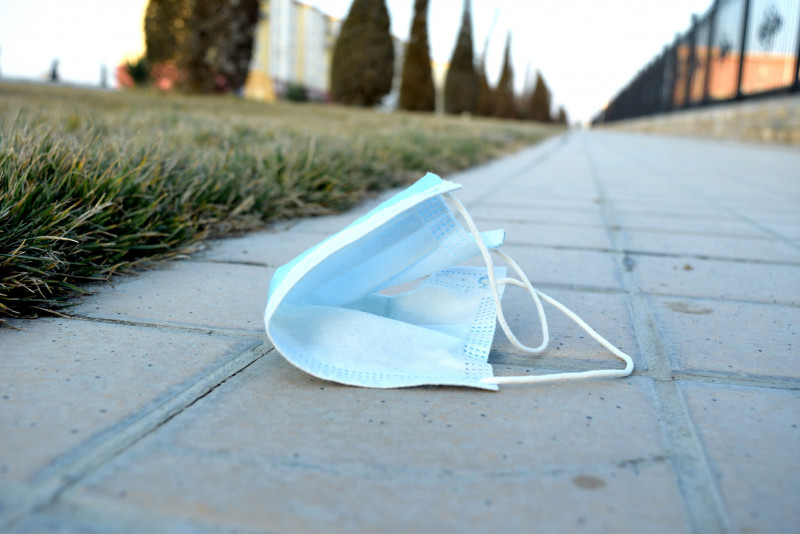
They are also littering streets, rivers and oceans, harming wildlife.
But researchers and companies are looking for ways to put masks to good use, though it is not a very profitable venture at the moment.
Garden chairs
In Britain, several hospitals have acquired a compactor made by Cardiff-based Thermal Compaction Group which melts protective gowns and surgical masks into blue slabs.
The material is then used to make garden chairs or tables.
In France, Tri-o et Greenwishes, a recycling company, picks up masks tossed in special bins used by some 30 customers, including Parisian hospitals, TV network TF1 and building materials giant Saint-Gobain.
"We had a lot of demand from our clients" to offer mask recycling services, said company president Matthieu de Chanaleilles.
The company charges fees starting at €250 (about RM1,260) per month to collect the trash.
At its recycling plant, staff wearing protective gear stand behind plexiglass to sort through paper tissues, gloves and cups that are thrown in mask bins by accident. Afterwards, the workers are sprayed down with disinfectant.
The sorting area is sterilised with ultraviolet lamps. Masks are kept in quarantine for a week before being handled.
Two companies based in northern France then shred the masks, disinfect them and extract the polypropylene, which is transformed into pebbles that are used to make floor carpets or other plastic parts in a car.
Tri-o et Greenwishes has recycled one tonne of masks so far and hopes to have processed 20 tonnes by the end of the year.
It's a drop in the ocean of masks.
Some 40,000 tonnes of masks were binned in France last year, without a recycling option, according to a January parliamentary report.
Long road
Making the venture profitable is a challenge.
In Trenton, New Jersey, TerraCycle sells a "zero waste box" for disposable masks for US$88.
The masks are then sent to partner facilities to be recycled into plastic granules that are sold to manufacturers that make other products such as benches, flooring surfaces or shipping pallets.
TerraCycle chief executive Tom Szaky said recycling personal protective equipment is costlier than aluminium.
"Why is, say for example, a dirty diaper, or PPE not recyclable? It's because it costs much more to collect and process and the results are worse. So no one would bother doing it because there's no money to be made," Szaky told AFP.
"So Terracycle's business says 'Well, if someone's willing to pay those actual costs, then we can perform such a service'," he said.
In Australia, researchers at the Royal Melbourne Institute of Technology are experimenting with other solutions after being inspired by the sight of masks littering the streets.
Once disinfected and shredded, masks can be mixed with processed building rubble to create a flexible and robust material to help build roads, according to the scientists.
The researchers are now investigating their use in construction cement.
Three million masks are needed to make one kilometre (half a mile) of road.
"The face mask has a good tensile strength; they can provide tensile strength to the concrete, which is very important," Mohammad Saberian, a post-doctoral research fellow at RMIT University, told AFP.
"We're currently looking for partners to use the face masks in real-world applications and to make kind of a pilot road," Saberian said.
Since publishing the research earlier this year, several industries have expressed interest, and the team was now applying for funding to further investigate the findings, which could take one to two years, he said. – AFP, May 20, 2021