NEW YORK – Banished at the start of the pandemic, the handshake is making something of a comeback, thanks to vaccinations and the lifting of social restrictions – but "pressing the flesh" faces an uncertain future.
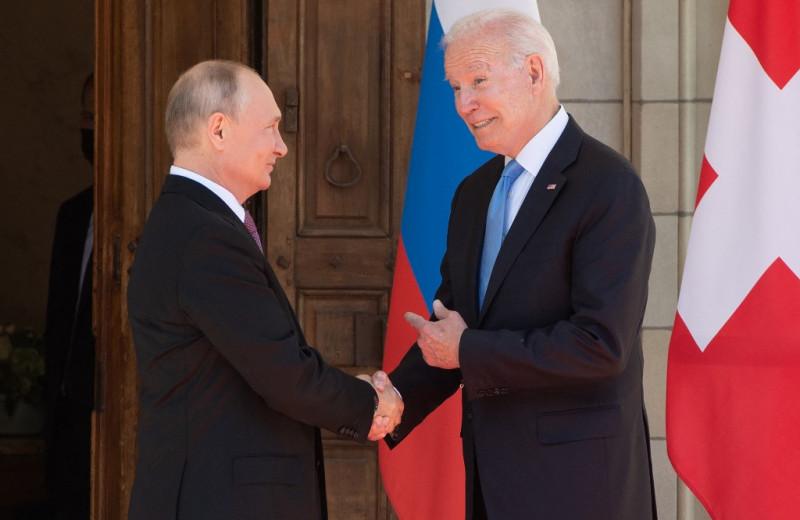
More than speeches or communiques, one of the most striking takeaways from the Vladimir Putin and Joe Biden summit in Geneva this week was their fulsome handshake in front of the world's cameras – a rare moment of physical human contact.
A few days earlier, at the G7 summit in Cornwall, Biden and his fellow leaders were still elbow-bumping away, at outdoor events spaced six feet apart.
Back in the United States, most Covid-19 restrictions have been lifted, and vaccinated citizens have been told they don't need masks – even inside. Social distancing is largely a thing of the past, and unlimited domestic travel is back on.
But many Americans are still treading carefully – mask-wearing is still encouraged in many shops and offices, friends often greet each other with a brief wave, and handshakes are treated warily.
New York telephone technician Jesse Green declines to shake hands with customers, but does with people he knows and who have been vaccinated.
"Because of the pandemic, people are more aware about the way they use their hands," he said.
For William Martin, a 68-year-old lawyer, shaking hands with anyone, vaccinated or not, is out of the question.
He won't do so "until it is safe," he said, adding "and 'safe' will not be determined by some government."
Some US companies and organisations are using colored bracelets to allow employees, customers or visitors to signal their openness to contact: red, yellow or green, from the most cautious to the most comfortable.
Hugging is generally out of bounds, and kissing to greet someone – never common in the United States – is almost unimaginable for most.
Unscientific?
Jack Caravanos, a professor at New York University's School of Global Public Health, said wariness of handshakes does not exactly match the evidence.
Covid-19 "is poorly transmitted by surface contact and is essentially an airborne virus, (so) the scientific basis for no skin contact is moot," he said.
"However, the common cold, influenza and a host of other infectious diseases are transmitted by touch, therefore eliminating handshaking will overall have a positive public health impact."
Tapping into the wider health benefits, many experts would not mourn the death of the handshake.
"I don't think we should ever shake hands ever again, to be honest with you," White House pandemic advisor Anthony Fauci said last year as the virus took hold worldwide.
Allen Furr, professor of sociology at Auburn University, said "we've always had germophobes, people who don't like to touch people because they see everything as a contagion.
"We may have some more of those, because of the psychological effect that safety is equated with not coming close to people – that may stick in some people's minds."
A human ritual
Shaking hands is a ritual taught to children by adults, but after 16 traumatic months it is one that could weaken if it is not passed down to the next generation, he said.
Other forms of greeting such as fist-bumping, a brief wave, or alternatives such as an Indian-style "namaste" could become increasingly popular compared with the hearty grip of a "manly" handshake.
But "so much will be lost if we didn't shake hands," mourns Patricia Napier-Fitzpatrick, founder of The Etiquette School of New York.
"You can tell a lot about a person by their handshake. It's part of body language – people have lost jobs in the past because of bad handshakes.
"When you touch someone, you're showing you trust them, you're saying 'I'm not going to harm you.'"
As with everything, handshaking today has "become a political thing", suggests New York paramedic Andy McCorkle, with some people shaking hands as a sign of defiance against the government and Covid restrictions.
"I feel like it'll be solidified psychologically, to keep one's distance," he said.
The pandemic has upended many things about everyday life, and the handshake is just one of them – the test will be to see if humans need it back.
Furr, for his part, expects the handshake to endure.
"It's just kind of too important a ritual in our culture," he said. – AFP, June 18, 2021