PROTECTIVE face masks could augment your chances of seduction. No joke, it's a scientific observation!
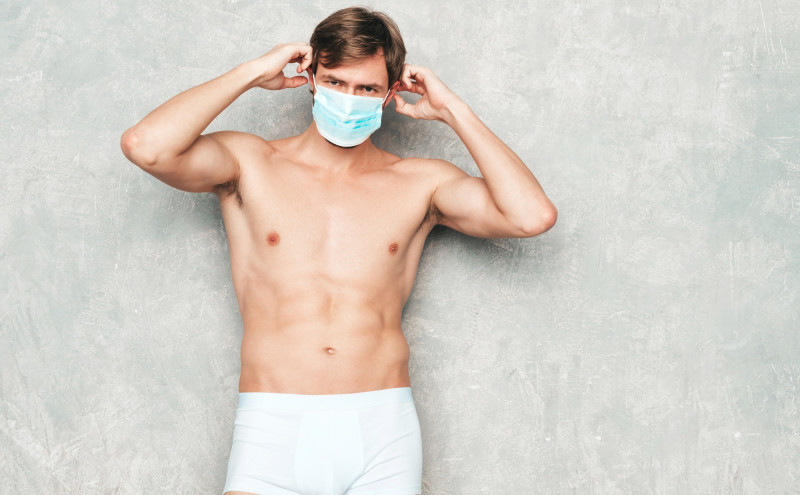
A recent study reveals that wearing a surgical mask could make you more attractive. News that should change the way you perceive what has been the most coveted – and loathed – accessory of the last two years.
Has wearing a mask become second nature for you or do you still yearn to rip it off minutes after putting it on?
Compulsory or not, depending on where you live, the mask has, in just two years' time, become an essential accessory intended to help stop the spread of Covid-19. But it is also considered to be an annoying part of everyday life, and many studies have even pointed out several of its harmful effects, especially in terms of social interactions.
Commonly worn long before the pandemic in some countries, for all its advantages the mask has never been associated with seduction, on the contrary. Its image is rather associated with disease.
A team of researchers from Cardiff University, in Wales, wanted to find out if the pandemic had changed this association. And indeed, our view of masks has changed! Because, masks ultimately make us more attractive...
For the purposes of the study, the scientists asked about 40 female participants to evaluate, on a scale of 1 to 10, how attractive they found a selection of images of male faces: without a mask, then with surgical or cloth masks, or with a black book covering part of the face.
The result is clear: women found the male faces wearing a surgical mask most attractive, followed by those wearing a cloth mask... these were rated as much more attractive than those without a mask.
The study indicates that this change in perception could be linked to the feeling of security that the mask provides in the current context, but also to the fact that it hides undesirable elements of the lower part of the face, such as acne for example, while putting the focus on the eyes.
A finding that could prompt some people to feel better about wearing a mask. – ETX Daily Up, January 19, 2022