Places

Urban forests are precious carbon sinks that should be better preserved, study shows

Boston University, with Harvard Forest, analysed more than 48,000 forest plots in the northeastern United States

Updated 4 years ago · Published on

Urban forests are precious carbon sinks that should be better preserved, study shows
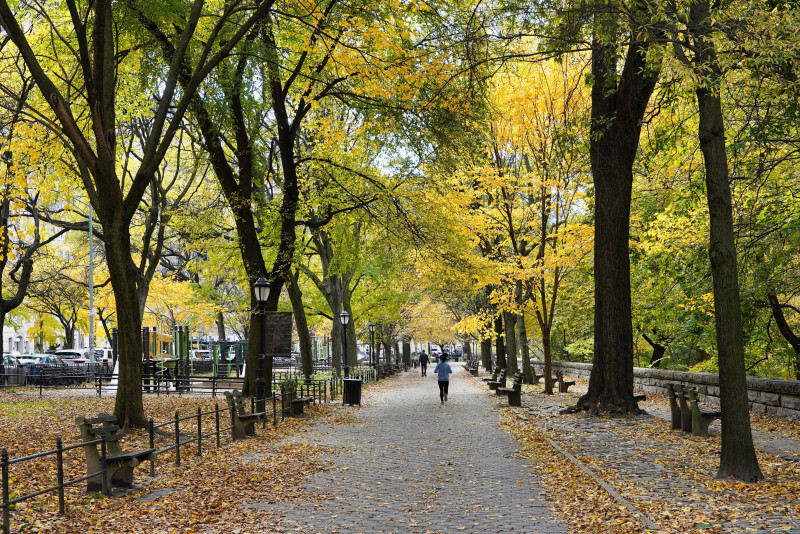
Trees at the extreme edges of forests grow nearly twice as fast as trees in the forest interior, study finds. – ETX Daily Up pic, February 22, 2022

RESEARCHERS in the US have found that trees at the outer edges of forests grow nearly twice as fast as trees in forest interiors. These ecosystems could therefore play an essential role in storing carbon and fighting climate change.

As part of the study, carried out by researchers from Boston University in collaboration with the Harvard Forest research department, more than 48,000 forest plots in the northeastern United States were analysed.

Lucy Hutyra, a biogeochemist and ecologist at Boston University, and senior author of the research, studied the growth rates and carbon storage capacity of trees in forest plots bordering roads, agricultural crops or solar farms, for example.

Her team found that trees located at the edges of forests grew twice as fast as those growing in the forest interior, about 30 metres from the edge.

"This is likely because the trees on the edge don't have competition with interior forest, so they get more light," says study co-author, Luca Morreale. 

According to the authors, these findings challenge current thinking about the conservation and value of urban forests, which should not be viewed solely as places for recreation.

At a time when cities and nations are pledging to plant more trees in an attempt to mitigate the effects of climate change, the paper's authors emphasise the need to better preserve the edges of existing forests, which are generally the first targets for removal or alteration.

"We are underestimating how much carbon is being taken up by temperate forest edges," says Lucy Hutyra.

"We also need to think about how susceptible they might be in the future to climate change," continues the researcher, because previous research has shown that even though these trees are growing faster from more sunlight, hotter temperatures can lead to plummeting growth rates in trees at forest edges. – ETX Daily Up, February 22, 2022


Related News

Events / 1mth

‘We need to work together to combat threats of climate change’ – Sarawak deputy premier

Events / 1mth

Sarawak and Sabah play key roles in weathering climate change

Malaysia / 9mth

Sabah expands totally protected areas to 2,227 million hectares - Hajiji

Events / 9mth

MoU inked for greater climate resilience

Malaysia / 9mth

Penang: DID to conduct comprehensive review of beach erosion

Business / 10mth

Petra Seaga looking to invest RM1.4b in Sabah biomass, sustainable energy sector

Spotlight

Malaysia

Anwar receives special recognition as 10,000 Muslims gather in Putrajaya

Malaysia

Video of elderly man being assaulted goes viral on social media

Malaysia

The wide reach of corruption and organised crime in the country

Malaysia

Malaysia pushes to give smaller economies stronger voice in Asia-Pacific trade – Anwar

Malaysia

No tsunami threat to Malaysia after 5.4-magnitude earthquake hits Banda Sea

Malaysia

Who is calling the shots in Negeri Sembilan as Ismail’s position comes under scrutiny?

Opinion

Ayob Khan: When the uniform comes off, the principles remain

Malaysia

MySiren to send emergency alerts to compatible phones nationwide from Nov 29 test

You may be interested

Health

Selangor records 18,451 haze-related illnesses, with Petaling clinics hardest hit

Events

Seven companies selected for RM15m corporate innovation programme

By Alfian Z.M. Tahir

Our Planet

Beaver Supermoon lights up November skies, begins four-month celestial spectacle

Community

BOH contributes RM50,000 to Malaysia’s homegrown cancer vaccine research