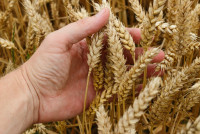
MOUGON – In a field in western France, the small purple and white flowers quivering among tender shoots of wheat are a clue that this is not conventional single-crop farmland.
In fact, this whole area is part of scientific work to help farmers cut down on their use of pesticides, herbicides and chemical fertilisers.
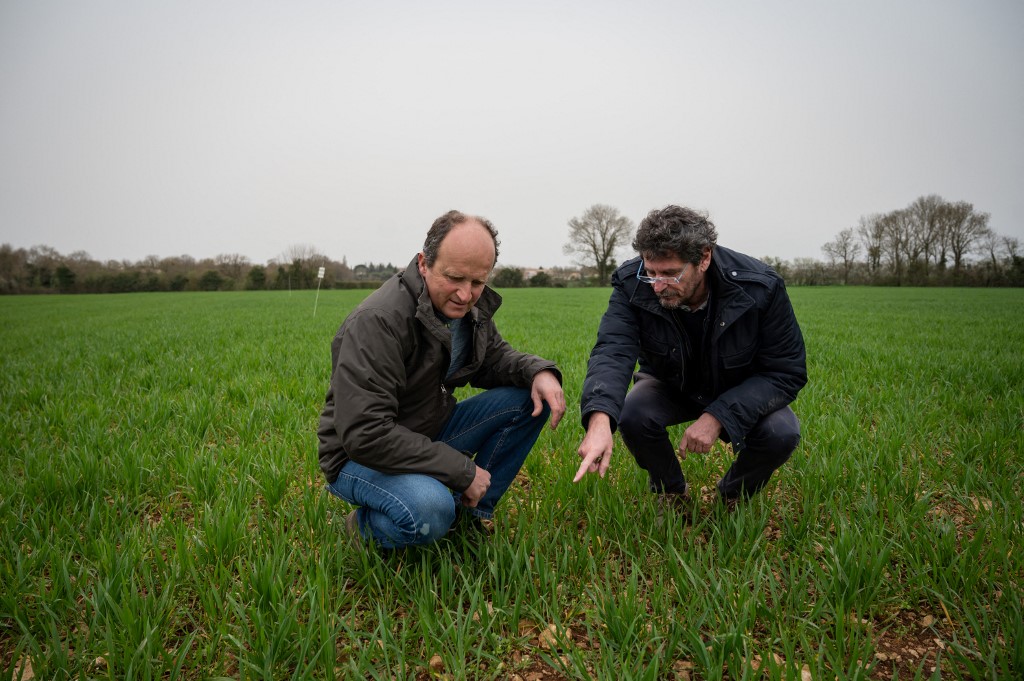
"I felt that these products were dangerous," said farmer David Bonneau as he hunched over the little wildflowers – veronica and hickweed. And "the general public is asking for reductions".
One of his experimental plots is treated the standard way, with chemical weedkiller; another he weeds mechanically with a harrow whose teeth tear up the wild plants; while a third will not be treated at all.
He is part of a project involving 400 farms and around 40 villages in the Deux-Sevres region of western France, where scientists are experimenting with different techniques to cut pollution.
Researchers from the French research agency, CNRS, support volunteer farmers to reduce the use of pesticides – probable sources of cancer and fatal to birds – as well as water-polluting chemical fertilisers, the prices of which are exploding.
While Russia's invasion of Ukraine has raised the spectre of food shortages, policymakers in Europe should not waver in their commitment to green agriculture, experts say.
And protecting Nature, a central task of biodiversity negotiations currently taking place in Geneva, is also a matter of safeguarding the water we drink, the food we eat and the air we breathe.
"It's important from a political point of view to show long-term engagement," said Robert Finger, head of farming systems research at ETH University of Zurich.
And greener could even mean more profitable.
"In many parts of the world, we are at a point where fertiliser use is very inefficient in terms of additional yield," he said, referring to Europe and parts of Asia.
Excessive use of fertilisers or pesticides can affect small and large crops.
Dangerous habits
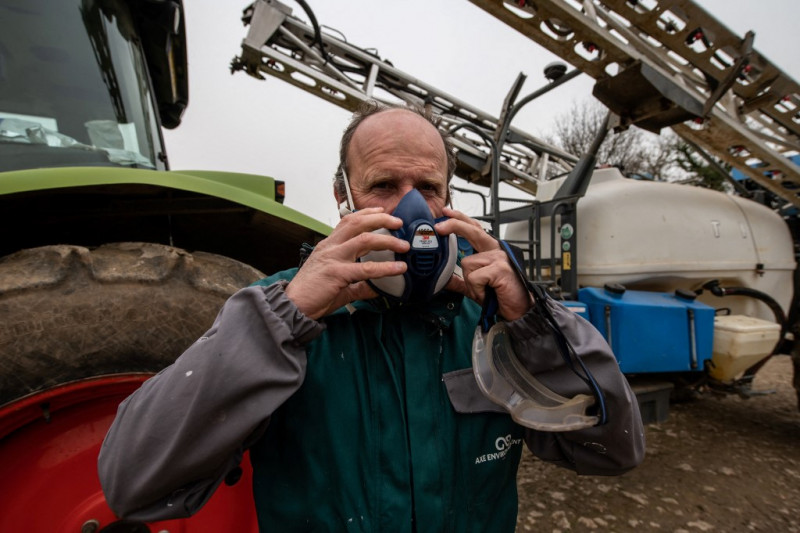
Meanwhile, Pepijn Schreinemachers, a researcher at the World Vegetable Center, said farmers in countries such as Vietnam, Laos and Cambodia were misusing pesticides with potentially harmful consequences.
"It is important to realise that it is farmers themselves who are most affected by the misuse of agrochemicals," he said. This could be using too much of a chemical, unsafe techniques or the use of the wrong products.
"Every farmer can share details about pesticide-poisoning incidents they have experienced, ranging from skin rashes to vomiting and unconsciousness. Still, most farmers strongly believe that pesticides are necessary for farm production."
So how can farmers be persuaded to change?
Robert Finger believes farming needs to have a middle way, between full organic farming and chemical-heavy conventional agriculture.
"The most important point is that the farmers have an option to do something different," he said.
Clear long-term public policies should help support the development of new technologies, as well as investment in pesticide-free production and techniques like growing legumes among crops to reduce the need for fertilisers.
The costs of pesticides and fertilisers should properly reflect the damage they can do, he said.
And in regions where "highly toxic" products are not being used safely, Schreinemachers said they should be banned outright, or heavily taxed to discourage use, while encouraging alternatives like biopesticides.
To help farmers overcome worries about making a switch, CNRS researchers are considering a mutual fund that would compensate them in the event of losses linked to the reduction of synthetic fertilisers and pesticides, a model that already exists in Italy.
Green growth
David Bonneau has seen savings so far on the costs of buying weedkiller and equipment.
When he made his first attempts at ditching the chemicals, he used his neighbour's machinery. Since then a more efficient device has been purchased by the agricultural cooperative.
But the proof will come at harvest time, when researchers will measure the wheat yields of each of the plots to find out the impact of the herbicide reduction.
In Deux-Sevres, "we have demonstrated that conventional farmers can reduce nitrogen and pesticides by a third without loss of yield, while increasing their income because they lower their costs", said Vincent Bretagnolle, research director at the CNRS.
But changing behaviour long-term is another challenge.
"Even the farmers who participated in the experiment and saw the results with their own eyes did not noticeably change their practices," Bretagnolle said. – AFP, March 24, 2022