THE 61st anniversary of the fabled first flight of Russian cosmonaut Yuri Gagarin will prompt mixed feelings. Celebrated every year as the International Day of Human Space Flight, April 12, will be unique in many ways.
Ongoing conflicts in Ukraine, Ethiopia, Afghanistan and Myanmar, economic collapse in Sri Lanka and Pakistan, severe drought in Madagascar, and the Covid-19 global pandemic have put tremendous pressure on international trade and relations. Not many human pursuits can take us out of such dire circumstances; human space flight is one.
The profession of astronautics is strong on marvel and inspiration. These attributes go far beyond national borders and the agencies that carry them out. Until human space flight becomes as mundane as suburban travel, it will motivate people worldwide. Yuri Gagarin is celebrated as much by the Americans as by the Russians. Black trainee astronaut Edward Dwight is an inspiration not only to African Americans but also to native Africans. Astronauts of Indian descent Kalpana Chawla and Sunita Williams are muses to Americans and the Indian populace, including the vast ‘desi’ diaspora.
Flight into the global commons of outer space is flight into open and unowned expanses. Indeed, as the Americans and Soviets raced to the Moon, neither extended their political acrimony into space. However, things have gradually changed.
Outer space today is frequently visited by space agencies and private-sector players. Almost every high- and middle-income economy has at least one satellite orbiting the planet. From foreign space enterprises, nations receive downstream space-utilisation services: satellite telecommunications, meteorology, remote sensing. Satellites are being miniaturised and rocket launches can be done on demand. This conducive environment for frequent small satellite launches has led to constellations of thousands of satellites.
Skylab, Mir, Salyut and the International Space Station (ISS) were accustomed to traffic-free orbits. Not any more. Contemporary human space flight must dodge through the densely packed satellite constellations in Earth’s orbit.
In December, China notified the UN Office for Outer Space Affairs that it took evasive action to prevent two Starlink satellites operated by the American aerospace company SpaceX from colliding with the Tianhe module of its nascent space station. Chinese media speculated that the American company might have been deliberately testing Chinese manoeuvrability.
A month earlier, operators of the ISS publicised how they had had to manoeuvre the space station to avoid hitting a piece of the defunct Fengyun-1C satellite, which had been blown to smithereens by a 2007 Chinese anti-satellite missile test.
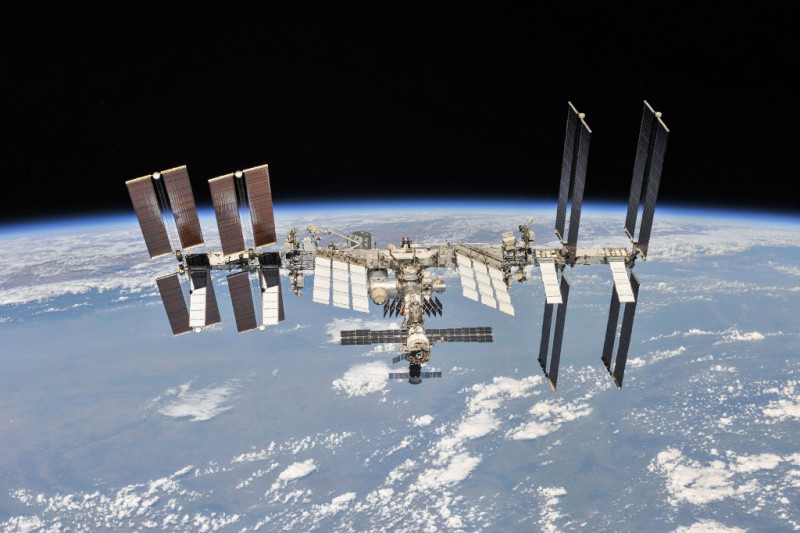
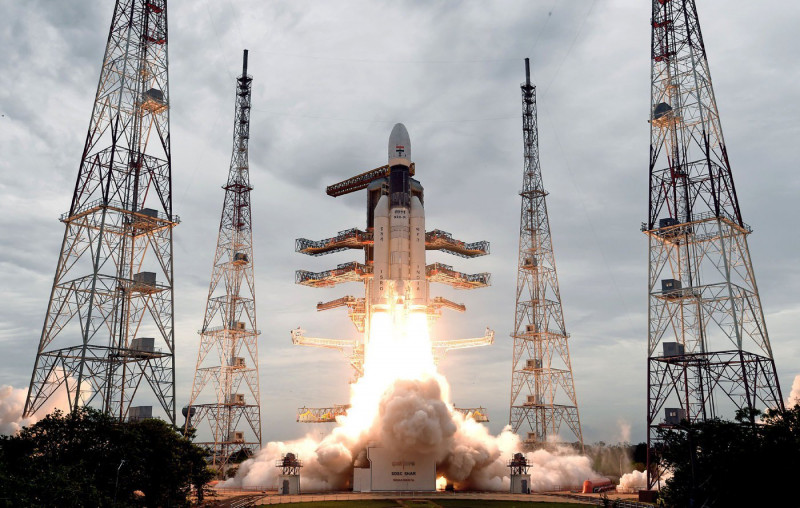
India, too, is entering the echelons of human space flight. Its first orbital crewed mission, Gaganyaan, is planned for 2023. The Indian Space Research Organisation is also working to raise a compact space station by the early 2030s and place it in low Earth orbit.
As the Russo-Ukrainian War continues, it is evident that the simpatico between the US and Russia is spiralling into a chasm. The escalation of tensions has led to speculation about their collaboration on the ISS. If they were to divorce, the US and Russia will seek partners that share their vocal disdain for the other bloc.
The creation of blocs may dislodge any hotline or détente mechanism that would previously have alleviated differences. In this scenario, the role of neutral nations – those that do not belong to any bloc but work with both – will become vital in cooling off confrontations between the two. Neutral nations will not be peacekeepers as such, but they will help maintain equilibrium.
Both Russia and France have immensely assisted India with the Gaganyaan programme: Russia with training for the Indian astronauts, or vyomanauts, and France with its competence in space medicine. In turn, India is likely to invite universities and private space startups from developed and developing economies to participate in the Indian Space Station by contributing cutting-edge scientific payloads and performing groundbreaking experiments.
India could encourage greater participation from South America, Africa, Eastern Europe, Central and West Asia, Southeast Asia, and Oceania. A diplomatic hand, full of soft power, could be extended to countries from these regions. Encouraging universities and research institutions from developing economies to build payloads would have a progressive impact on the quality of education they impart. India could benefit from bright ideas coming from these countries, and it may lead to fruitful collaborations. The Indian Space Station could become a hallmark of harmonious international scientific progress in the global commons.
The International Day of Human Space Flight 2022 will be brimming with constructive developments, from Gaganyaan to Tianhe to the US-led Artemis programme. But the day will also be rife with concerns about space debris, the malignant growth of satellite constellations, and technopolitical competitiveness mutating into conflict in Earth’s orbit.
India has the task of progressing its space programme thoughtfully, without joining any blocs, and demonstrating stability in stormy waters. Peace can be achieved by forging partnerships with friendly nations from both blocs for the Indian Space Station. Human space flight continues to be an endeavour that can transcend the politics of Earth. – The Vibes, April 12, 2022
The author, Chaitanya Giri, is a space policy and diplomacy consultant at the Research and Information System for Developing Countries, New Delhi, and an affiliate scientist with the Earth-Life Science Institute, Tokyo Institute of Technology, Japan. His research interests span space policy, planetary exploration, astrochemistry and space diplomacy. He has no conflicts to declare.
Published under Creative Commons and in partnership with 360info.org