WHILE it is still too early to talk about a monkeypox epidemic, despite the increase in reported cases recently, the emergence of the phenomenon should act as an alert, according to Antoine Flahault, Director of the Institute of Global Health at the University of Geneva.
Q: Cases are on the increase in North America and Europe: can it be called an epidemic?
A: We're seeing the emergence of an unusual phenomenon, but it's still difficult to know whether it will explode into an epidemic, or whether its spread will be more contained. In recent days, the number of cases has doubled every three or four days, which could signal the exponential growth of an epidemic wave.
However, it can also be questioned whether the recent media coverage of the phenomenon has encouraged patients to consult their doctor, and their doctor to discuss the diagnosis more and notify the cases detected. It is therefore still a little early to speak of an epidemic, but the start of an epidemic would indeed resemble what we are currently observing.
Q: Is the spread of the disease surprising and worrying?
A: The emergence of this phenomenon, which is new outside of equatorial Africa, should alert us and make us very cautious. It would be much more effective from a health point of view, and much less impacting in social and economic terms, to isolate the few cases detected today for three weeks and to demand quarantine for highly suspicious contacts.
Indeed, we can currently try to dismantle all the chains of transmission because we only have a few cases, rather than waiting to be overwhelmed by a possible influx of cases for which we have little knowledge, few treatments or vaccines available.
It should always be remembered that an epidemic progression of contamination follows an exponential law which can be very rapid. For the moment, what we know about the monkeypox virus does not lead us to fear the massive contamination of the general population. Unless the virus has evolved significantly, both in its transmissibility and in its modes of transmission, this virus is known to be not very transmissible.
We know, after 50 years of experience in Africa, that this virus requires strong interhuman promiscuity with someone contagious for contamination to take place.
Q: Is there a risk, as with Covid, of it becoming a global pandemic?
A: We cannot rule out any scenario at this stage. And the pandemic scenario cannot be ruled out completely.
That said, there are other less pessimistic scenarios, which are at least as plausible as scenarios. So far, no chain infections of more than six people have been reported. The reproduction rate in Africa has always been below 1, ie. without pandemic potential.
The conditions may be in place for human-to-human transmission to take place, thanks to increased adaptation of the virus, but also to mobility and to networks of human communities living in close proximity.
The HIV/AIDS pandemic also began with the contamination of certain segments of society, in particular the male homosexual communities and people exchanging needles.
We then saw the pandemic spread to other groups of the population, blood transfusion patients, sex workers, and then heterosexual couples and newborn babies of infected mothers.
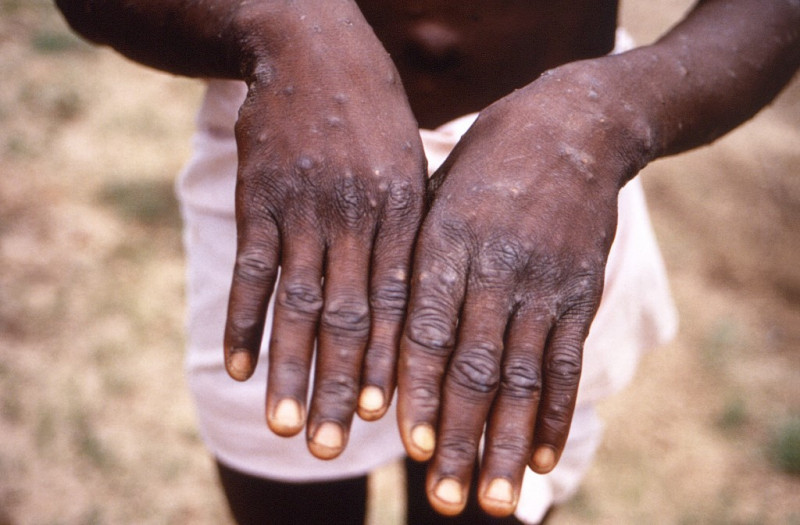
At the current time, however, there is no evidence that the monkeypox virus is sexually transmitted. It seems to be transmitted more by close and prolonged contact with an infected person who has blisters on their skin.
In this case, there is no reason for it to be confined to the male homosexual community. Other groups of the population could then be affected, children and heterosexual couples, in particular. – AFP, May 25, 2022