Living

Could climate change cause humans to shrink?

Smaller animals can better shed excess heat, according to University of Edinburgh palaeontologist

Updated 4 years ago · Published on

Could climate change cause humans to shrink?
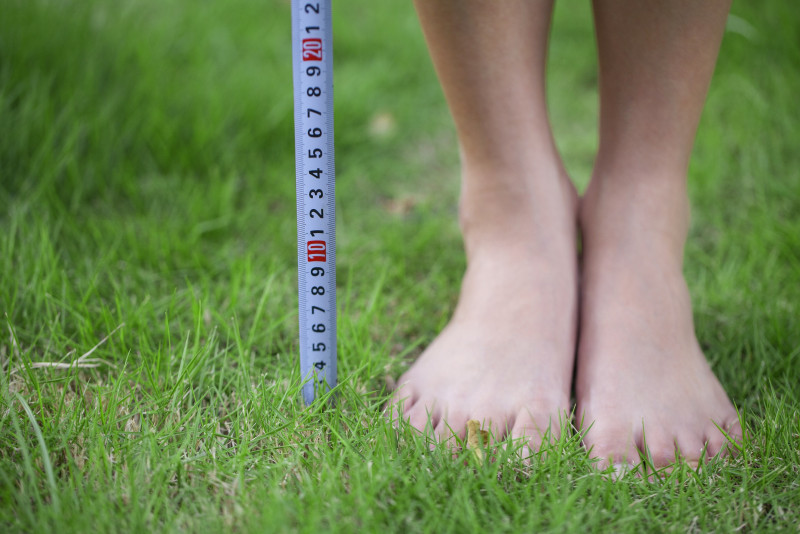
Just as some animals have done before us, humans may shrink to adapt to rising temperatures caused by climate change. – ETX Daily Up pic, June 10, 2022

JUST as some animals have done before us, humans could shrink in size to adapt to rising temperatures caused by climate change. At least that's the theory put forward by a palaeontologist at the University of Edinburgh in Scotland.

Mammals that live in warmer regions are often smaller in size than those living in colder areas. This notably appears to have been the case for early horses, which lived about 55 million years ago. 

"The reasons are not entirely understood, but it is probably, in part, because smaller animals have a higher surface area relative to their volume than plumper animals and can thus better shed excess heat," explains Steve Brusatte, a palaeontologist at the University of Edinburgh, quoted by The Guardian. 

According to the researcher, these elements may suggest that it is "plausible" that humans could shrink in size in order to adapt to rising temperatures due to global warming.

This theory is of interest to other scientists. In July 2021, researchers from the University of Cambridge (UK) and the University of Tübingen (Germany) published a study in the journal Nature Communications.

The authors analysed the body and brain sizes of more than 300 fossils from the "Homo" family – the family to which modern humans belong.

According to their estimates, temperature is one of the main factors causing the change in human body sizes over the last million years. In short, a warmer climate could lead to a decrease in body size, while a colder climate could lead to larger bodies.

However, the impact of global warming on human body size could have other causes, such as the availability of food and resources.

This is the counter-argument formulated by some researchers, including Professor Adrian Lister of the Natural History Museum in London, also quoted by The Guardian. – ETX Daily Up, June 10, 2022


Related News

Events / 1mth

‘We need to work together to combat threats of climate change’ – Sarawak deputy premier

Events / 1mth

Sarawak and Sabah play key roles in weathering climate change

Malaysia / 2mth

AI: Regulators want a kill switch, investors want to restrict competition

Malaysia / 3mth

Poor air quality: Sharp rise in asthma cases

Sports & Fitness / 3mth

Heat takes toll on athletes at SUKMA 2026

Our Planet / 6mth

Deputy minister lauds community initiative to protect nature

Spotlight

Malaysia

Anwar receives special recognition as 10,000 Muslims gather in Putrajaya

Malaysia

Video of elderly man being assaulted goes viral on social media

Malaysia

The wide reach of corruption and organised crime in the country

Malaysia

Malaysia pushes to give smaller economies stronger voice in Asia-Pacific trade – Anwar

Malaysia

No tsunami threat to Malaysia after 5.4-magnitude earthquake hits Banda Sea

Malaysia

Who is calling the shots in Negeri Sembilan as Ismail’s position comes under scrutiny?

Opinion

Ayob Khan: When the uniform comes off, the principles remain

Malaysia

MySiren to send emergency alerts to compatible phones nationwide from Nov 29 test

You may be interested

Health

Selangor records 18,451 haze-related illnesses, with Petaling clinics hardest hit

Events

Seven companies selected for RM15m corporate innovation programme

By Alfian Z.M. Tahir

Our Planet

Beaver Supermoon lights up November skies, begins four-month celestial spectacle

Community

BOH contributes RM50,000 to Malaysia’s homegrown cancer vaccine research