ONE is a pastry-cook. Another dreams of becoming a bookseller. All have slammed the door on the hospitals where they used to work, exhausted by wave after wave of Covid-19 patients.
Nolwenn Le Bonzec, a former nurse who moved from her native Brittany to the Belgian capital Brussels, recounted how she hung up her surgical uniform six months ago and hasn't looked back.
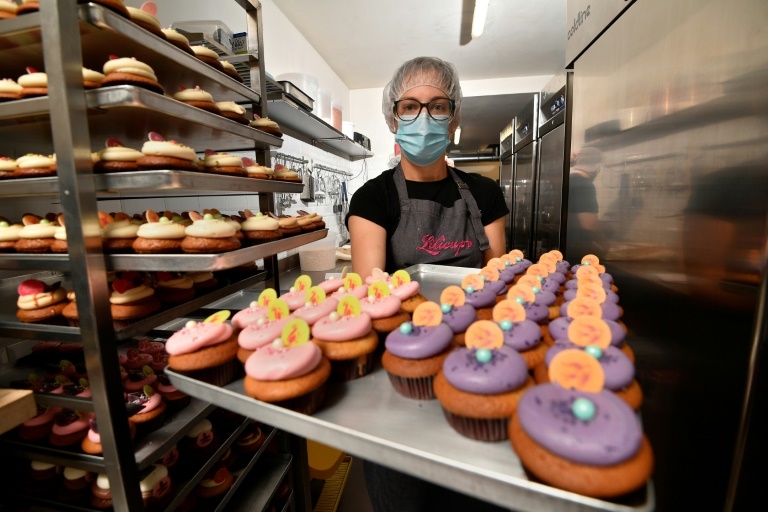
Now she makes little coloured cupcakes. A radical shift that "saved my mental health", she says.
"I worked for five years in a hospital. Little by little I saw the working conditions go downhill, and health became a mere product. Initially, it was a profession we did to be humane," the 27-year-old says, as she wears the black apron of the "Lilicup" shop where she now works.
Thomas Laurent, another former nurse, wanted to work in a hospital since he was 15 - it was an "old dream," he explains. In January he will start training as a bookseller.
The 35-year-old Frenchman has just left the hospital emergency ward in Lyon, central France. Conditions there, he says, "were no longer tolerable".
Despite a desperate plea by European authorities for medical staff to treat wave after wave of Covid-19 patients, these former nurses speak of disillusionment and disappointment with public health systems they say fell far short of what they were designed for.
"We have demanded better conditions for years. But the (Belgian) government simply doesn't take us seriously," Le Bonzec says.
"If I kept on, I think I would have fallen into depression. We protested. We stood up. But it didn't change anything."
'They died alone'
Recalling her days at the Saint-Luc clinic in Brussels, she explains that she questioned her choice of profession when the first coronavirus wave hit in early 2020.
"Psychologically, it was really hard, to work in quarantine wards, to fight all the time just to have facemasks. We put our health and that of our families at risk. And those patients weren't allowed any visitors. They were all alone, they died alone... We weren't enough."
Staffing shortfalls weighed heavily on the care provided to patients, she says.
"Unfortunately, we rushed our treatment. And when we did everything quickly, we did it badly... It was insufferable," she says.
Day by day, turning up at the hospital became increasingly difficult to contemplate. Until finally she felt no more energy for her chosen job, only "frustration" and "senselessness".
"Six months on, I don't miss my nursing days at all. I'm happy to go to work now, and to talk about my working day when I get home," Le Bonzec says.
Laurent concurs. Since ceasing to be a nurse, he says, he "sleeps better". The crushing daily pressure "has disappeared". Even the 4 am starts don't dull the shining eyes he presents over his facemask.
No more applause
The grinding reality of nursing is especially felt among the younger staff. "Because they go into that job full of ideals, and they get a cold shower as reality hits, and they don't always get the support they need," says Astrid Van Male, a Belgian nurse who has changed roles to support healthcare staff coping with burnout.
The people she sees "don't always think about caring for themselves because they're used to looking after other people," she says. "They wait until their world crumbles around them."
Some feel guilty for taking vacation days, worrying that it just increases the load for their colleagues, she adds.
"If nothing is done, fairly soon we'll have no more health workers in the hospitals. Even foreign nurses aren't accepting these working conditions."
During the first coronavirus wave, applause in appreciation of medical staff echoed across balconies in Europe. During this second wave, the clapping is absent.
"People clapping for us, but not standing up for us, that's too easy," Le Bonzec says. "They need to use their energy to help us!" – ETX Studio, November 20, 2020