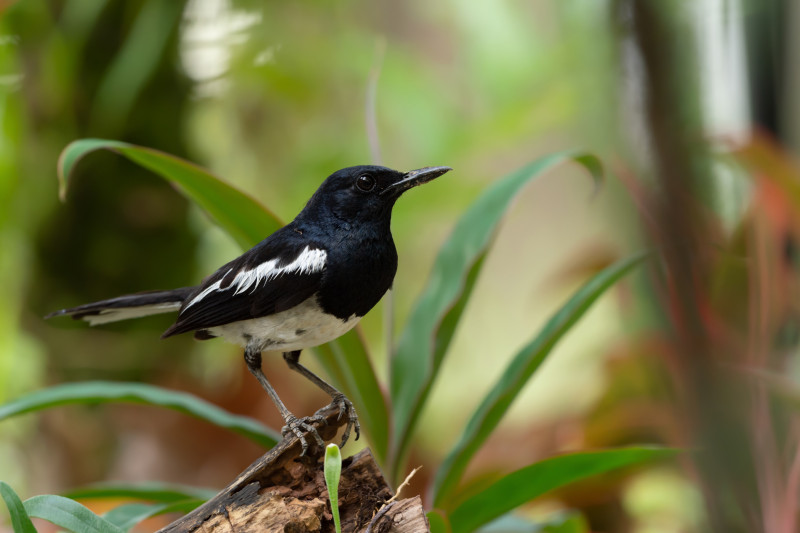
WILL there be fewer birds in 60 years?
Newly published German-English research shows that many species are at risk of extinction due to global warming, suggesting that this is the sad reality we're headed for. But the biggest changes will be seen in migration patterns of certain types of birds in the northern regions of the planet, the study predicts.
Climate change is threatening birds' survival. And we can expect to see fewer varieties of them by 2080, if the current trend is not reversed, say researchers from Durham University in the UK and the Senckenberg Biodiversity and Climate Research Centre in Germany.
This study looked at 8,768 bird species around the world in order to predict the number of species that could disappear or migrate to new regions to adapt to climate change.
These predictions are based on two climate scenarios, in which projected greenhouse gas emissions are at low or medium levels.
Published in the journal Proceedings of the Royal Society B, The study did not only look at the number of bird species threatened with extinction, but also the variety of species type or "phylogenetic diversity."
And, as one might expect, the forecasts are not very optimistic: not only are there likely to be fewer birds, but groups of related species may disappear, with profound effects on communities in terms of composition of phylogenetic diversity, especially in tropical and subtropical areas.
But all is not lost despite the fact that a phylogenetic restructuring of species should occur "around the world," with the scientists emphasising that "local phylogenetic diversity can be a key to the resilience of biological diversity to environmental changes."
"The most severe changes to the phylogenetic diversity of local assemblages are likely to be caused by species range shifts and local species gains rather than range reductions and extinctions.
"Our findings highlight the importance of considering diverse measures in climate impact assessments," note the researchers. – ETX Daily Up, August 5, 2022