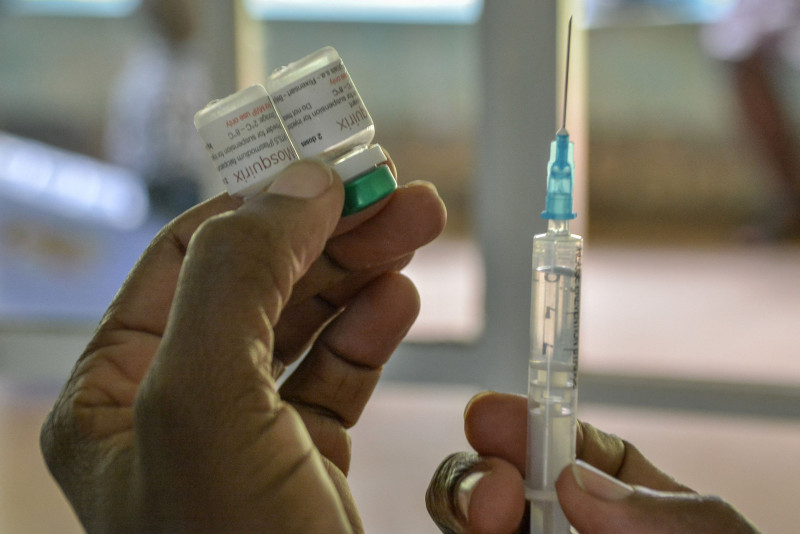
A BOOSTER dose of a new malaria vaccine maintains a high level of protection against the disease, researchers said on Thursday, expressing hopes the cheap jab could be produced on a massive scale in a matter of years.
The international research team suggested the vaccine, developed by Britain's Oxford University, could represent a turning point in the fight against the mosquito-borne parasitic disease, which killed 627,000 people – mostly African children – in 2020 alone.
Last year a different vaccine produced by British pharmaceutical giant GSK became the first to be recommended for widespread use against malaria by the World Health Organisation, and has now been administered to more than a million children in Africa.
However, research has found that the effectiveness of GSK's vaccine is around 60%, and significantly wanes over time even with a booster dose.
Oxford's R21/Matrix-M vaccine meanwhile was found to be 77% effective at preventing malaria in research published last year – the first time the WHO's roadmap goal of 75% had been met.
'Fantastic'
For the research, 450 children aged five to 17 months in Burkina Faso – where malaria accounts for around 22% of all deaths – were given three doses in 2019.
They were split into three groups, two receiving different doses of the Matrix-M adjuvant, a vaccine ingredient patented by Novavax also used in the US biotech firm's Covid jab. The third control group received a rabies vaccine.
Ahead of the 2020 rainy season – when malaria cases surge – 409 children returned to get a booster shot.
For the group that received the higher dose of adjuvant, the booster rose the protection level to 80%, according to the results of a phase 2b trial published in The Lancet Infectious Diseases journal on Thursday. The lower dose had 70% efficacy.
And crucially, the booster returned antibody levels to a similar level seen after the first round of doses, the study said.
The study's lead investigator Halidou Tinto of the Burkina Faso health research institute IRSS said, "It is fantastic to see such high efficacy again after a single booster dose."
Tinto, who was involved in trialling both malaria vaccines, said GSK's vaccine had an optimal efficacy of around 60 percent. "So I can confirm that R21 is doing much better," he told a press conference.
70% reduction in deaths?
Oxford vaccinologist and study co-author Adrian Hill said the vaccine meant "We really could be looking at a very substantial reduction in that horrendous burden of malaria, deaths and disease in the coming years, certainly by 2030."
A 70% reduction in deaths from malaria could be feasible in that time, he said, partly because of the vast number of vaccine doses that could be quickly produced.
Oxford has partnered with the world's largest vaccine manufacturer, the Serum Institute of India.
The institute is "willing and able to manufacture 200 million doses a year starting next year," Hill said.
The six to 10 million doses that GSK can produce a year is "not enough for 40 million children who need four doses in the first year," Hill added.
And the Oxford vaccine would likely cost a few US dollars a dose, less than half the US$9 (about RM40.48) for GSK's version, he said.
The challenge of getting those doses into arms would require more funding, he added.
Results from a phase three trial involving 4,800 participants across four countries are expected later this year, which could potentially lead to approval.
Azra Ghani, an epidemiologist at Imperial College London not involved in the research, welcomed the results, saying it was "particularly encouraging" the booster dose restored protective antibodies.
Gareth Jenkins of the charity Malaria No More UK said the results were "another encouraging signal that, with the right support, the world could end child deaths from malaria in our lifetimes".
Jenkins said in a statement that new British Prime Minister Liz Truss' "first foreign policy test" was to ensure continued funding at the replenishment conference for the Global Fund to Fight AIDS, Tuberculosis and Malaria being held in the US this month. – AFP, September 12, 2022