SYDNEY – Australia listed a small wallaby and the grey snake among 15 new threatened species on Tuesday as it launched a zero-extinction plan for its unique wildlife.
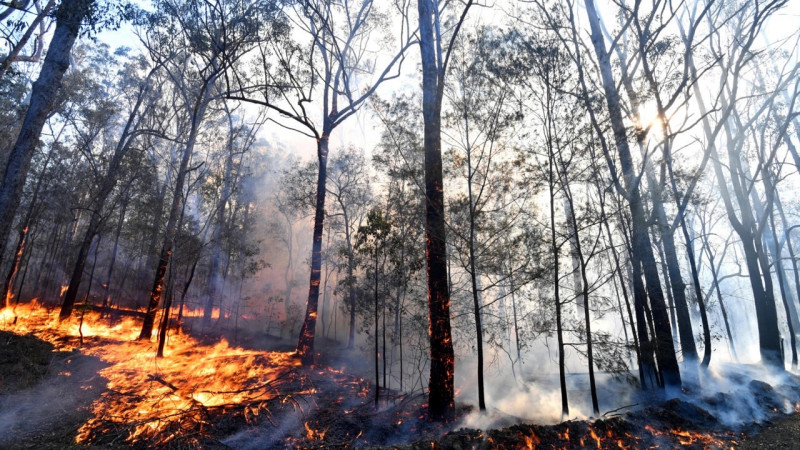
Many of Australia's species are clinging to existence, their habitats shrinking from human activity and extreme events such as the 2019-2020 Black Summer bushfires, wildlife groups say.
Prime Minister Anthony Albanese's government announced a new 10-year scheme to try and halt the slide into extinction of 110 “priority species” and shield 20 “priority places” from further degradation.
It aims to prevent any new extinctions of plants and animals while conserving at least 30% of Australia's land mass.
Wildlife groups blame Australia’s poor record in protecting its unique species largely on habitat destruction, accelerated by global warming and resulting extreme weather.
The Black Summer fires burned through 5.8 million hectares in eastern Australia and killed or displaced an estimated 1-3 billion animals.
“The Black Summer bushfires in particular have seen devastating results for many species. We are determined to give wildlife a better chance,” said Environment Minister Tanya Plibersek.
“Listing species as threatened under national environment law is a critical step in protecting the species and habitats in need of urgent help.”
‘Extinction capital’
Australia's attempts to protect its wildlife had not worked so far, the minister added.
“Australia is the mammal extinction capital of the world,” she said.
Among the 15 plants and animals listed as threatened are the vulnerable small parma wallaby, which faces danger from bushfires and predators, the endangered mildly venomous grey snake of Queensland, and the endangered small wingless matchstick grasshopper, which is sensitive to drought and frequent bushfires.
Wildlife groups welcomed the government's goal of preventing any new plant or animal extinctions.
The objective “is ambitious but essential if future generations of Australians are to see animals like koalas, mountain pygmy possums, greater gliders and gang gang cockatoos,” said the Australian Conservation Foundation's nature programme manager Basha Stasak.
“Stopping the destruction of wildlife habitat is the key to achieving this objective.”
Stasak called on the government to strengthen national environment law, saying it had failed to protect animals, plants and ecosystems.
Scientists had estimated the cost of tackling Australia's “extinction crisis” at A$1.69 billion (about RM4.65 billion) a year, Stasak said.
‘Downward spiral’
A five-yearly State of the Environment report released in July painted a picture of wildlife devastation on land and sea.
It cited the clearing of millions of hectares of primary forest and mass coral bleaching on the Great Barrier Reef caused by marine heatwaves.
WWF-Australia called for investment in recovery plans for all threatened species.
“Australia's wildlife and wild places have been on a dangerous downward spiral,” said WWF-Australia chief conservation officer Rachel Lowry.
She welcomed Australia's target of zero new extinctions, saying it matched the goals of New Zealand and European Union member countries.
Lowry pressed the government to set out and fund a recovery plan for the more than 1,900 threatened species in Australia.
“This plan picks 110 winners,” she said.
“It's unclear how it will help our other ‘non priority’ threatened species such as our endangered greater glider for example.”
Plibersek told journalists that protecting 110 prioritised species would create a “halo effect” on interdependent species in the same habitat.
Protecting 20 locations could create “little Noah's Arks, places that we can be confident we are returning to healthy populations of plants and animals,” she said. – AFP, October 4, 2022