WHILE this phrase is often used in the context of falling in love, when your heart literally skips a beat; in medical terms, you may feel your heart skipping a beat if you have premature ventricular contraction (PVC).
“They are common,” says Dr How Ann Kee, consultant cardiologist and electrophysiologist at Sunway Medical Centre, Sunway City. “Some people feel them, but others don’t. Some have their PVCs detected only on an electrocardiogram (ECG) during a health screening.”
While PVCs are fairly common, with up to 50% of people having experienced PVC at one time or another in their lives, this is not to say that PVCs should be disregarded, especially if they are interfering with the heart function or are causing significant symptoms. So, the question remains: Is this love, excitement.. or a PVC?

Are PVCs something to worry about?
A premature ventricular contraction (PVC, or premature ventricular complex) is an extra electrical impulse arising from the heart's lower chamber (ventricle). It interferes with the regular normal heart beats. You may feel like your heart is fluttering as skipped heart beats or abnormally strong beats.
PVCs are usually not problematic to you or your health, and most PVCs are isolated – meaning they happen one at a time. But, the feeling of skipped beats can be quite bothering to the patients.
PVCs become a concern if they happen frequently. According to Dr How if the PVC burden is more than 15%, that is considered excessive and may result in left ventricle dysfunction. To put those numbers in context, an average human heart beats about 100,000 times a day, and having 15,000 PVCs a day equates to about a 15% PVC burden.
That explains the electricity.. and love might not be to blame
PVCs are common, and the cause is idiopathic or unknown. Dr How explains that these PVCs can happen in a healthy person of any age with a normal structural heart. They can also occur in patients with underlying heart disease or who previously had a heart operation.
There are other health factors that may also aggravate the development of PVCs. These include:
- Too much caffeine
- Electrolyte imbalances
- Lack of sleep
- Excess usage of alcohol, tobacco or drugs
Benign PVCs... or not
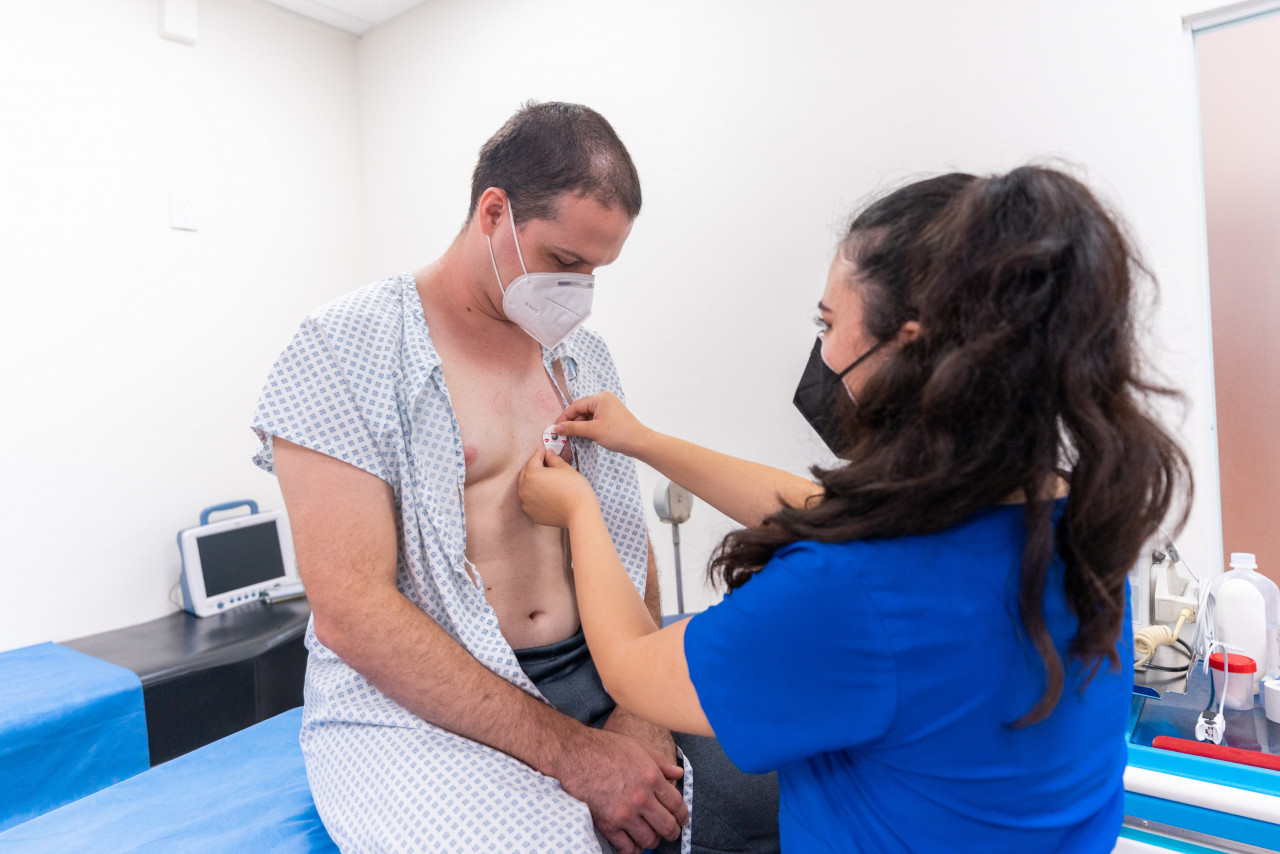
The first step in diagnosing PVCs is to do an electrocardiogram (ECG). A physician may also recommend a Holter monitor that will record a person’s heartbeats over 24 hours.
“That will quantify the burden of PVCs, thus determining the treatment plan of the PVC,” Dr How explains.
In some cases, doctors may request a supervised exercise stress test if symptoms are found to be associated with exertion, or echocardiography for an evaluation of heart structure and function. The outcome is better, in the absence of structural heart disease, as a high burden PVC may result in left ventricle dysfunction.
Reassure or refer?
Treatment for PVCs depends upon the PVC burden, symptoms and presence of heart dysfunction. For infrequent PVCs, the management is usually conservative. However, if PVCs are frequent, and patients are symptomatic, Dr How would recommend medications aiming to reduce the PVC burden.
“The response to medication defers between individuals. In patients who do not respond well to medications, a catheter ablation is recommended,” Dr How adds.
An electrophysiology study (EPS) and catheter ablation is a procedure done by cardiac electrophysiologists, cardiologists who subspecialise in heart rhythm diseases.
PVCs are usually not life threatening. However, frequent PVCs may result in heart failure and a catheter ablation may eliminate the PVC and improve the heart function.
Finding PVCs should, at the very least, trigger a detailed assessment of your heart as patients with PVCs are found to have a better medical outcome and are potentially curable if managed early and appropriately. – The Vibes, October 26, 2022